Sailing Aegina - harbours, bays and what to see
Where to moor on Aegina, which bays suit a swim stop, the Temple of Aphaia, pistachios and the meltemi. A practical guide for a sailing week in the Saronic.
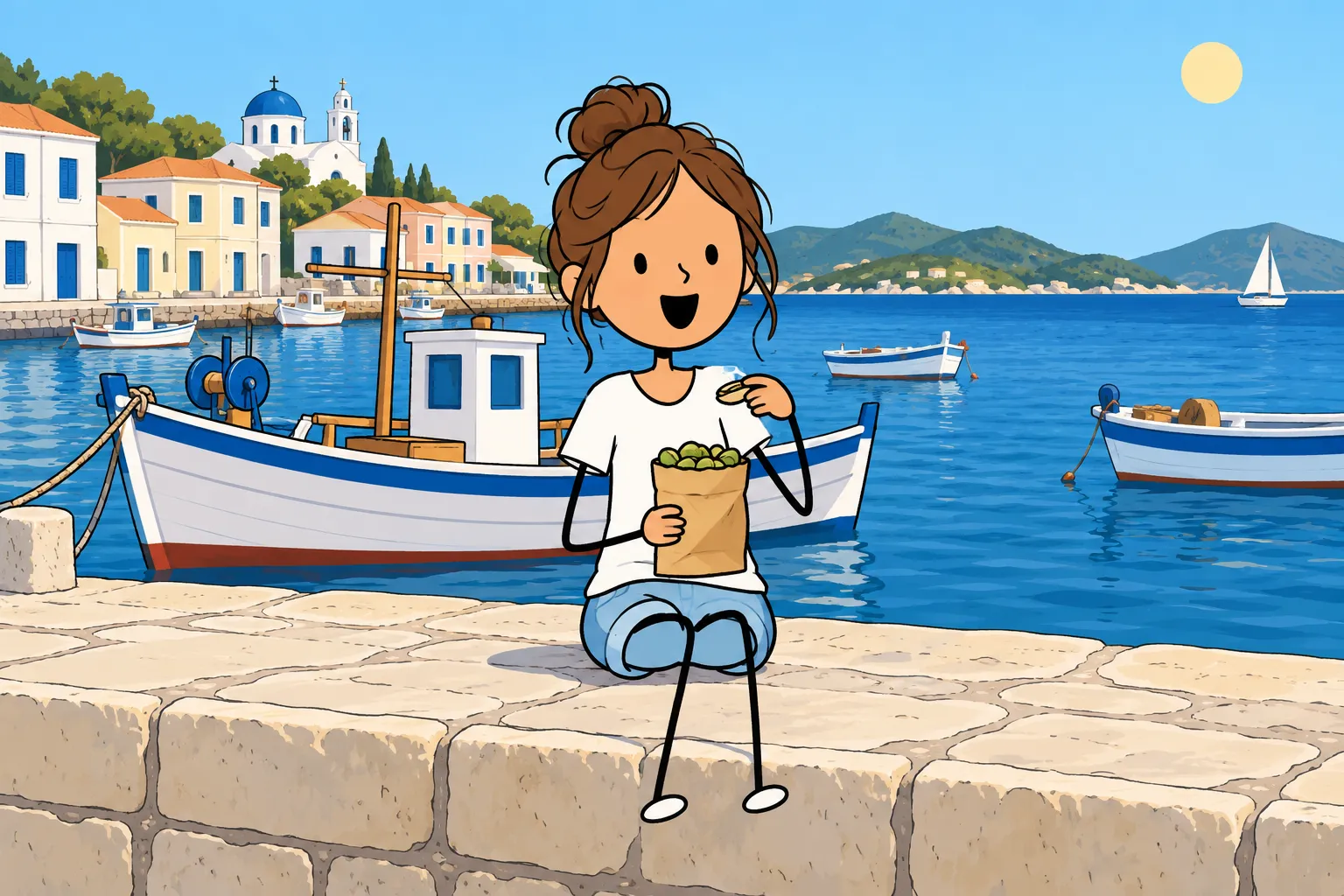
Aegina is the island closest to Athens, about 17 nautical miles to the south-west, which makes it a natural first or last stop of a week in the Saronic. It is hilly and green, with pistachio groves, a lively harbour town and one of the best preserved Doric temples in Greece. It also gets busy, so a little planning helps.
Aegina is one of the islands on the Saronic Gulf route. Below: where boats moor, where to swim, what is worth seeing ashore and what the wind does.
Where do boats moor on Aegina?
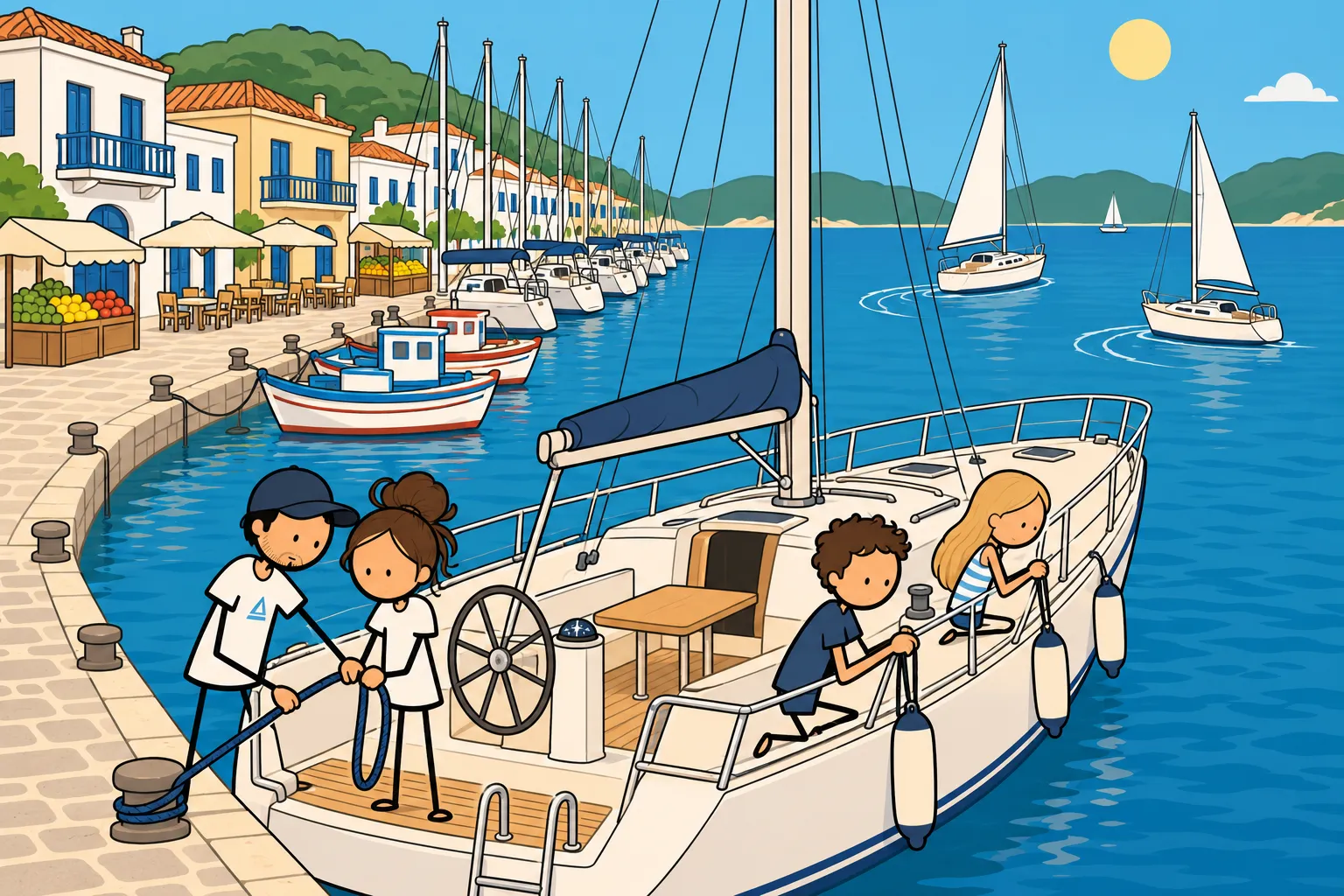
Aegina has several very different options, and the skipper picks the one that suits the day's wind and the crowd.
Aegina town
The main harbour is on the west coast, sheltered by a breakwater. In the sailing season the marina is taken by local boats on permanent moorings, so charter boats usually have to ask the harbour office for a berth in the old harbour instead. The seabed is mud and holds poorly in places, so mooring takes care. Weekends are the busiest, with many boats and crossed anchors. Once you are tied up, the town is charming, with the old quays visible under the water when it is calm.
Souvala
A small port on the north coast with a short usable mole, good shelter except in strong northerlies, a sandy bottom and tavernas along the beach. It is often overlooked, which is part of its appeal.
Perdika
A fishing village in the south-west, safe in nearly all conditions except strong south-easterlies. It fills up in summer, so boats arrive early. Mt Oros, the highest point in the Saronic at 534 m, starts from here.
Ayia Marina
A busy resort on the east coast, with an L-shaped mole that takes roughly 20 boats, fewer if catamarans are among them. Shelter is excellent except in strong easterlies. There was still no power or water on the quay in early 2025, and weekends bring 40 or more visiting boats, so it is better to arrive early in the afternoon.
For the difference between marinas, town quays and anchorages, see where to spend the night. In some harbours guests help with the lines. It is basic, needs no experience, and the skipper explains it at the start of the week.
What are the best bays to anchor and swim?
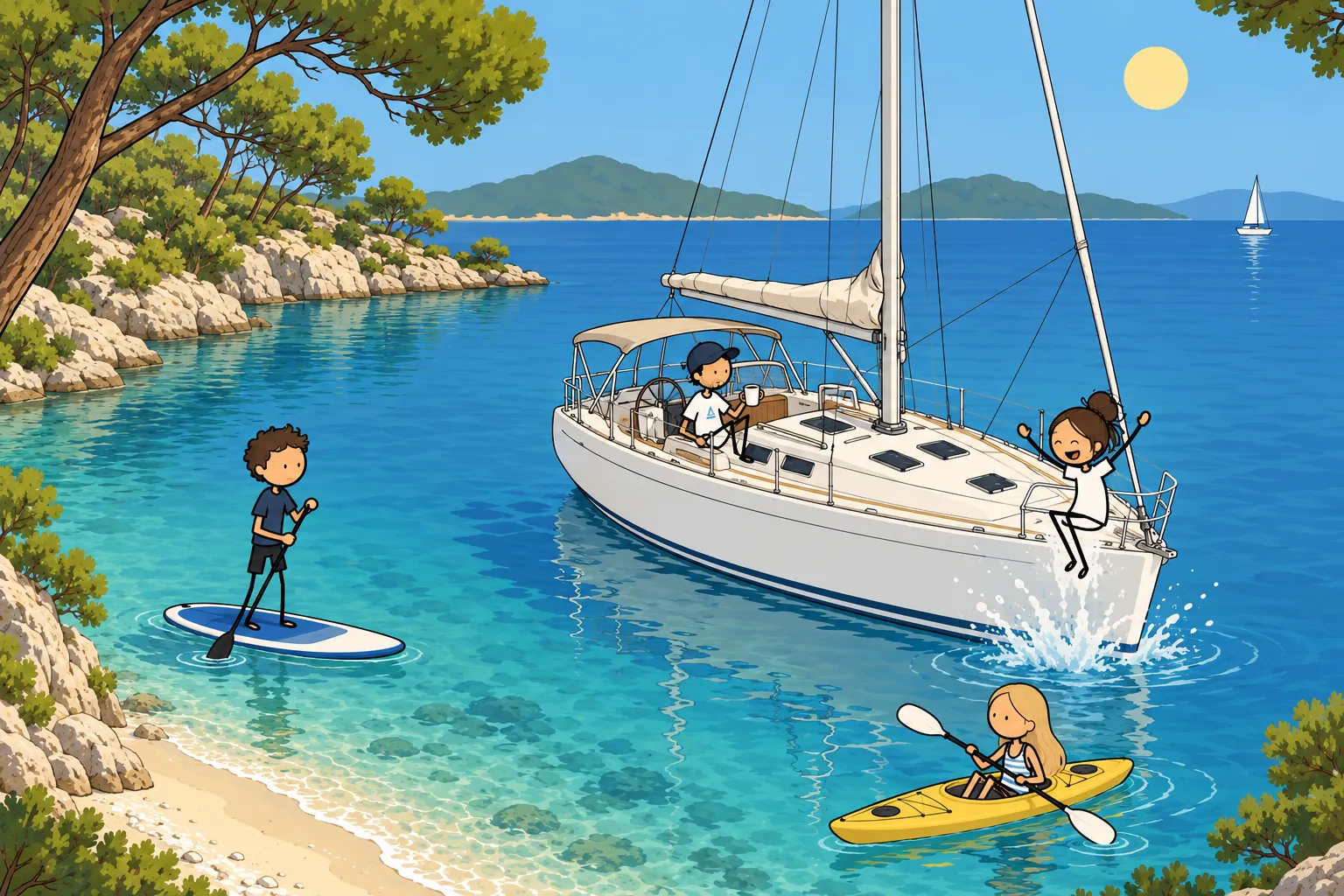
- Klima and Mazioti (south coast): two bays west of Cape Pyrgos, open to winds from the north-west to the south-east. Klima has a marked swimming area and a summer beach canteen. Mazioti has fewer boats and good holding in sand, but the meltemi gusts from the east, so a long line ashore helps.
- Moni islet: a small islet west of Perdika, uninhabited and protected as a park since 1962, with semi-wild peacocks, deer and goats. The north coast has several anchorages. In July and August it is as crowded as its beach, so it is better in the shoulder season.
- Agistri and Aponisos: three nautical miles south-west of Aegina, the wooded island has its pine-fringed anchorages around the Aponisos islet, with turquoise water. Megalochori is the only port suited to charter boats, because the main beach village is too shallow.
- Dorousa: a small island with many anchorages, a short hop from Agistri.
Experienced skippers choose sheltered bays, so the boat is usually still at anchor.
What is there to see ashore?
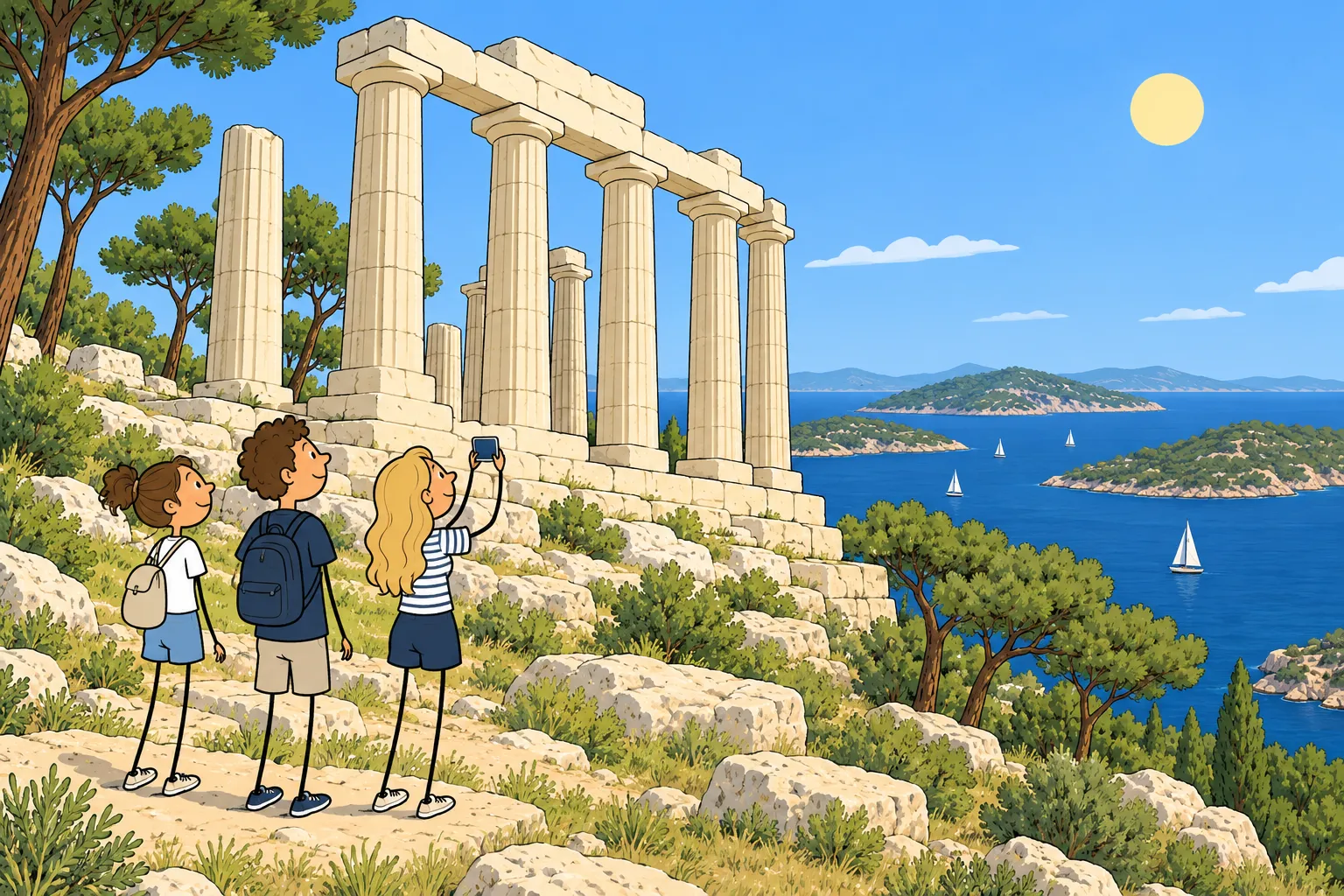
- The Temple of Aphaia. Built around 500 BCE, one of the best preserved Doric temples, with 23 columns still standing and a view over most of the Saronic Gulf. It is about 13 km from Aegina town, with a bus line from the town. From Ayia Marina it is a 30-minute walk, and from Souvala it is a longer hike via the abandoned medieval capital of Palaiochora.
- Aegina town. The Archaeological Museum, the lone column on Kolona hill and the ancient moles that still protect the harbour. In 1828 Aegina was the first capital of modern Greece.
- Pistachios. The island's pride. They are grown here, exported, and sold in every shop.
- Perdika and Mt Oros. Fish tavernas by the water and a hike with panoramic views.
What are the wind and conditions like?
In summer the meltemi is the usual wind in the Saronic. Near the mainland coast it blows force 4 to 6 at most, from the north-east, and it is less regular and less strong than in the Cyclades. The approach to Aegina town has reefs, partly man-made, and reefs also extend from Agistri and Metopi, so the skipper keeps to the channel. If the weather turns, the plan changes or the boat waits in a safe harbour.
How does Aegina fit into a Luff week?
Aegina is a classic stop in a Saronic week: close to Athens, so it works as a gentle start or an easy last day, and the hops to Agistri, Poros and Hydra are short. The skipper proposes the route and puts it together around the weather and the guests' wishes. To plan the next stops, read about sailing Poros and Hydra.
Frequently asked questions
1Can a charter boat stay in Aegina's marina?
2How far is Aegina from Athens by sea?
3Is it worth seeing the Temple of Aphaia?
4Do I need sailing experience for a week around Aegina?
Your week
Ready for a week in the Saronic?
Tell us your dates and crew and we will come back with boats and a route.