Sailing Hydra - harbours, bays and what to see ashore
How to moor in Hydra's crowded harbour, quieter bays like Bali and Agios Georgios, the town's captains' mansions, and the wind. A Saronic sailing week guide.
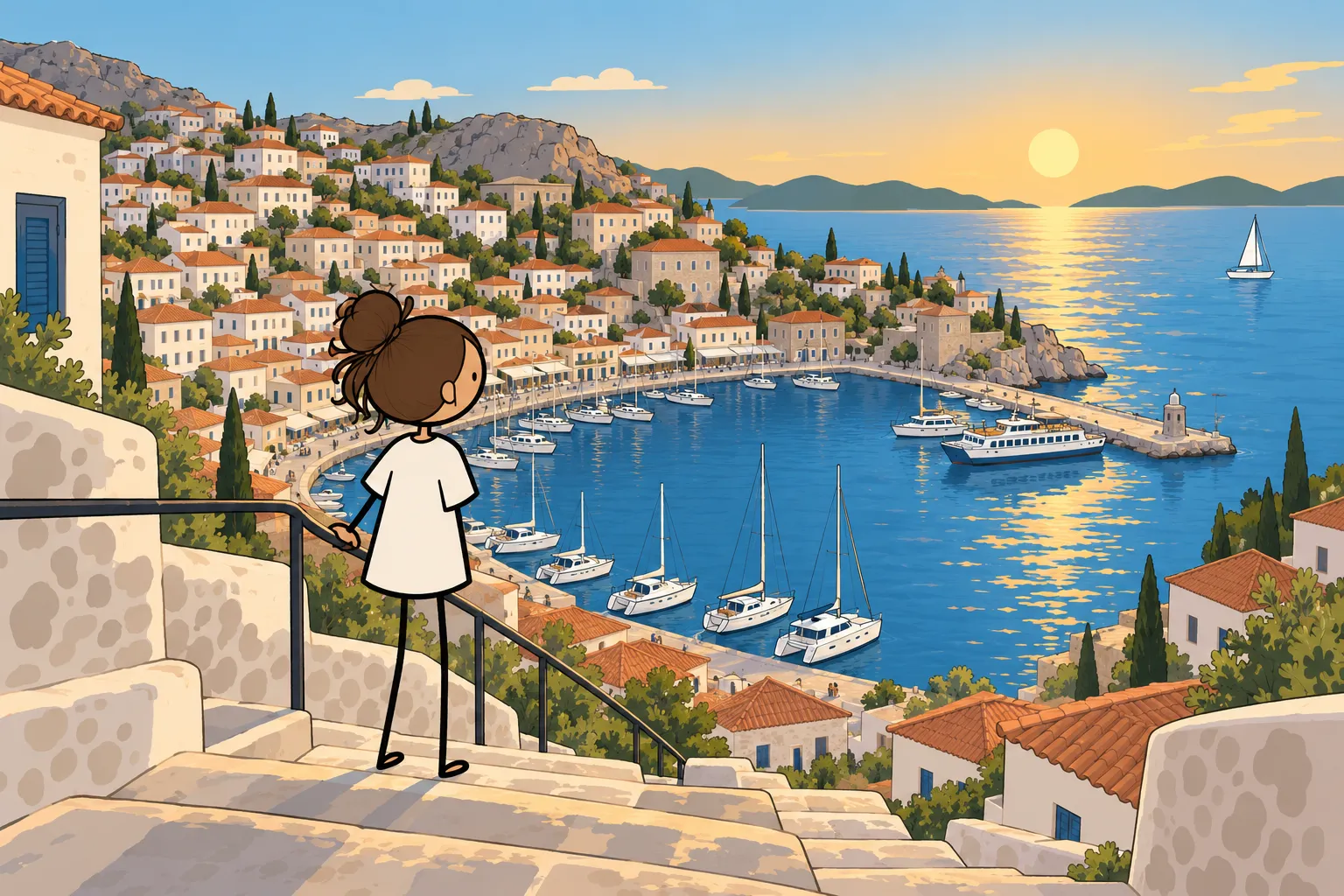
Hydra is the island sailors tend to remember. A bare limestone ridge, a horseshoe harbour with white and stone houses climbing up the slopes around it, and a past as one of the wealthiest shipping islands of the Greek revolution. It is one of the most popular charter areas in Greece, and the harbour shows it.
Hydra is on our Saronic Gulf route. Here is where boats moor, where to swim, what to see and how the wind behaves.
Where do boats moor at Hydra?
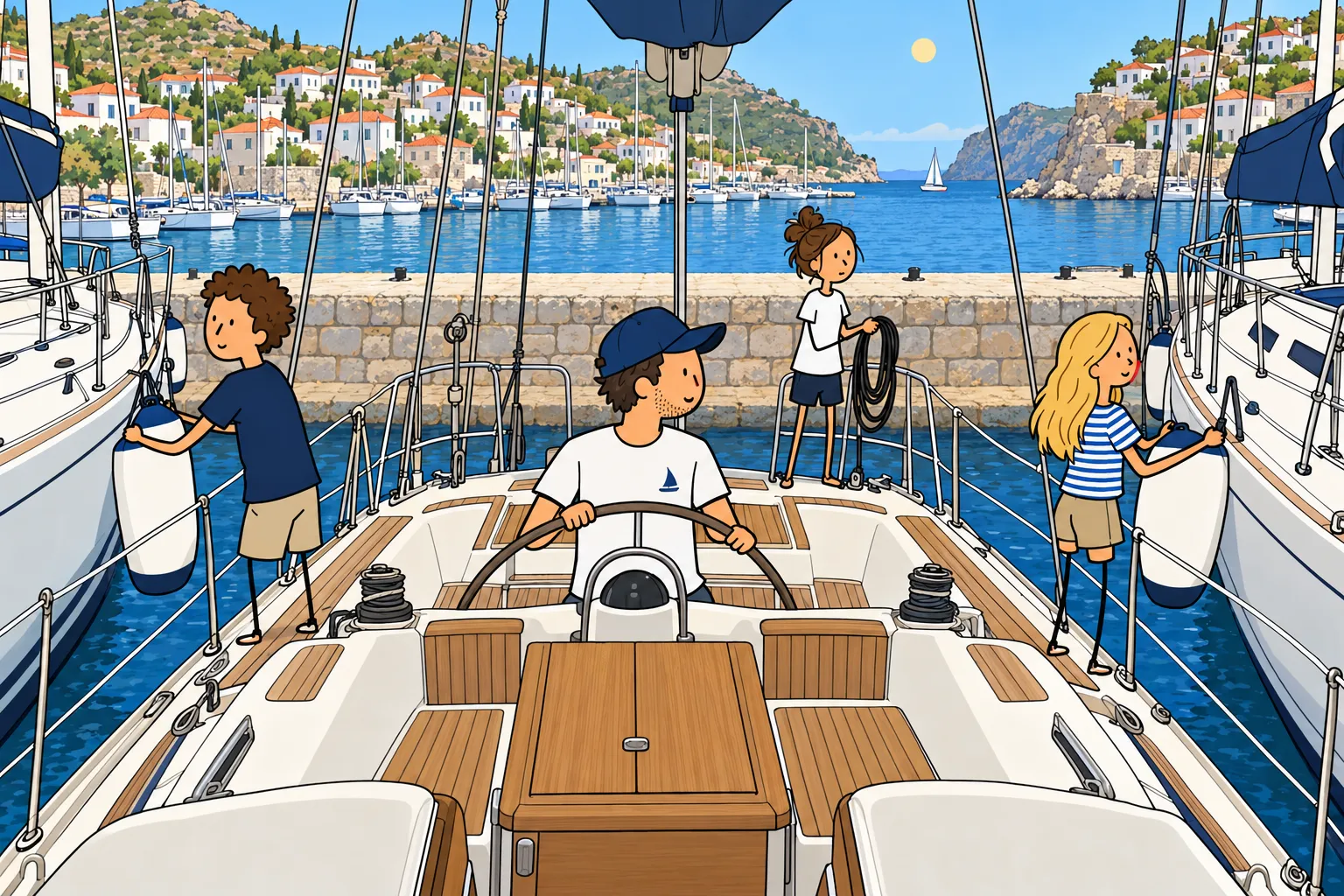
Hydra port
The little town (about 2,500 people) rises up the hills around a sheltered harbour on the north coast. In summer it is a tight squeeze: about ten ferries a day plus the odd cruise ship, and yachts and catamarans moor stern-to in double and triple rows. Anchors often tangle with other boats' chains, and holding is poor in places. A skipper who knows the harbour makes this far easier than it sounds. Guests may be asked to help with the lines, which is basic and explained at the start of the week.
Kameni, a short walk away
A small fishing harbour along the shore to the west, within walking distance of the port. In southerlies a boat can anchor outside the west pier and take a line to it, though ferry wash is annoying.
Molos and Bali, when the port is full
If the harbour is too cramped, the bay of Molos is an excellent alternative even in most northerlies (in strong north-north-westerlies, Bali is the better choice). For how harbours, quays and bays differ, see our guide to where to spend the night.
What are the best bays to anchor and swim?
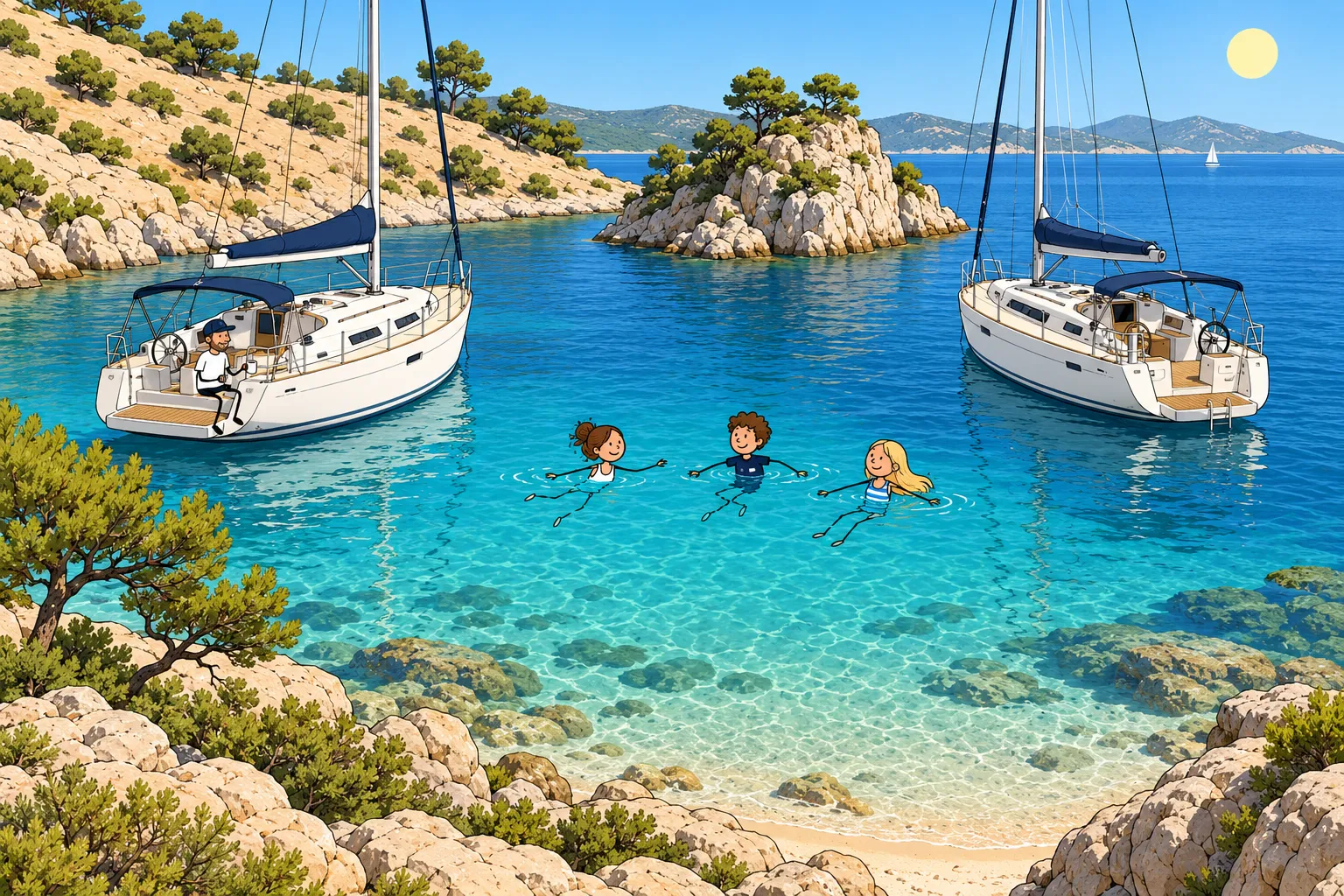
- Bali: a tiny cove hidden behind the islet of Petasi, on the north-west of the island, with all-round shelter, a sandy bottom and room for two or three boats. It is secluded and has no beachgoers, but a swell can come in with north-east and south-west winds.
- Agios Georgios: the most popular bay, with the most greenery: forest down to the shore, a beach and a buoyed swimming area. Expect other yachts, and solid holding in sand.
- Molos: pebble beach and pine trees. The approach from the west is tricky, with islets and reefs.
- Kavouri (Bisti): a cove on the west tip with pines and snorkelling near the reef, exposed to the north and east.
- Agios Nikolaos: a bay on the south-west tip with glorious sunsets, with a chain of islets guarding the anchorage.
- Limioniza: a deserted south-coast bay with a beach called Klimaki. Strong north-easterlies send violent gusts down the mountains along the south coast.
Close by, in the Hydra gulf, Soupia ("Lizard island") has two sandy coves with tamarisk shade, and Dokos has the sheltered bay of Skindos. Experienced skippers choose calm, sheltered bays, so the boat is usually still at anchor.
What is there to see ashore?
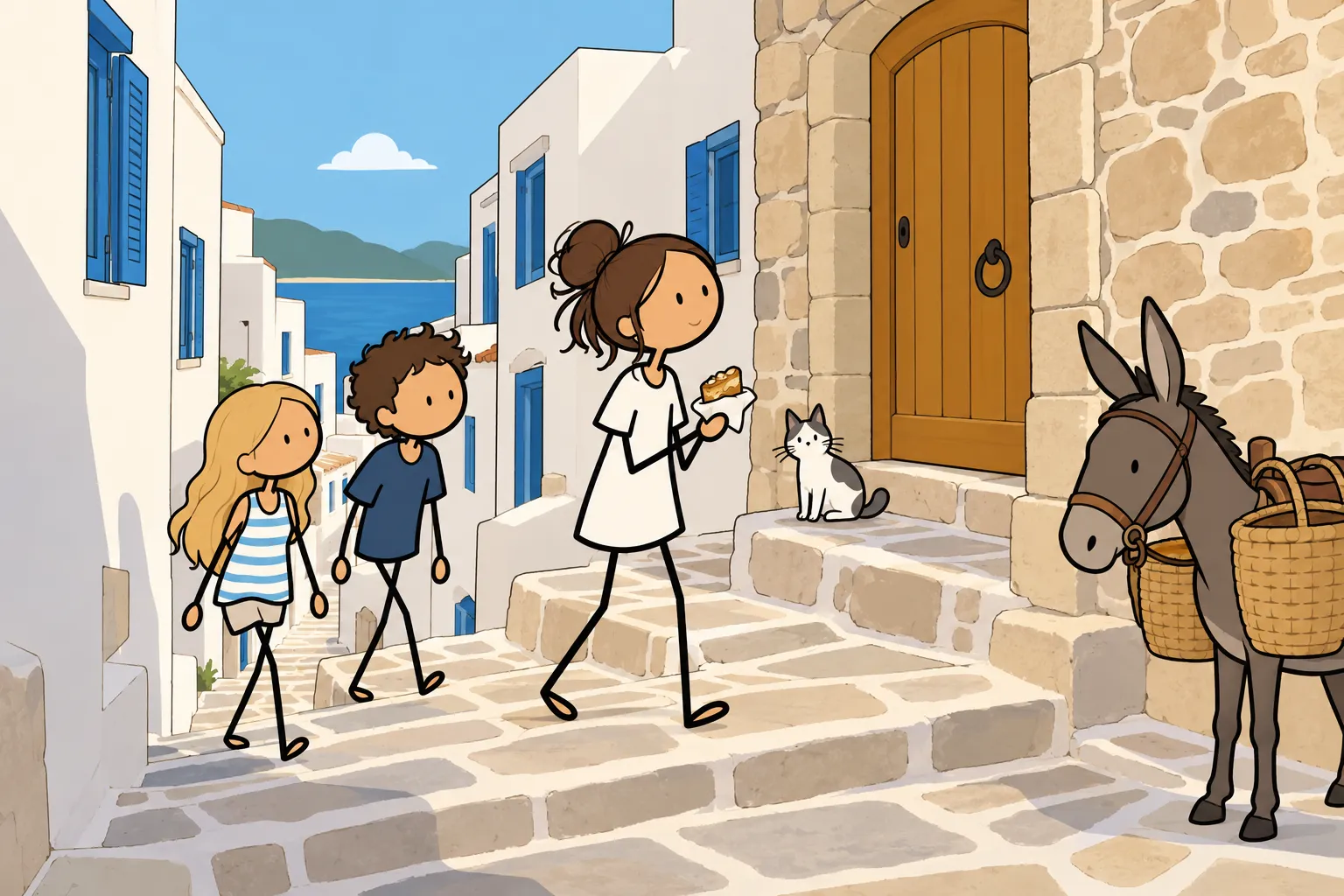
- The harbour and the town. Cycladic-style white houses on the hillside, no need for a plan: wander the lanes and climb up. The better tavernas are further up in town.
- The mansions. Imposing early 19th century houses of shipowners and merchants, including those of Admiral Iakovos Tombazis and Dimitrios Voulgaris. One now houses a merchant navy training school.
- The Panayia church. A 17th century conventual church on the quay with a cloister and a collection of art.
- The castle and the fortifications. Medieval castle ruins above the town and fortifications built during the War of Independence.
- Amygdalote. The local almond cake, worth trying, along with the craft goods the island sells: jewellery, pottery, embroidery.
Hydra grew wealthy through trade and shipping in the 18th century. During the War of Greek Independence, Hydriots converted their trading vessels into warships and met a large share of the cost of the war.
What are the wind and conditions like?
In summer the meltemi is the usual wind in this area. In the Saronic it blows force 4 to 6 at most, from the north-east, and it is less regular than in the Cyclades. Around Hydra, local effects matter: the south coast gets gusts down the mountains in strong north-easterlies, and the ferries' wash in the harbour can be uncomfortable. The skipper chooses the day's stops around the weather. If the weather turns, the plan changes or the boat waits in a safe harbour.
How does Hydra fit into a Luff week?
Hydra is often the far point of a Saronic week, with short hops from Poros through the Hydra gulf. The harbour is atmospheric but busy, so the skipper may plan an evening in town and a quieter swim stop on the same day. The skipper proposes the route and puts it together around the weather and the guests' wishes. For neighbouring stops, read about sailing Poros and Spetses.