Can a sailboat capsize - an honest look at heeling, keels and catamarans
Why a sailboat heels but does not tip over, how stable a catamaran really is, what CE design categories mean and how the skipper sails around the forecast.
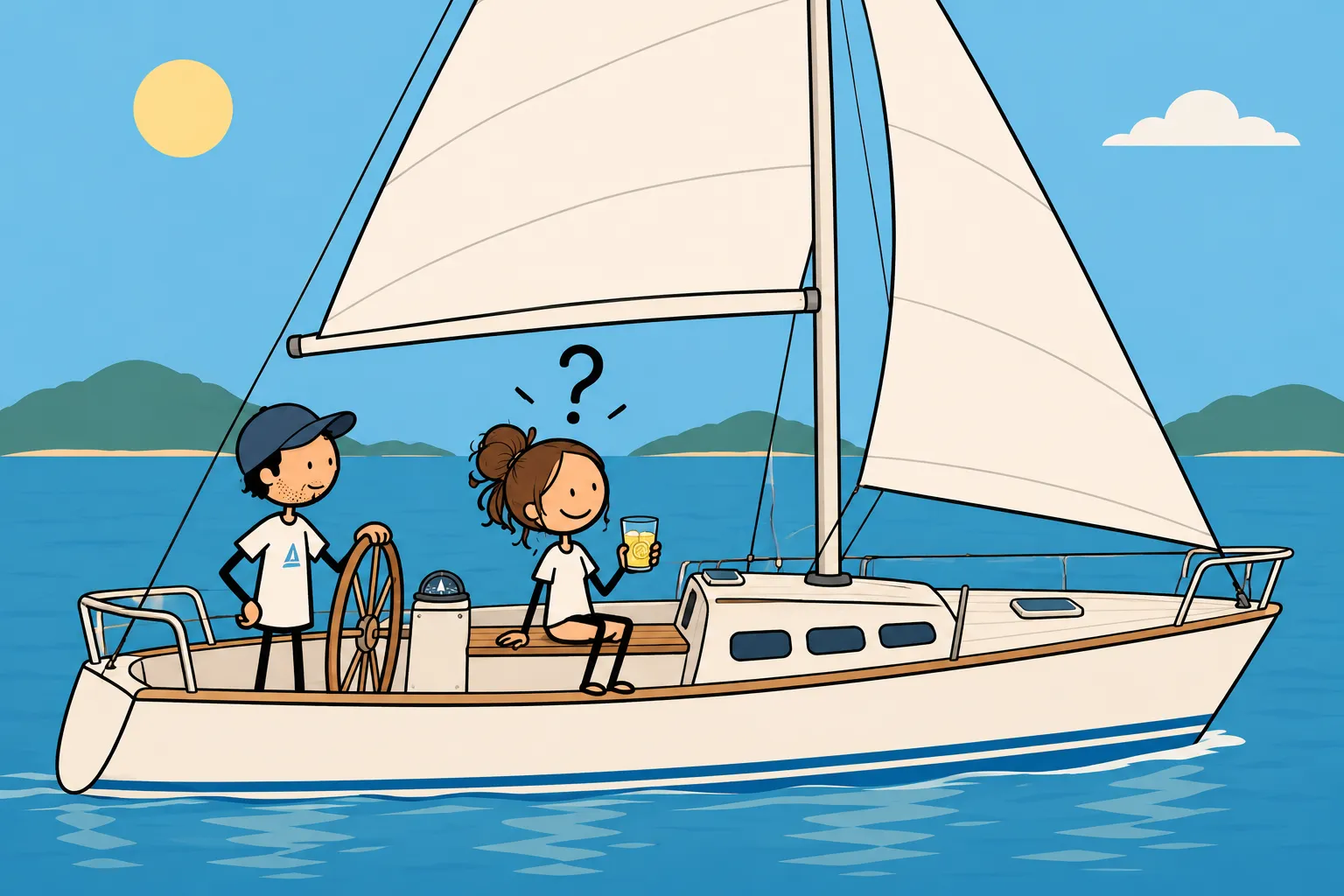
Can a sailboat capsize? Many people ask it after seeing their first photo of a sailboat leaning hard under sail. The question also comes up when a group is choosing between a sailboat and a catamaran, because one of the two seems "safer".
The short answer: a cruising sailboat heels under sail, but its heavy keel brings it back upright, so capsizing is extremely unlikely. A catamaran sails flat and is very stable, and capsizes are extremely rare and tied to extreme conditions. Below we explain why, honestly and without scaremongering.
Why does a sailboat heel, and is it dangerous?
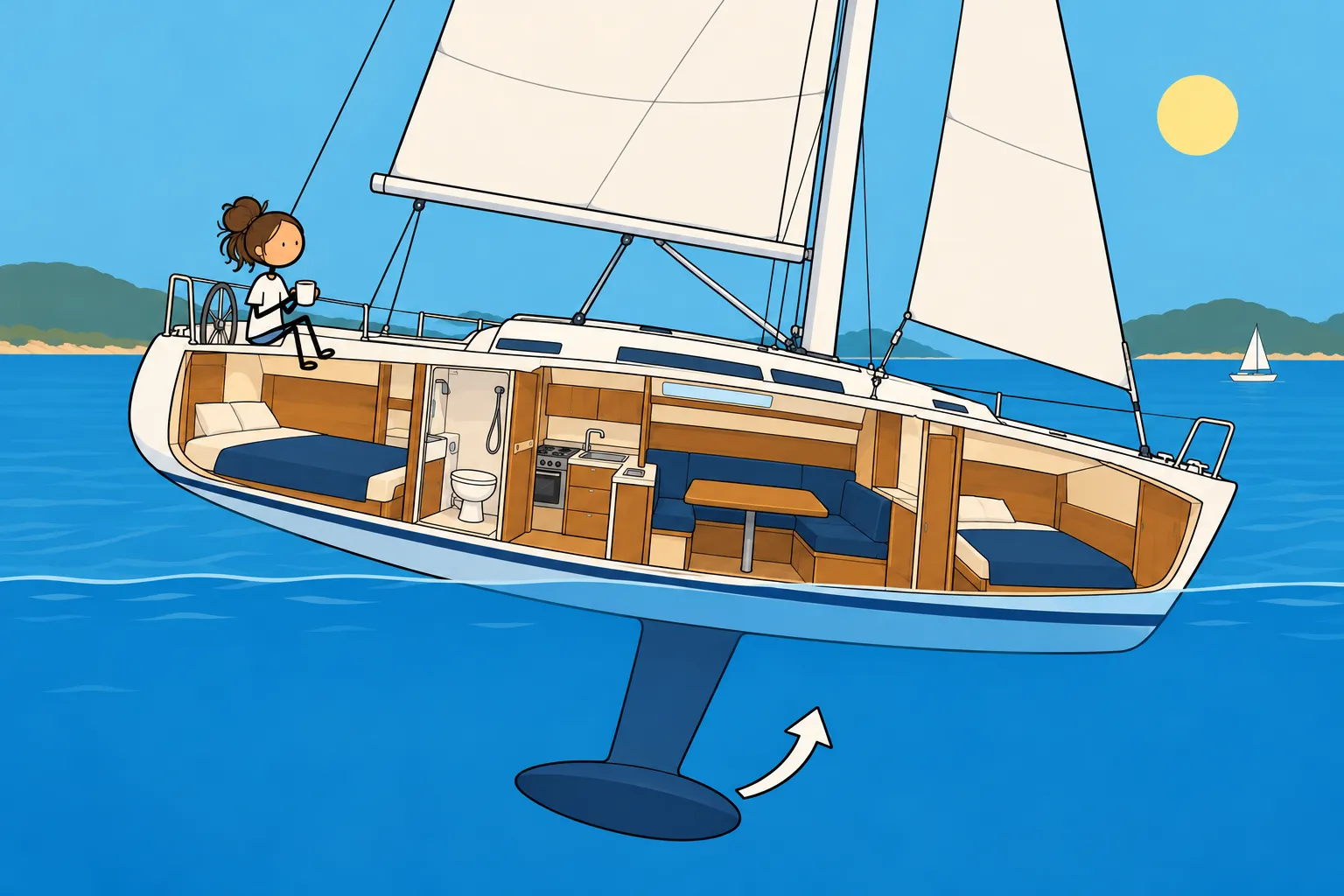
Heeling is a normal part of sailing, not a sign that something is wrong. The wind pushes on the sails and the boat leans to one side, up to about twenty degrees in a stronger breeze. A sailboat is built to do exactly that, and for many sailors that moment, when the boat picks up speed and leans over, is the best part of the day.
What keeps a sailboat upright is the keel: a heavy fin under the hull, with ballast of lead or iron. Upright, the keel hangs straight down. As the boat heels, it swings out to the side and pulls the boat back harder and harder, like a weight on the end of a lever.
Something else happens at the same time: the further the boat heels, the less the wind presses on the sails. The force tipping the boat drops while the force righting it grows. That's why a sailboat leans in a gust, loses some power and comes back up.
What if the heeling makes you uncomfortable?
Tell the skipper. They can ease the sails so the boat straightens right away, or reduce the sail area (this is called reefing) so the sailboat sails more upright and more calmly. While the boat is heeling, the most comfortable place is the high side of the cockpit, and it's worth holding a handrail whenever you stand up.
Which sailboats actually capsize?
The picture of a sailboat tipping over usually comes from small sailboats without a keel, the dinghies people learn on and race in regattas. They have no ballast under the hull, so the crew fights the heel themselves by leaning out over the side. On a dinghy, capsizing is part of sailing: sooner or later it happens to everyone who sails one.
The sailboats you charter for a week at sea are something else entirely. They're cruising sailboats with a heavy keel, and with them a capsize is very, very unlikely.
To be fully honest: in a real storm on the open sea, with big breaking waves, a wave can knock even a keelboat onto its side. Even then, the keel usually brings it back upright. But those are the conditions of an offshore storm, not of a summer holiday among the islands.
Can a catamaran capsize?
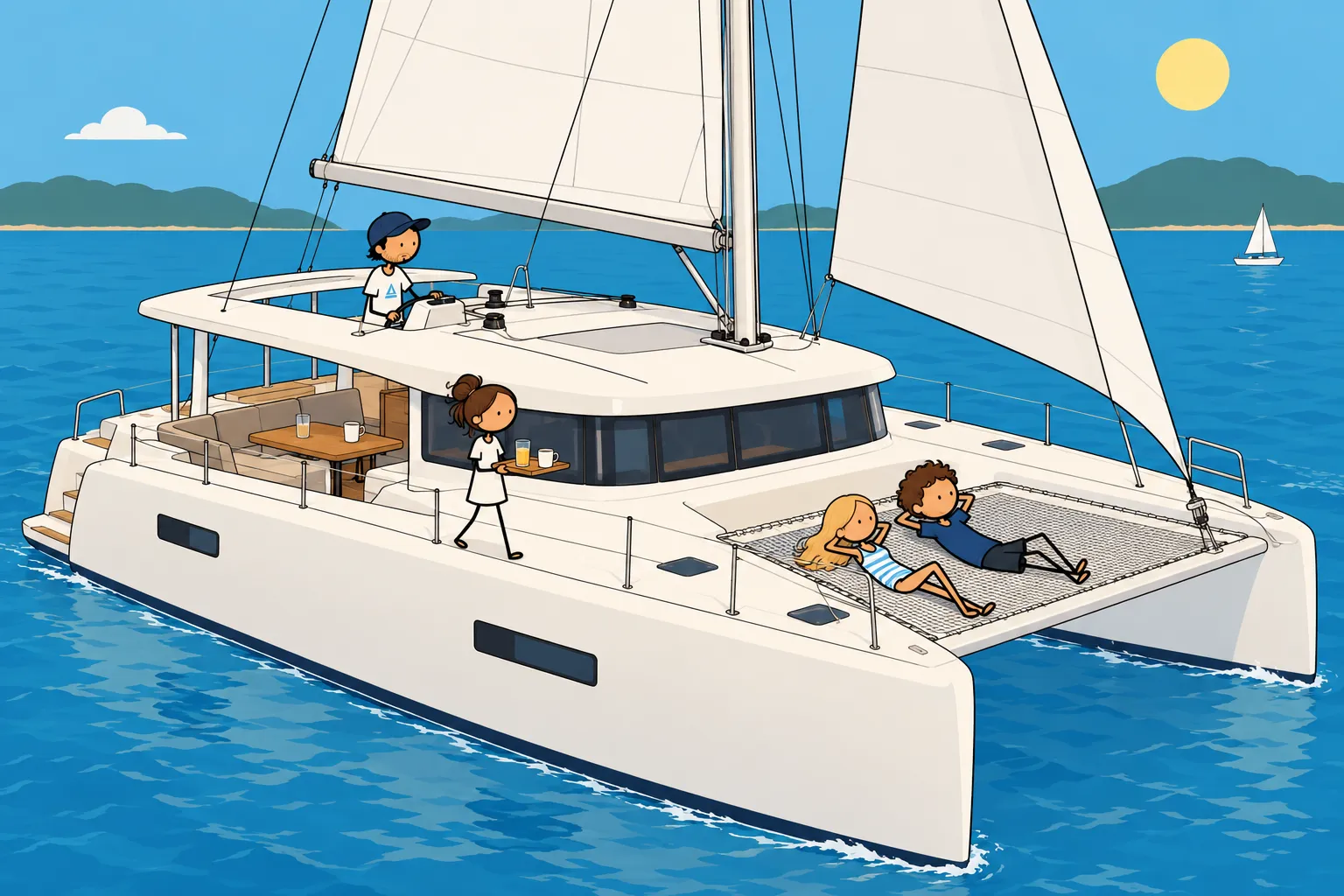
A catamaran is stable in a different way. It has no heavy keel, just two hulls set several metres apart, so its width alone holds it steady. A Lagoon 42, for example, is 7.68 m wide and weighs about 12 tonnes empty. That's why a catamaran sails flat: no heeling, your glass stays on the table, and walking around is easy even while you sail.
Capsizing a cruising catamaran is extremely rare. Lagoon, one of the best-known catamaran builders, told the German magazine YACHT it estimates that only a handful of the roughly 6,400 boats it has built have capsized. The British magazine Yachting World writes that capsize is very unlikely in most modern catamarans, and that wide, comfortable catamarans built like floating homes are less at risk than fast, sporty designs.
When a capsize does happen, the story is usually the same: too much sail in a strong gust or in big waves, often on a lighter boat or when the boat is handled wrongly.
A catamaran does have one drawback compared with a sailboat. Because it doesn't heel, it gives no warning when it's carrying too much sail, and if it ever did capsize it would stay upside down, with no keel to bring it back. That's why a catamaran is sailed by the numbers: the sails are reduced early, according to the wind strength and the builder's reefing table. Experienced skippers reef a catamaran in good time.
What do CE design categories A, B, C and D mean?
Every new recreational boat sold in the European Union gets a design category, known as its CE category. It states the wind and waves the boat's stability and buoyancy were designed for. The stability of sailboats and catamarans is assessed under the international standard ISO 12217, which places a boat in one of four categories based on its design and maximum load:
- Category A: wind above force 8, significant wave height above 4 m
- Category B: wind up to force 8, significant wave height up to 4 m
- Category C: wind up to force 6, significant wave height up to 2 m
- Category D: wind up to force 4, significant wave height up to 0.3 m
Force 8 is a gale, 34 to 40 knots (about 63 to 74 km/h). Significant wave height is the average height of the highest third of the waves. Category A covers stronger wind and bigger waves than that, but even it excludes extreme conditions such as hurricanes or rogue waves.
The category appears in a boat's specifications, together with the maximum number of people for it. The Lagoon 42 catamaran, for example, is rated A12 / B14 / C20 / D30: in category A it's designed for up to 12 people, and in category B for up to 14.
What are summer conditions like where we sail?
Our Greek routes on this blog cover the Ionian Sea from Lefkada or Preveza, the Saronic Gulf near Athens and the Sporades from Volos marina.
- The Ionian Sea. From late May to the end of September the maistro blows here, a north-westerly that usually arrives in the early afternoon at force 3 to 6 and dies down in the evening. The meltemi is much weaker here than in the Aegean, which makes the Ionian Sea the perfect choice for a first sailing week.
- The Aegean: the Saronic Gulf and the Sporades. In summer the meltemi blows here. It usually builds to force 4 or 5 in the early afternoon and dies down by sunset, but it can reach force 5 to 7 and keep blowing for several days in a row. The Saronic Gulf is more sheltered from it: along the mainland coast the meltemi reaches force 4 to 6 at most and blows less regularly than around the Cyclades.
The meltemi's strength also depends on the month, so for the Aegean it's worth knowing when to sail in Greece: it's strongest in July and August, while in June and September it blows at full strength less often.
Compare that with the categories above: even a category B boat is designed for winds up to force 8 and waves up to 4 m. An ordinary summer day is far below that, and the windy days have a clear plan.
How does the skipper plan around the weather forecast?
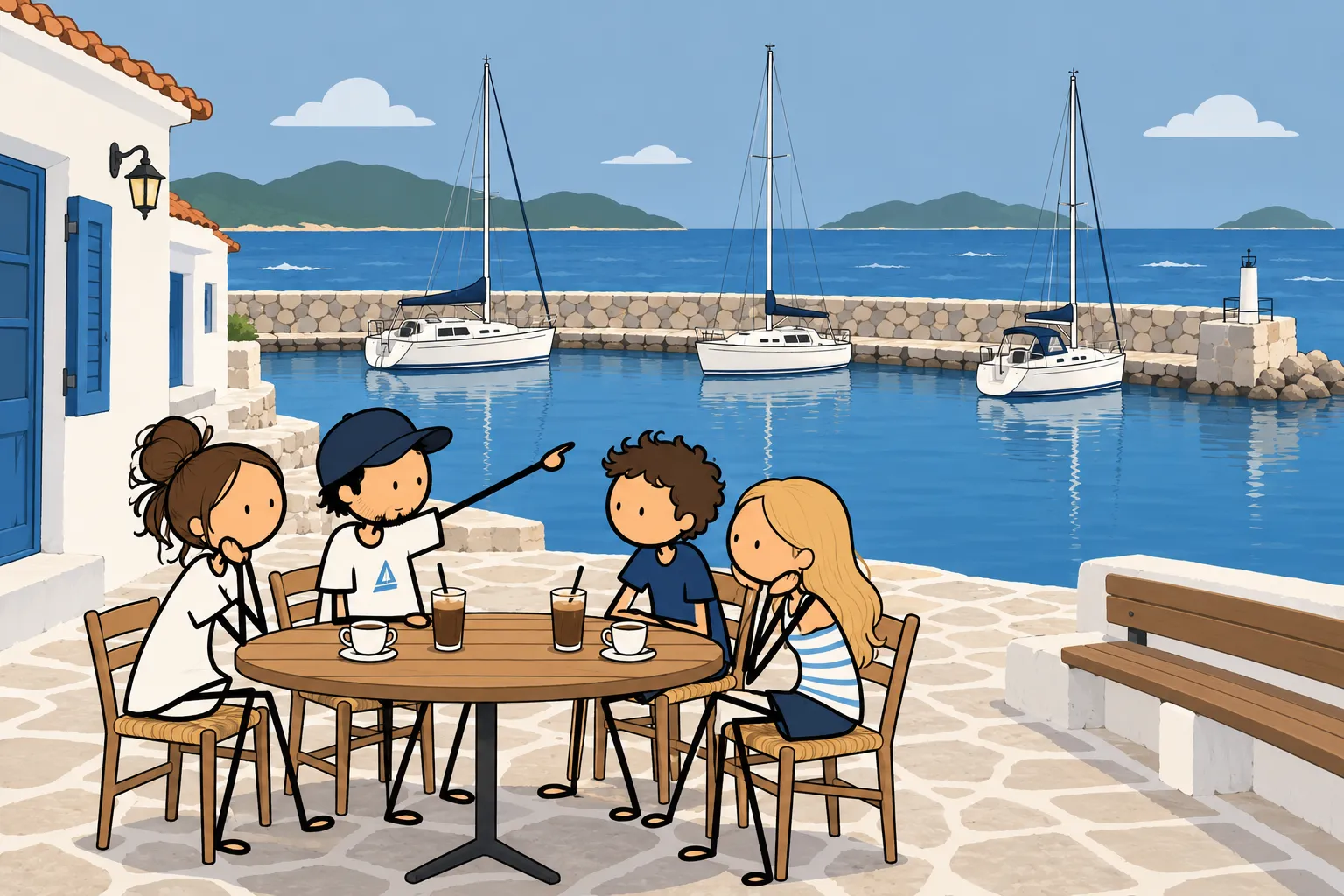
The most important thing isn't the boat itself, it's deciding when and where to sail. The skipper is an experienced, licensed professional who lives on board with you all week and follows the weather forecast. The skipper proposes the route and puts it together around the weather conditions and the guests' wishes.
In practice it looks like this:
- A fine day with good wind: you sail, and the coves for swimming and the night are chosen according to the wind direction. Experienced skippers pick calm, sheltered bays for the night.
- A windy day: an earlier start in the morning, before the wind picks up, a shorter passage, or less sail set in good time.
- Bad weather: the plan changes, or the boat waits in a safe harbour until the weather settles.
None of this needs experience from you. The skipper handles the boat, and in some harbours guests help with the lines when mooring: passing or throwing a line, tying it to a cleat, setting the fenders. It's basic, and the skipper explains it at the start of every sailing week. The other basic rules of sailing safety, from life jackets to moving around the deck under way, are simple and apply on every boat.
Frequently asked questions
1How much does a sailboat heel while sailing?
2Is a catamaran safer than a sailboat?
3Do you sail when the wind is strong?
4Do I need experience to be safe on board?
5Where can I find a boat's CE category?
Your week
Want a week at sea without the worry?
Tell us how many of you there are, when you'd like to sail and whether you lean towards a sailboat or a catamaran, and we'll suggest boats that suit you.