Best time to sail in Greece - month by month, from May to October
Sea and air temperatures, the meltemi wind, crowds and prices for every month from May to October, plus which Greek route suits which month.
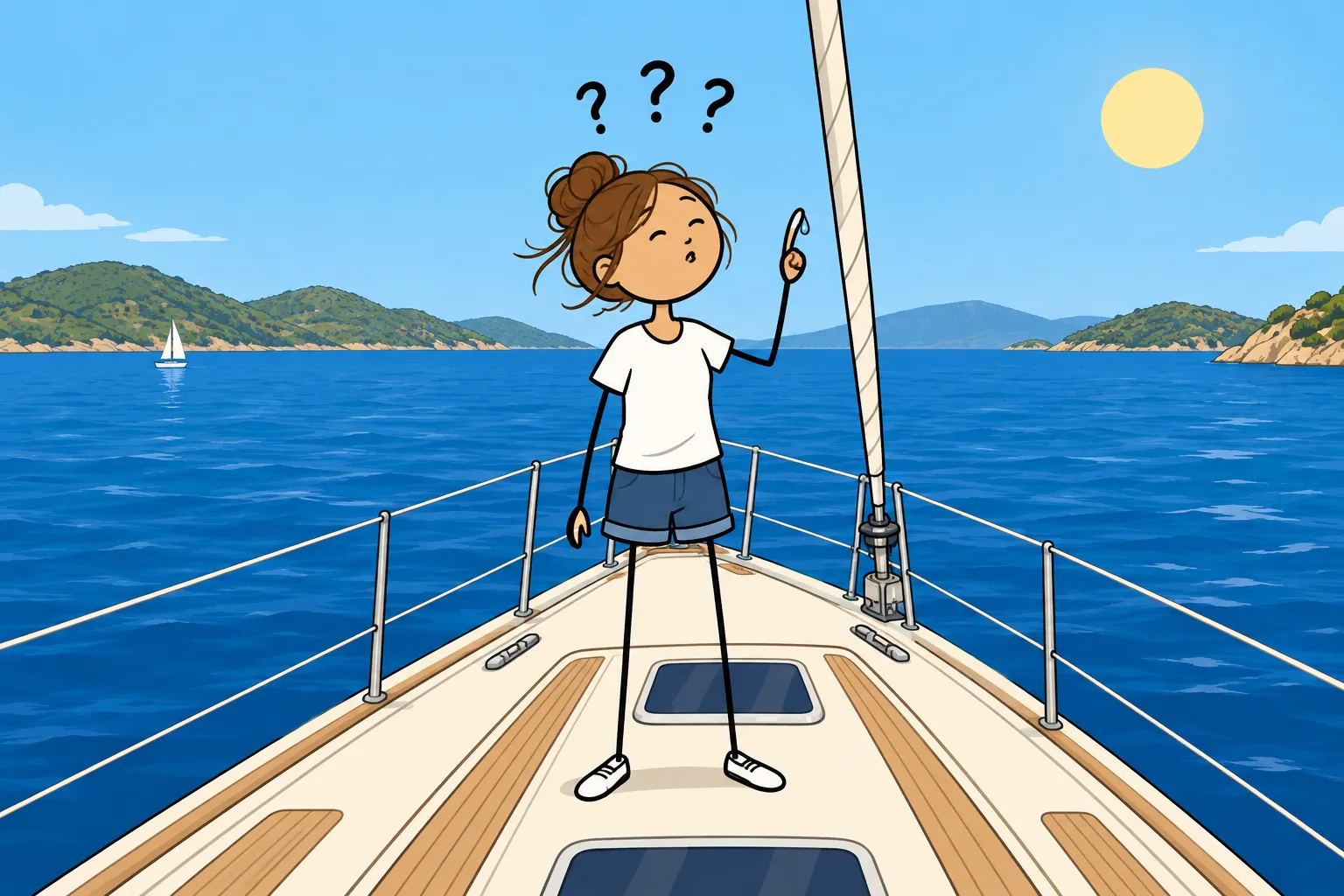
The month you pick decides a lot about your sailing week: how warm the sea is, how much wind there is, how busy the harbours are and, to a degree, what you pay. The good news is that there's no bad month between May and October, only different ones.
The short version: June and September are the best all-round months, with a warm sea, long sunny days and fewer people than in high summer. July and August are the hottest and liveliest, and also the busiest. May and October are the quietest and usually the most affordable, with fresher water.
Below we go month by month, explain the meltemi wind in plain words, and match each month to our routes: the Ionian Sea from Lefkada or Preveza, the Saronic Gulf near Athens and the Sporades from Volos.
Sailing in Greece month by month
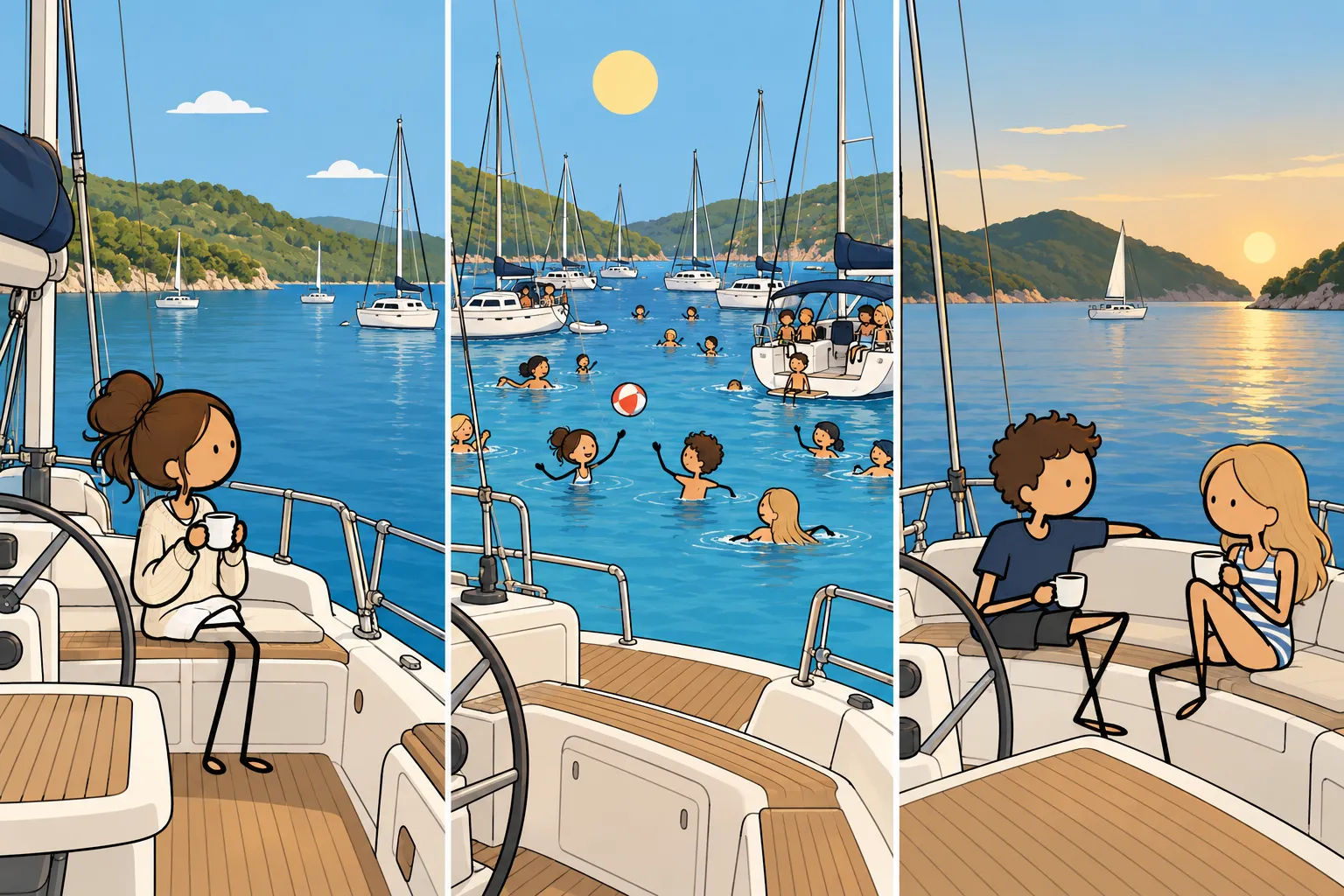
The figures below are long-term averages for the areas we sail. Any single week can be a little warmer, cooler or windier.
- May: sea 18-19°C, daytime air 23-25°C, meltemi only now and then. Quiet, usually the lowest prices.
- June: sea 21-22°C, daytime air 27-30°C, meltemi starts in the Aegean. Getting livelier, mid-range.
- July: sea 23-25°C, daytime air 29-33°C, meltemi at its strongest in the Aegean. High season, busy.
- August: sea 24-26°C, daytime air 29-33°C, meltemi at its strongest in the Aegean. Busiest, usually the priciest.
- September: sea 23-25°C, daytime air 26-29°C, meltemi easing. Calmer, mid-range.
- October: sea 20-22°C, daytime air 21-24°C, meltemi only now and then, more changeable weather. Quiet, usually the lowest prices.
May
The season starts. The sea is still fresh at around 18 to 19°C, refreshing rather than warm: great for a quick swim on a sunny afternoon, a bit cool for long ones. Days are pleasant at 23 to 25°C, nights cool down to around 12 to 18°C, and the odd shower is possible. The meltemi blows only now and then. Harbours and bays are at their quietest of the year, and prices are usually at their lowest.
May suits anyone who prefers quiet bays and walks through island villages to long hours in the water. Add something warm for the evenings to your packing list.
June
The days are the longest of the year, the sea has warmed to about 21 to 22°C and daytime temperatures reach 27 to 30°C. Rain is rare. In the Aegean the meltemi starts to appear, usually not yet at full strength. In the Ionian, a steady afternoon breeze called the maistro settles in from late May. Harbours get livelier as the month goes on but stay relaxed compared with July and August, and prices sit in the middle.
June suits first-timers, couples and groups of friends who want warm water and real summer without the high-season crowds. Together with September, it's the best all-round month.
July
Full summer. The sea is 23 to 25°C, days reach 29 to 33°C and it hardly ever rains. In the Aegean, July and August are when the meltemi is at its strongest, which also makes the hottest days easier to bear on the water. The Ionian keeps its gentler afternoon maistro. Schools are out across Europe, harbours and beaches are busy, and it's high season, with prices to match.
July suits families and anyone whose holiday has to fall in the summer. For the gentlest conditions, choose the Ionian or the Saronic, and book early.
August
The warmest sea of the year, around 24 to 26°C, and days of 29 to 33°C. It's the busiest month and usually the most expensive. On 15 August Greece celebrates the Dormition of the Virgin Mary, a public holiday and one of the most important church feasts of the year. The meltemi is at its peak, as in July.
August suits anyone who wants the warmest water and the liveliest atmosphere. Book as early as you can, and in the Aegean expect a few windy days that the skipper plans the route around.
September
September brings the best balance of the season. After August, the sea is at its warmest, about 23 to 25°C, and warmer than in June, because it has soaked up the whole summer. Days are a more comfortable 26 to 29°C. The meltemi can still blow on some days, usually less often and less strongly than in August. Once schools are back, harbours calm down and prices return to the middle of the range.
September suits couples, groups of friends and anyone with flexible holidays who wants warm water without the crowds.
October
The quiet end of the season. The sea is still around 20 to 22°C, warmer than in May, and days of 21 to 24°C are pleasant for walks ashore. Days are shorter (about 6 to 7 hours of sunshine a day, against 12 to 13 in July), evenings are cool, and rain is more likely: 6 to 10 days with some rain in the month, more in the Ionian than around Athens. The weather is more changeable, and the skipper plans the route around it. Together with May, it's usually the most affordable month.
October suits flexible travellers on a budget who value quiet harbours over guaranteed beach weather.
What is the meltemi, and should it worry you?
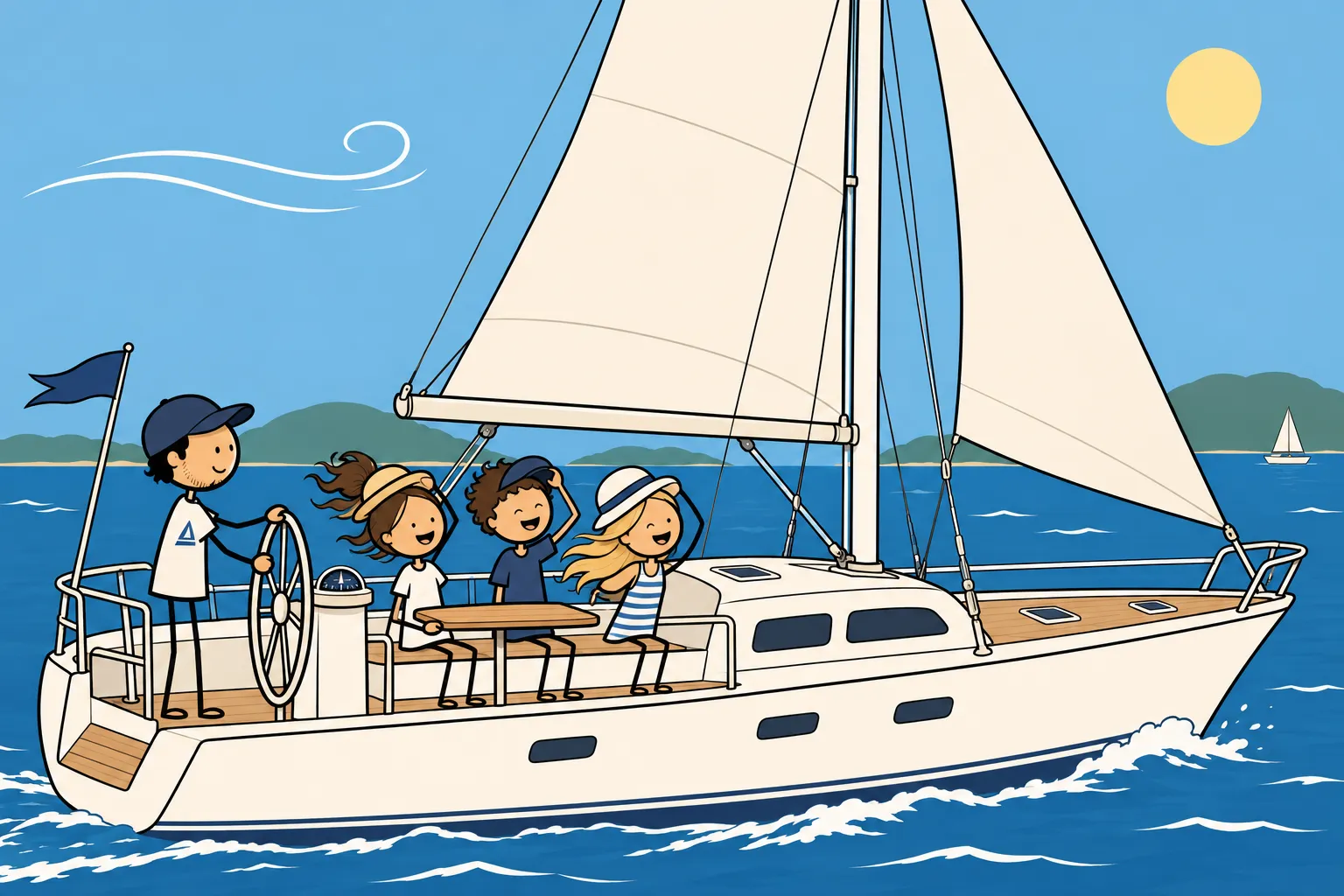
The meltemi is the summer north wind of the Aegean, the sea between mainland Greece and Turkey. The ancient Greeks already knew it as the etesian wind. It forms when high pressure sits over the Balkans and low pressure over Turkey, and the air flows from one to the other, north to south, across the Aegean.
- When: mostly June to September, at its strongest and longest in July and August. It also shows up now and then in May and October.
- A typical day: it rises in the early afternoon to a good sailing breeze of about 11 to 21 knots (roughly 20 to 40 km/h) and dies down around sunset.
- Stronger spells: on some days it blows harder, keeps going through the night and can last several days in a row.
- The good side: it cools the hottest days, dries the air, and brings clear skies and long views.
- Where it's strongest: in the open sea around the Cyclades. The areas we sail are more sheltered from it, as the next section explains.
What it means for your week: the skipper lives on board with you, follows the forecast every day, and proposes the route and puts it together around the weather conditions and your wishes. On a windy day that can mean setting off in the morning before the wind builds, anchoring on the sheltered side of an island, or a shorter hop and an afternoon in a harbour town. If you're prone to seasickness, the Ionian in summer is the gentlest place to start.
Which route suits which month?

Ionian Sea from Lefkada or Preveza
The Ionian is on the west side of mainland Greece, and the meltemi is much weaker there, if it arrives at all. Its summer wind is the maistro: from late May to the end of September, a northwesterly breeze rises in the early afternoon and dies down in the evening. That means calm mornings for swimming, a steady breeze for the afternoon sail and quiet evenings, with short distances between islands. It's the perfect choice for first-timers and the calmest option for July and August. In October it gets a few more rainy days than the Aegean side.
Saronic Gulf near Athens
The Saronic Gulf is enclosed by Attica and the Peloponnese, so it's sheltered from the open Aegean. The meltemi does reach it, but less regularly and with less force than in the Cyclades, and it's lighter still around Poros and Methana. Being close to Athens, it's easy to get to for a week and works well in every month from May to October. In July and August, it's the calm way to sail the Aegean.
Sporades from Volos
The Sporades in the northwest Aegean do get the meltemi, but a much weaker one than further south: in summer it averages around force 3 to 4 (a gentle to moderate breeze, 7 to 16 knots), where the southern Aegean averages force 5 to 6 (17 to 27 knots). It blows mostly from the north and northeast. With beautiful beaches and plenty of secluded anchorages, the Sporades work all season, and in high summer they're a gentler way to sail the Aegean.
When is sailing in Greece cheapest, and when should you book?
The cost of sailing in Greece usually follows the season: July and August are the busiest weeks and the priciest, June and September sit in the middle, and May and October are the most affordable.
Every sailing week runs Saturday to Saturday, because charter companies rent boats by the week, so plan around a Saturday. The earlier you book, the more boats and dates you can choose from, especially for July and August. That's the idea behind First Minute 2027 in our yacht catalogue: first to book, first to choose. Deciding late can still work, with fewer boats and dates left to choose from.
Frequently asked questions
1What is the best month to sail in Greece?
2When is the sea warmest in Greece?
3Is the meltemi dangerous?
4Can you go sailing in Greece in October?
5Is it cheaper to sail in May or October?
Your week
Not sure which month is right for you?
Tell us when you can travel and who's coming, and we'll help you match the month and the route. Send us an inquiry and we'll get back to you.