Sailing safety - what to know before you set sail
Safety gear, the first-day briefing, weather, moving on deck, swimming, the dinghy, sun and alcohol. What to know for a carefree week at sea.
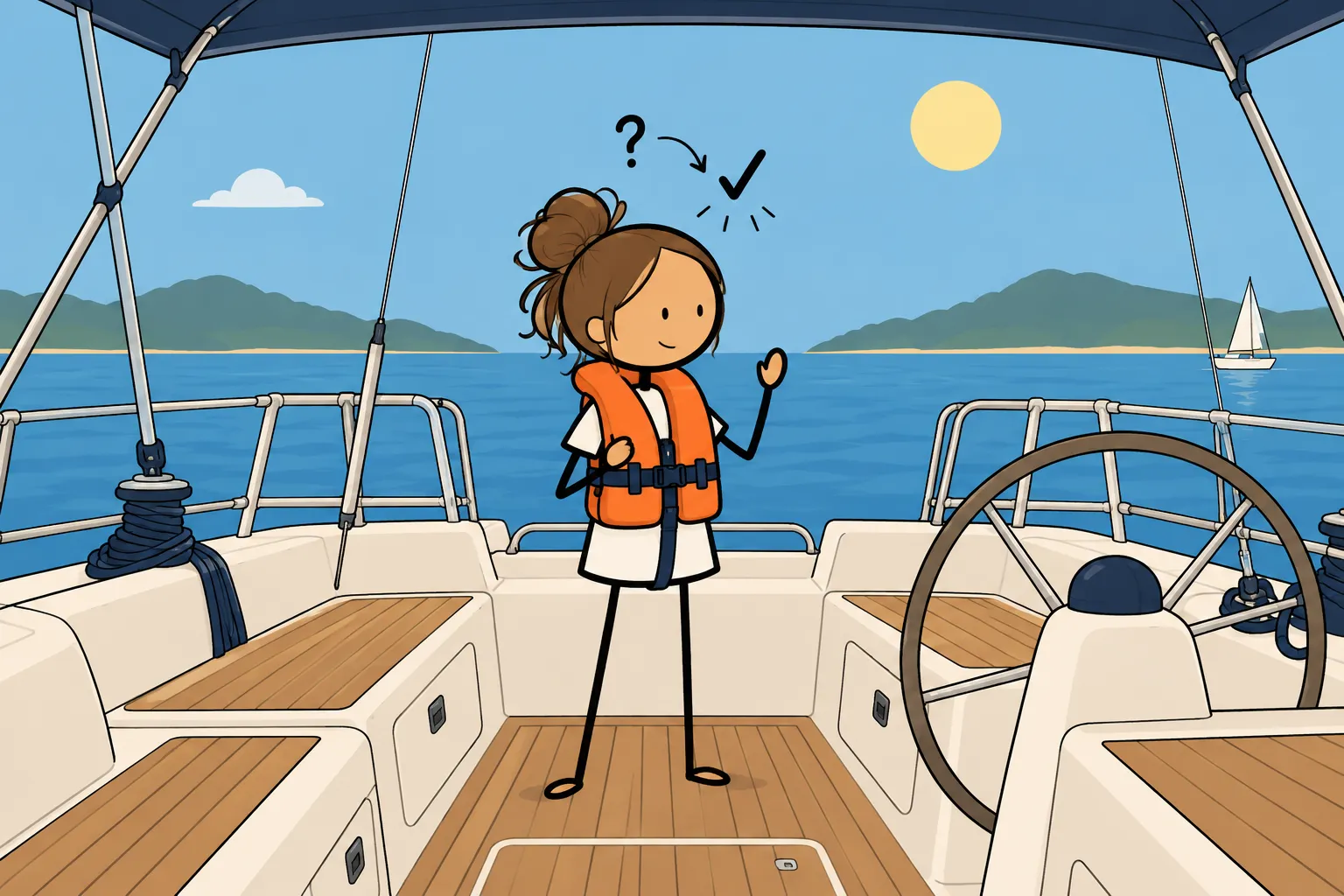
Is sailing safe? It's one of the first questions people ask before their first sailing week. It's a fair question: a boat, open water and wind sound like things you need to know a lot about.
The short answer: a summer week on a sailboat or catamaran, with an experienced, licensed skipper who lives on board with you, is a relaxed holiday, not a risky adventure. The skipper is responsible for the boat, watches the weather and knows the waters. What's left to you is a handful of simple habits: knowing where the gear is, moving carefully on deck, swimming sensibly and keeping out of the sun.
Many people also wonder at first whether a sailboat can capsize. Leaning over under sail is normal, and the heavy keel brings a sailboat back upright. Everything else follows, point by point.
What safety equipment is on board?
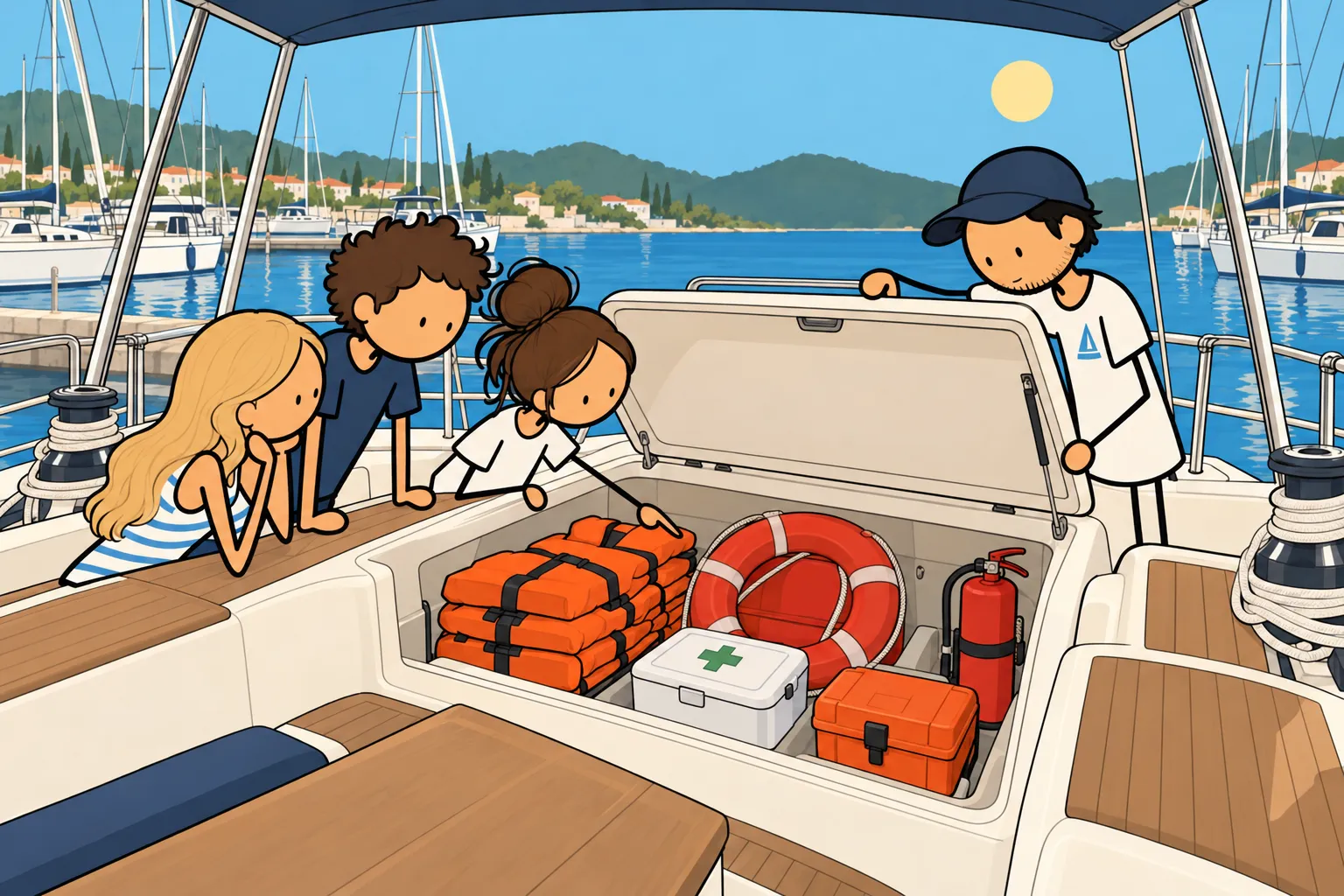
Every charter boat carries safety equipment, and exactly what it has to carry is set by the country the boat is registered in. On a typical sailboat or catamaran you'll find:
- Life jackets for everyone on board, stowed in one of the lockers. The skipper shows you where on the first day.
- A horseshoe lifebuoy with a light and a line, at the stern, ready to throw.
- A life raft, packed in a canister, which inflates in an emergency.
- Fire extinguishers and a first aid kit.
- Distress signals such as flares, and a horn.
- Safety harnesses with a short tether, for clipping on to the boat in rough seas or at night.
- A VHF radio, which the skipper uses to talk to harbours and the coast guard.
If you're sailing with kids, tell us when you inquire, because children's life jackets are available on request. A child should wear a life jacket in their own size, not an adult one.
What does the skipper explain at the start of the week?
Before you first set off, the skipper usually gathers everyone and goes through the essentials on board. It's short, practical and needs no prior knowledge:
- where the life jackets are and how to fit them properly, buckles and straps tight so they can't slip over your head
- where the lifebuoy, life raft, fire extinguishers and first aid kit are
- how to turn the gas in the galley on and off
- how to move on deck and what to hold on to while the boat is sailing
- what to do if someone falls overboard
- how guests help with the lines when mooring in some harbours: passing or throwing a line, tying it to a cleat, setting the fenders
This is also the right moment to tell the skipper anything they should know: that someone isn't a strong swimmer, has an allergy, asthma or a chronic condition, or takes regular medication. You don't have to share it with the whole group, as long as the skipper knows.
How does the skipper plan around the weather?
Weather is the biggest part of safety at sea, and it's the skipper's job. They check the forecast every day, and it decides where the boat goes. The skipper proposes the route and puts it together around the weather conditions and the guests' wishes.
In the Aegean, summer brings the meltemi, a northerly wind that is strongest in July and August. It usually picks up in the early afternoon and dies down by sunset, but it can also blow for several days in a row, day and night. That's why on those days skippers sometimes set off early in the morning, to cover a leg before the wind builds.
If the weather is bad, the plan changes or the boat waits in a safe harbour. A day in harbour isn't a lost day: you explore the island on foot and lunch moves to a taverna.
If calm water matters most to you, the Ionian has calmer seas and short legs, which makes it a great choice for a first time sailing in Greece.
How do you move safely on deck?

A few simple habits keep you from slipping and bumping into things:
- One hand for you, one for the boat. While the boat is sailing, always hold on to something: a grab rail, the guardrail or the mast.
- Move along the high side. When a sailboat leans over, walk along the side that's up, not the one closer to the water.
- Mind the boom. The beam along the bottom of the mainsail swings from one side to the other when the boat changes course. When the skipper calls a turn, keep your head down and stay seated.
- Don't step on lines. A rope rolls underfoot. Keep your fingers clear of winches and lines under load.
- Watch where you step. There are hatches on deck that open for ventilation, and a wet deck is slippery. Bare feet or shoes with soft, non-slip soles are safest.
- No hands or feet between the boat and the quay. When mooring, never push the boat off the quay or another boat with a hand or foot. That's what fenders are for.
In rough seas or at night, the skipper may ask you to wear a life jacket and clip on with a safety harness.
How do you swim safely from the boat?
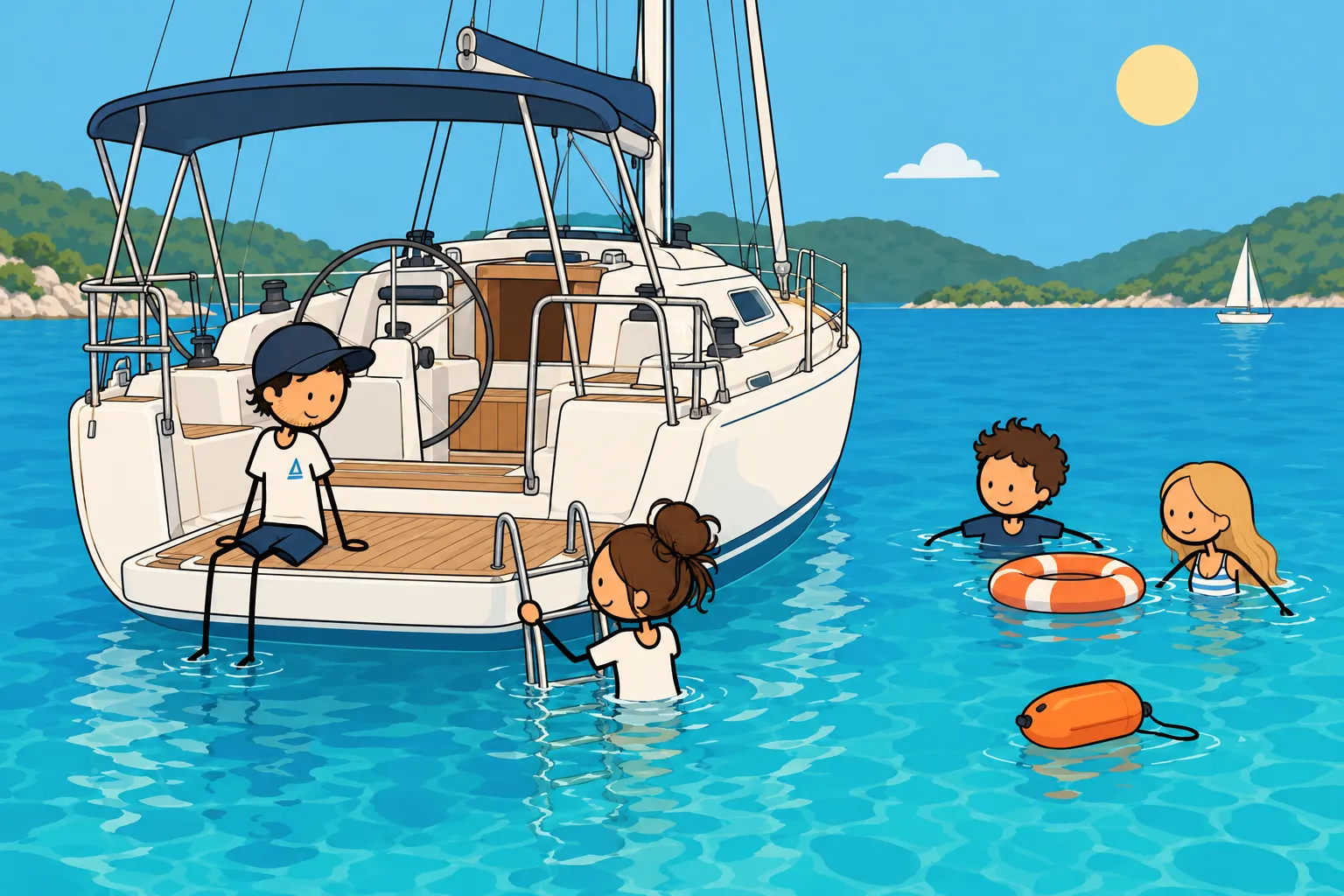
Swimming in a bay you can only reach by sea is many people's favourite part of the day. With a few rules it's completely carefree:
- Ladder first, then jump. Before anyone goes in, put the stern ladder down. Climbing back aboard from the water without it is much harder than it looks.
- The engine has to be off. While anyone is in the water near the boat, the engine stays off, because even a propeller turning at idle can cause serious injury.
- In the water only once the boat has stopped. The skipper knows the depth and what's under the boat, so ask where it's deep enough to jump.
- Stay close to the boat and tell someone on board you're going in, especially when it's windy or there are waves.
- Watch for dinghies. In busy bays, dinghies and other boats come and go all the time, and a swimmer in the water is hard to see. A bright swim cap or a tow float helps.
- Kids in the water only with supervision, and younger kids and weaker swimmers in a life jacket.
How do you use the dinghy safely?
The dinghy is a small inflatable boat with an outboard engine, used to get ashore from the anchorage. Agree with the skipper on who drives it.
- Get in carefully, one at a time, and sit down in the dinghy, with the weight spread evenly.
- Don't overload it. The dinghy usually shows how many people it can take, so it's better to make two trips.
- The kill cord. If the engine has a kill cord, whoever drives clips it around their leg, so the engine stops if they fall out.
- Slowly between boats and near swimmers.
- A light at night. A torch or your phone's light helps other boats see you, and keep your phone and documents in a waterproof pouch.
- The driver is someone who hasn't been drinking. Heading back to the boat after dinner at a taverna is when this rule matters most.
Sun, heat and alcohol: what should you watch for?
Sun and heat
Sun protection tops the list of what to pack for good reason: water and sand reflect UV radiation, so you're more exposed at sea than on land.
- Use a broad-spectrum sunscreen of SPF 30 or higher and reapply it every two hours. Sunscreen protects you, but it's not a reason to stay in the sun longer.
- The sun is strongest between 11am and 3pm. That's the time to be in the shade, for example under the canopy over the cockpit.
- Cover up with a broad-brimmed hat, wraparound sunglasses and a light long-sleeved top, and put sunscreen on whatever stays uncovered.
- Drink water throughout the day and keep a bottle within reach. A dry mouth, thirst, a headache and dizziness are signs you're dehydrated.
Alcohol on board
A glass of wine at anchor after a day at sea is part of the week. The problem is alcohol at the wrong moment: it impairs your coordination and your ability to think clearly, especially when something happens suddenly.
- while sailing and mooring, it's better to skip the drinks, because your help with the lines may be needed
- after drinking, don't jump off the boat or go for a swim, especially at night
- the dinghy is driven by someone who hasn't been drinking
Frequently asked questions
1Do I need to know how to swim?
2Do you have to wear a life jacket all the time?
3What should I do if someone falls overboard?
4What's the emergency number at sea in Greece?
5What happens if the weather is bad?
Your week
Any other questions before you set sail?
Tell us how many of you there are, when you'd like to sail and what worries you, and we'll suggest a boat and a destination that suit you.