What to pack for sailing - everything fits in one soft bag
A practical packing list for a week on a sailboat: why a soft bag, which clothes, shoes and chargers to bring, and what's already waiting on board.

Packing for a week on a sailboat is easier than packing for a hotel. You need less than you think, and one rule matters more than everything else on this list: bring a soft bag, not a hard suitcase.
This is the list we'd send a friend before their first sailing week: what to bring, what's already waiting on board so nobody packs it twice, and what's better left at home.
Why a soft bag and not a suitcase?
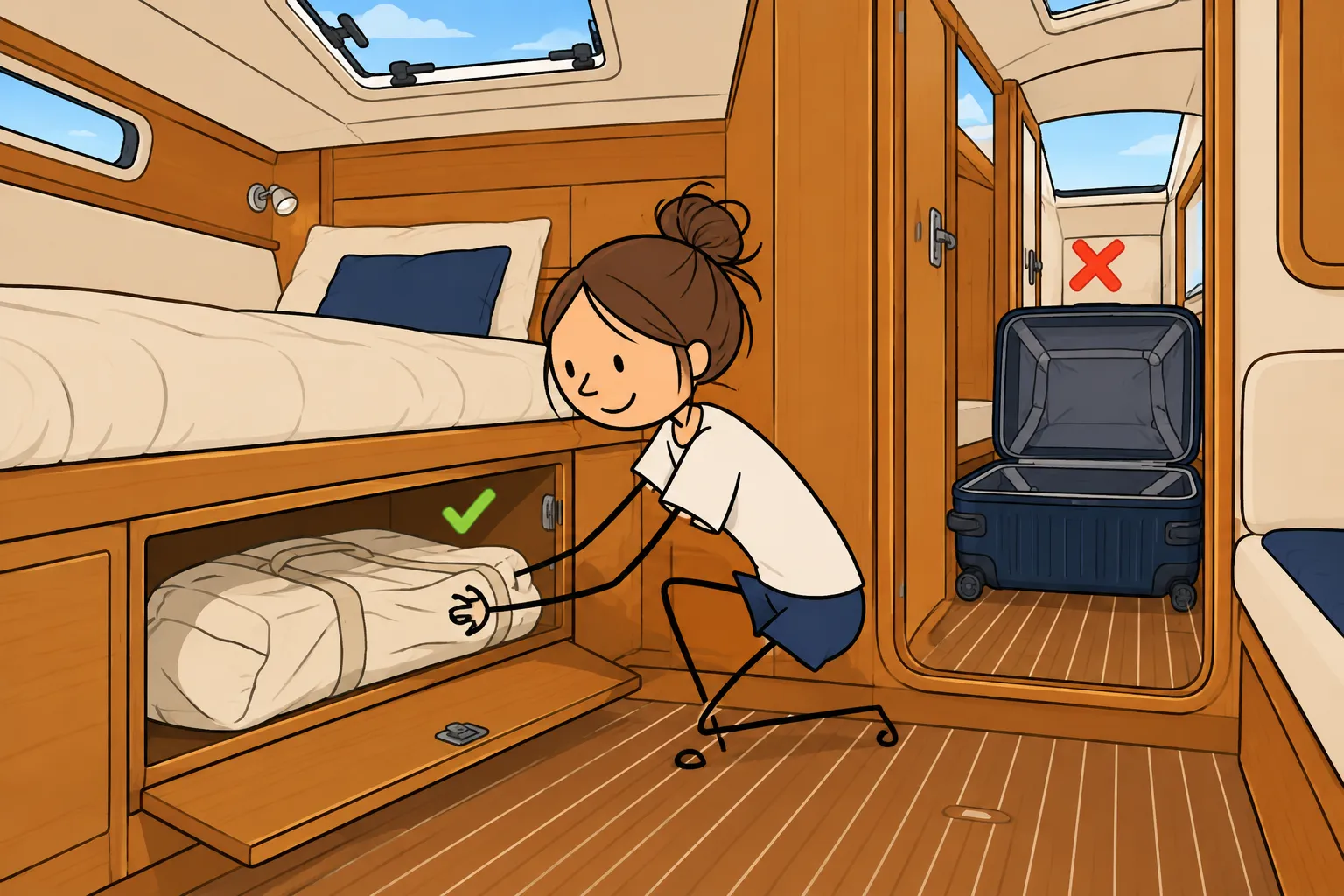
A cabin on a sailboat is roughly the size of a double bed with a little floor space beside it. Your things go into a small wardrobe, shelves and lockers built into the cabin. A soft bag folds flat and slides into one of them. A hard suitcase doesn't fit anywhere, so it spends the week in someone's way.
- Pick a duffel bag or a travel backpack of medium size, one per person. If you're flying, a soft cabin bag is often enough for a summer week.
- Add a small day bag for going ashore: a beach bag or a light backpack for a towel, sunscreen and a wallet.
- A small dry bag is a bonus. It keeps your phone, keys and wallet dry on the way ashore, or when spray comes over the deck.
What clothes and shoes do you need on a boat?
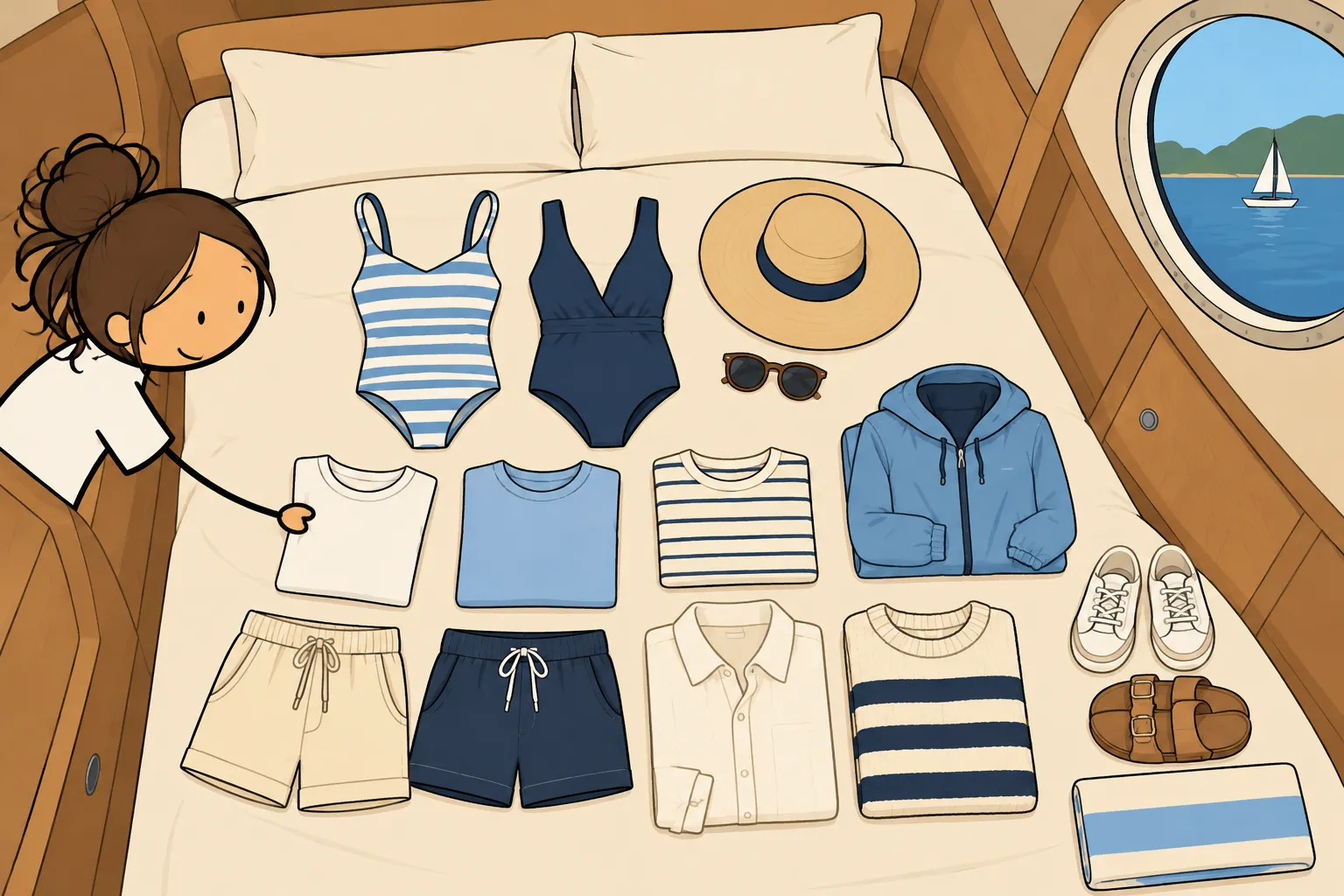
Less than you'd think. A typical day on board is breakfast, a few hours of sailing to the next cove or island, a swim and lunch, more sailing in the afternoon and dinner on an island or on the boat. Most of the day you'll be in swimwear with something light over it.
Clothes
- Swimwear: two or three, so there's always a dry one.
- Light layers: T-shirts, shorts, a summer dress or linen trousers. Things that dry fast and don't mind a bit of salt.
- A light long-sleeved shirt: the easiest sun protection for your shoulders and arms on deck.
- One warmer layer: a light jacket or a fleece. Even in summer, the wind on deck or an evening at anchor can feel cooler than on land, and at the start and end of the season you'll be glad you packed it.
- Something for dinner ashore: island tavernas are relaxed, so a clean shirt or a simple dress is as dressed up as it gets.
- Sleepwear and underwear for the week, plus earplugs if you're a light sleeper.
Shoes
- On board: bare feet, or soft, non-marking soles. Black rubber and hard soles leave marks on the deck.
- Sandals or flip-flops for the harbour, the beach and dinner.
- Light trainers if you plan to walk up to a village or a viewpoint.
- Water shoes are optional, but handy on pebbly or rocky beaches, where you may also meet sea urchins.
How do you protect yourself from the sun at sea?

The sun on the water is stronger than it feels. Water reflects UV rays, while the breeze and the swims keep you cool, so it's easy to miss that you're burning until the evening. This is the part of the list not to skimp on.
- A hat that stays on: with a cord or a strap, or one you can fold into a pocket when the wind picks up.
- Sunglasses with a strap. Glasses that go overboard don't come back. Polarised lenses also cut the glare off the water.
- Sunscreen with a high SPF: health services recommend at least SPF 30 with good UVA protection, reapplied every two hours and straight after every swim, even if it says water-resistant. Bring more than you'd take on a beach holiday.
- Lip balm with SPF and an after-sun lotion for the first couple of days.
Which chargers and electronics should you bring?
The boat runs on 12-volt batteries, like a camper van. Normal 220V sockets work only when the boat is plugged into shore power in a marina or harbour.
- A car charger adapter (12V/USB) and your cables. Most boats have USB or car-type 12V sockets, so your phone stays charged at anchor too.
- A power bank for days at anchor and trips ashore.
- A waterproof phone pouch for swims, spray and photos from the water.
- Guests from outside Europe: Greece and Croatia use European two-pin plugs (types C and F), so pack a travel adapter for the nights on shore power.
What about medication, seasickness and documents?
Health
- Personal medication: enough for the whole week plus a few spare days, in your hand luggage. Don't count on finding your exact medicine on a small island.
- A seasickness remedy, if you need one. If you get queasy in cars or on ferries, ask a pharmacist before the trip. Tablets, patches and wristbands all exist, and a pharmacist can tell you which suits you. Pack it where you can reach it, not at the bottom of the bag. On board, looking at the horizon helps too, and the rest of our tips are in our guide to seasickness.
Documents and money
- ID card or passport, whichever your nationality needs. Entry rules differ from country to country, so check the rules for your nationality before you book flights.
- Health or travel insurance details.
- A bank card and a little cash in euros.
What's already on board, so you don't pack it twice?
The boat is ready for life on board before you arrive, so a few things you'd normally pack can stay at home.
- Bed linen and towels are covered by the yacht package, together with the final cleaning. It's its own line in your offer.
- Beach towels are not included. Bring your own, or ask for them as an extra.
- Wi-Fi on board costs extra, unless the boat's page in our yacht catalogue lists it as included.
- The galley (the boat's kitchen) has a stove, a fridge, pots, plates and cutlery. Groceries and bottled water are bought locally, so there's no need to pack food.
- Life jackets are on board, and the skipper shows everyone where they are on the first afternoon.
What should you leave at home?
- A hard suitcase. There's simply nowhere to put it.
- Too many clothes. You'll spend most of the week in swimwear and a T-shirt. Half of what you'd pack for a hotel holiday is plenty.
- A hair dryer or straightener. They need 220V, which works only on shore power in a harbour, and on many boats not at all.
- Valuable jewellery. Rings and chains are easy to lose in the sea.
Sailing packing list: the short version
- Soft bag (duffel or travel backpack) and a small day bag
- 2 to 3 swimsuits
- T-shirts, shorts and a light long-sleeved shirt
- A light jacket or fleece
- Something casual for dinners ashore
- Sandals or flip-flops, plus soft-soled shoes or trainers
- A hat and sunglasses, both with a strap
- High-SPF sunscreen, lip balm with SPF, after-sun
- A beach towel (or order one as an extra)
- Car charger adapter (12V/USB), cables, power bank, waterproof phone pouch
- Personal medication, and a seasickness remedy if you need one
- ID card or passport, insurance details, bank card, a little cash
- Earplugs, if you sleep lightly
Frequently asked questions
1Can I bring a hard suitcase?
2Do I need to bring towels and bed linen?
3Do I need special sailing clothes or shoes?
4Can I charge my phone and laptop on board?
5What if I forget something?
Your week
Packed and ready? Let's find your boat
Tell us when and with whom you'd like to sail, and we'll suggest boats that fit your crew. Send us an inquiry, and the soft bag can start filling up.