Seasickness when sailing - how to prevent it and what helps
Why seasickness happens, who gets it, what helps on board, which remedies to ask a pharmacist about, and why a sailing week is gentler than you fear.
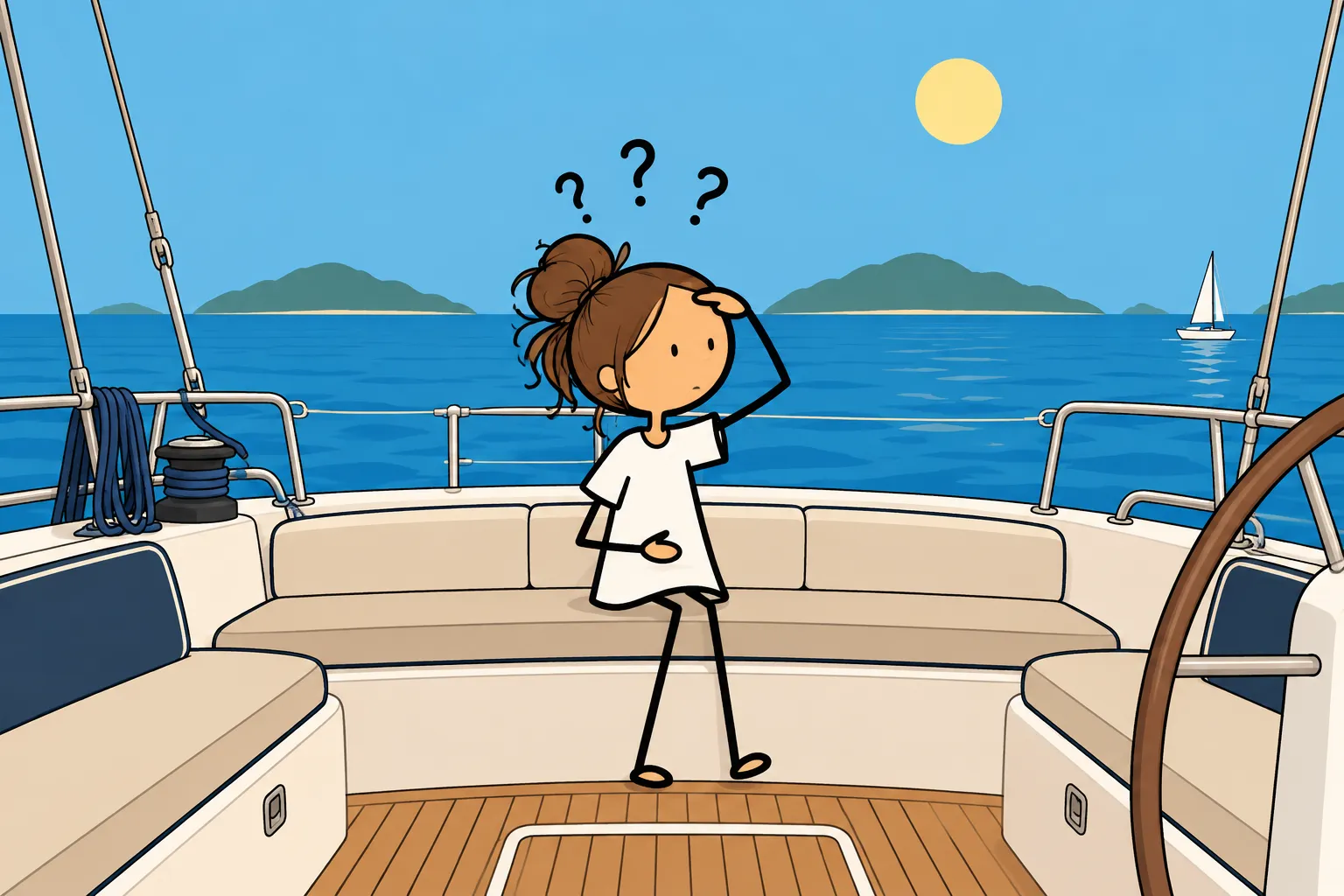
"Will I get seasick?" is one of the questions we hear most often before someone's first sailing week, especially from people who have never sailed before. It's a fair worry, and the honest answer is: maybe a little, and probably less than you fear.
Seasickness is common, well understood, and there's a lot you can do about it. Here's why it happens, who is more likely to feel it, and what actually helps, on board and before you leave.
Why do people get seasick?
Your brain works out how you're moving from several sources at once: your eyes, your inner ear (which senses motion and balance), and your muscles and joints. Usually they agree. On a boat, sometimes they don't. Read a book in your cabin while the boat sails, and your eyes tell your brain that nothing is moving, while your inner ear feels every wave. The brain gets two different stories, and the result is seasickness.
The signs are easy to recognise: feeling pale and cold, sweating, a headache or dizziness, then nausea. The earlier you react, the better the tips below work. And the good news: once the motion stops, the symptoms usually fade.
Who is more likely to get seasick?
In the wrong conditions almost anyone can feel it, but some people are more prone than others:
- Children, roughly between 2 and 12. Children under 2 rarely get it.
- Women, especially during pregnancy, around their period or when taking hormonal contraception.
- People who get migraines or have inner ear problems.
- People whose parents or siblings get it: it tends to run in families.
For many people it gets milder with age.
A few things make it more likely for anyone: a poor night's sleep, a stuffy space without fresh air, and worry itself. Being anxious about seasickness can make it more likely, which is one more reason to read on.
Will I get seasick on a sailing week in Greece?
A sailing week is a gentler setting than many people imagine, for a few reasons:
- The motion stops often. A typical day mixes sailing with long breaks: a swim and lunch in a cove, dinner on an island, the night at anchor or in a harbour. And symptoms usually fade when the motion stops.
- At anchor, the boat rocks very gently. In a harbour it doesn't rock.
- Your body adapts. If the motion goes on, most people adapt within two or three days. Sailors call it getting your sea legs.
- You're mostly on deck. While we sail, you spend your time in the cockpit, in the fresh air with the horizon in view, which is the best place to be if you're prone to it.
That doesn't mean it never happens. On a day with bigger waves, some people will feel it, so it's worth knowing what helps.
What helps on board?
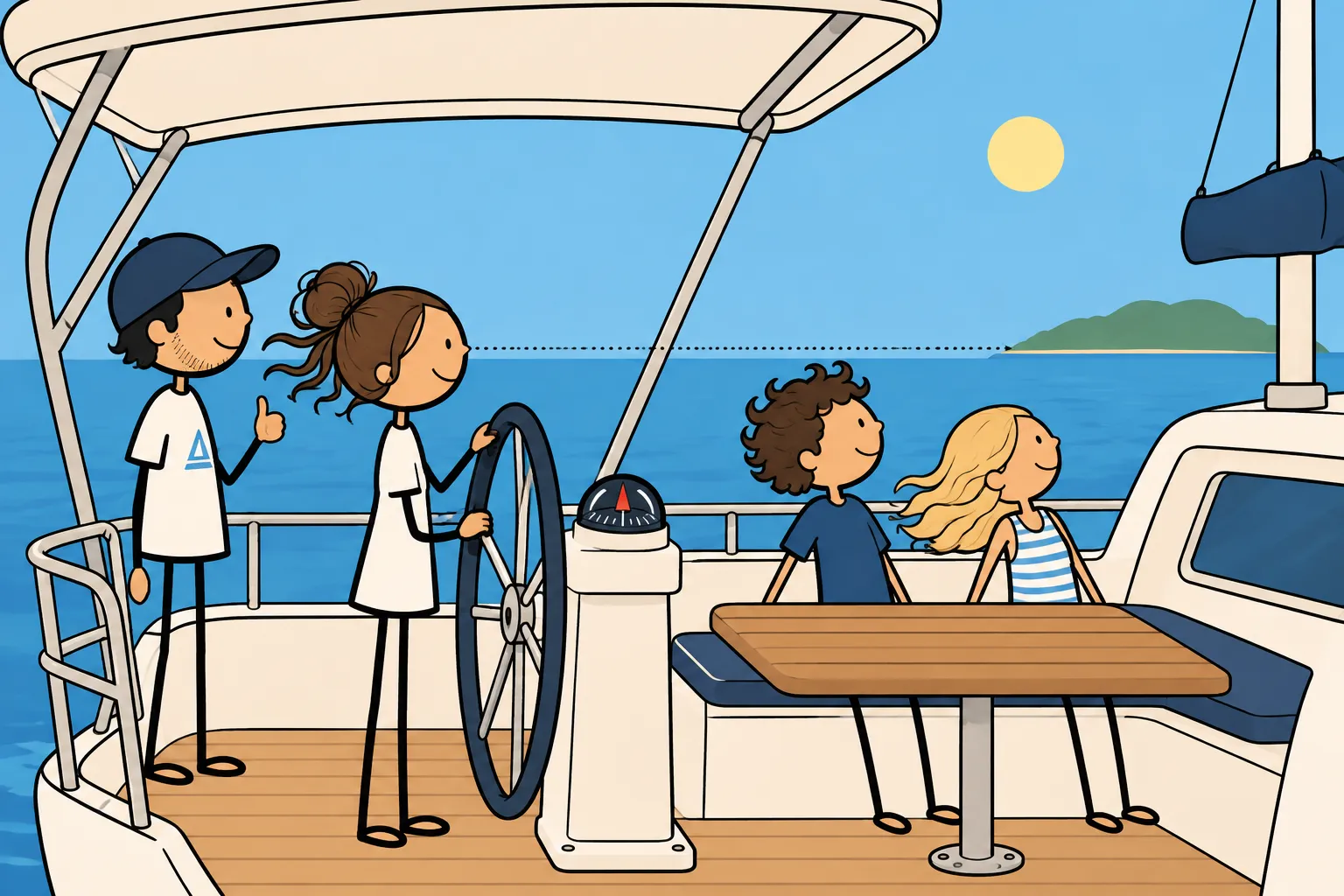
Most of what works is simple and costs nothing:
- Stay in the cockpit, in the fresh air. Avoid the bow (the front of the boat), which moves the most.
- Look at the horizon or a fixed point on land. It gives your eyes something steady that matches the motion you feel.
- Take the helm. Steering lets you feel each wave coming, and being in control, like driving a car, is known to help. The skipper will happily hand it over.
- Keep books and screens for later. Reading or scrolling below deck while the boat is moving is the classic trigger. Save them for the anchorage.
- Eat light, but don't skip meals. Small, plain meals work better than heavy, fatty or spicy food, and an empty stomach doesn't help either.
- Drink water through the day, especially in the summer heat.
- Go easy the night before. Alcohol and a short night both make seasickness more likely, so if you're worried about the next day, keep the first evening in the marina a quiet one.
- If you start to feel unwell, tell the skipper straight away, stay on deck, look at the horizon and breathe slowly. If that's not enough, lie down in the cockpit rather than in your cabin, and close your eyes.
Which seasickness remedies are worth trying?
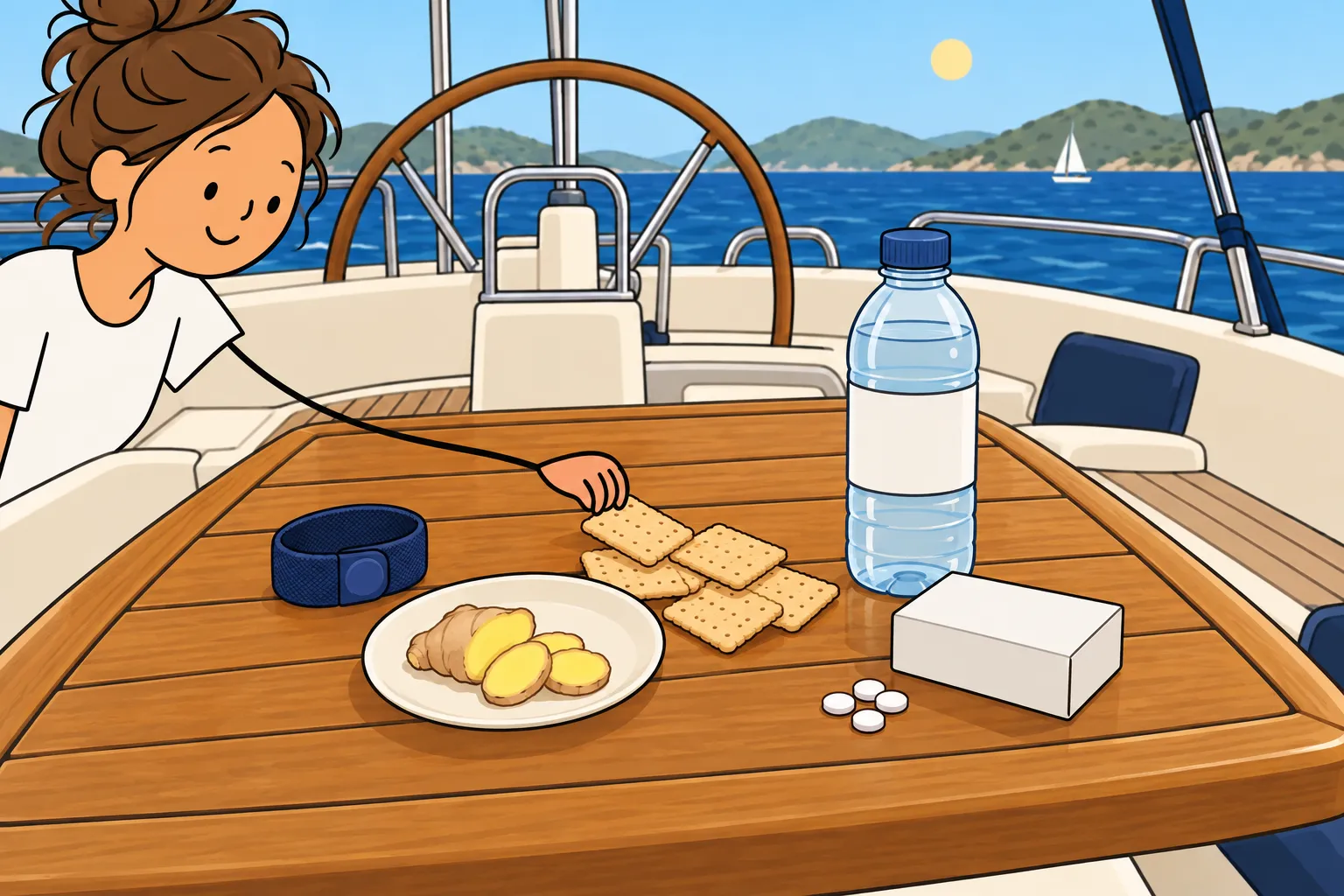
Before the trip, talk to a pharmacist or your doctor. They know your health and what's available where you live. A few things worth knowing before that conversation:
- Motion sickness tablets and patches are the most common option. Some tablets are sold over the counter; depending on the country, some patches need a prescription.
- Take them before you set off, as the pharmacist or the leaflet says. They work best before symptoms start, and much less well once you already feel sick.
- Many make you drowsy, so don't mix them with alcohol. It's worth trying one at home before the trip, to see how it affects you.
- Not every remedy suits children. Ask for one made for their age.
- Ginger, as tea, biscuits or tablets, is a popular home remedy. The research on it is mixed, but some people find it settles the stomach.
- Acupressure wristbands: studies haven't found them to work better than a placebo, but some people find them helpful.
If you're pregnant, have a health condition or take other medicines, ask your doctor before taking anything for seasickness.
Whatever you choose, buy it at home and put it on your packing list.
How does the skipper help with seasickness?

The skipper lives on board with you and keeps an eye on the forecast, the sea and the crew all week. That makes a real difference:
- Route planned around the conditions. Wind and waves depend on the region and the time of year. The skipper follows the forecast, and proposes the route and puts it together around the weather conditions and your wishes, so a windy day can become a short hop to a sheltered cove.
- The right time of day. In the Ionian, the summer wind usually builds in the early afternoon and dies down in the evening, so a longer passage can go in the calmer morning. In the Aegean, the summer meltemi can blow for several days in a row, and the skipper plans the route around it.
- Gentler motion underway. A small change of course can often make the boat move more gently.
- Someone who has seen it before. Tell the skipper early if you feel off. They can hand you the helm, find you the steadiest spot on deck, or change the plan.
If seasickness is your biggest worry, the Ionian Sea is a good place to start: calmer sea and short legs between the islands, which is why we call it the perfect choice for first-timers.
Frequently asked questions
1Can I get seasick at anchor?
2Does seasickness go away?
3Is a catamaran better if I get seasick?
4Should I take a seasickness tablet just in case?
5Can children get seasick?
Your week
Is seasickness keeping you on shore?
Mention it when you send us an inquiry, and we'll suggest a route and a boat with that in mind.