Life on a sailboat - what it's really like on board
What a cabin really looks like, how the boat toilet works, and how showers, water, phone charging and internet work during a sailing week in Greece.
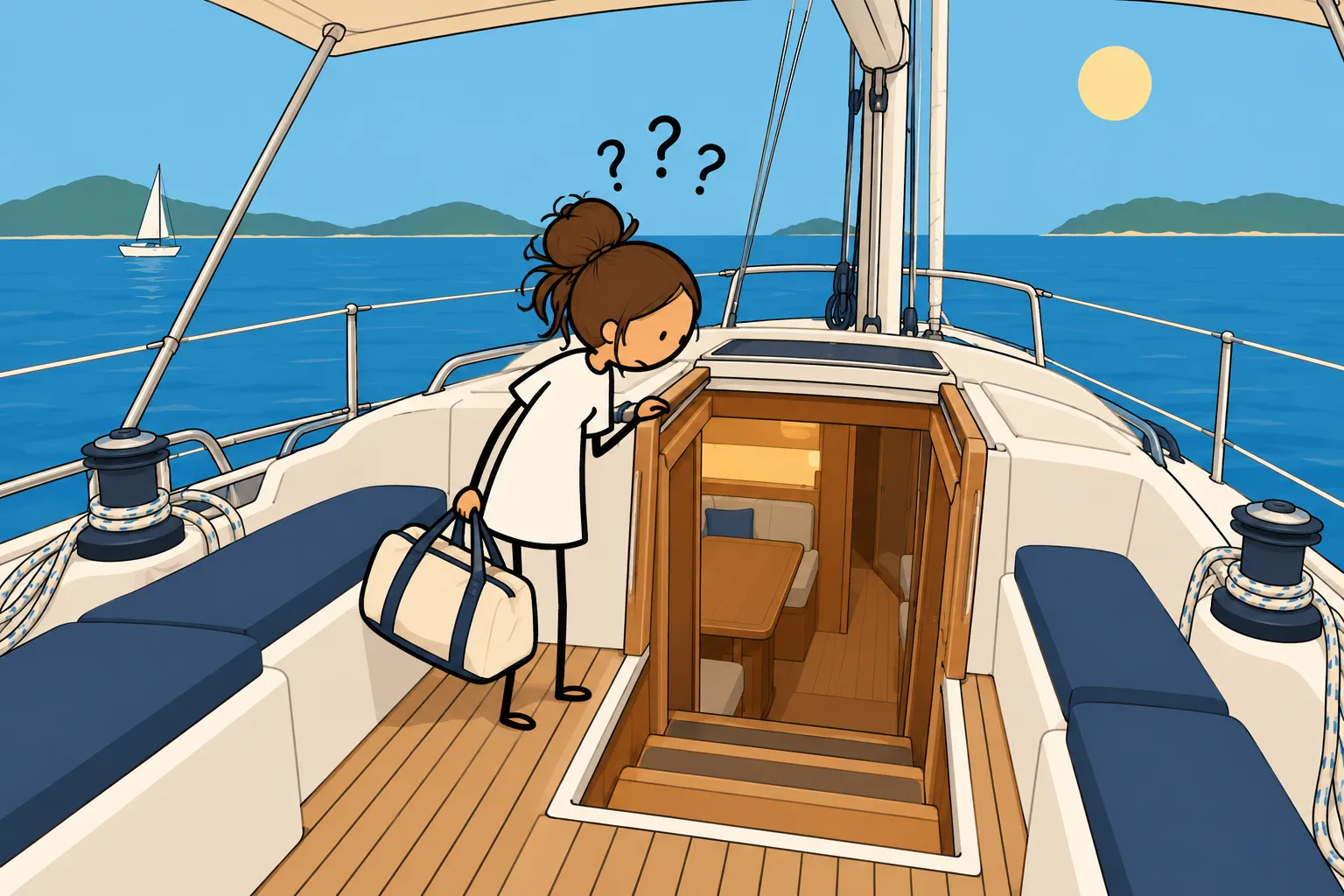
Most of the questions we get before someone's first sailing week aren't about sailing at all. They're about the boat. Where will I sleep? How does the toilet work? Can I charge my phone? Is there Wi-Fi?
Fair questions. A sailboat is a small floating home, and it works a little differently from a hotel. Here's exactly what to expect on board.
What are the cabins like?
A charter sailboat has 3 to 6 cabins, a catamaran 4 to 6. Cabins are single, double or triple. A double cabin is roughly the size of a double bed with a little floor space beside it: plenty to sleep well and get changed, not enough to unpack a suitcase.
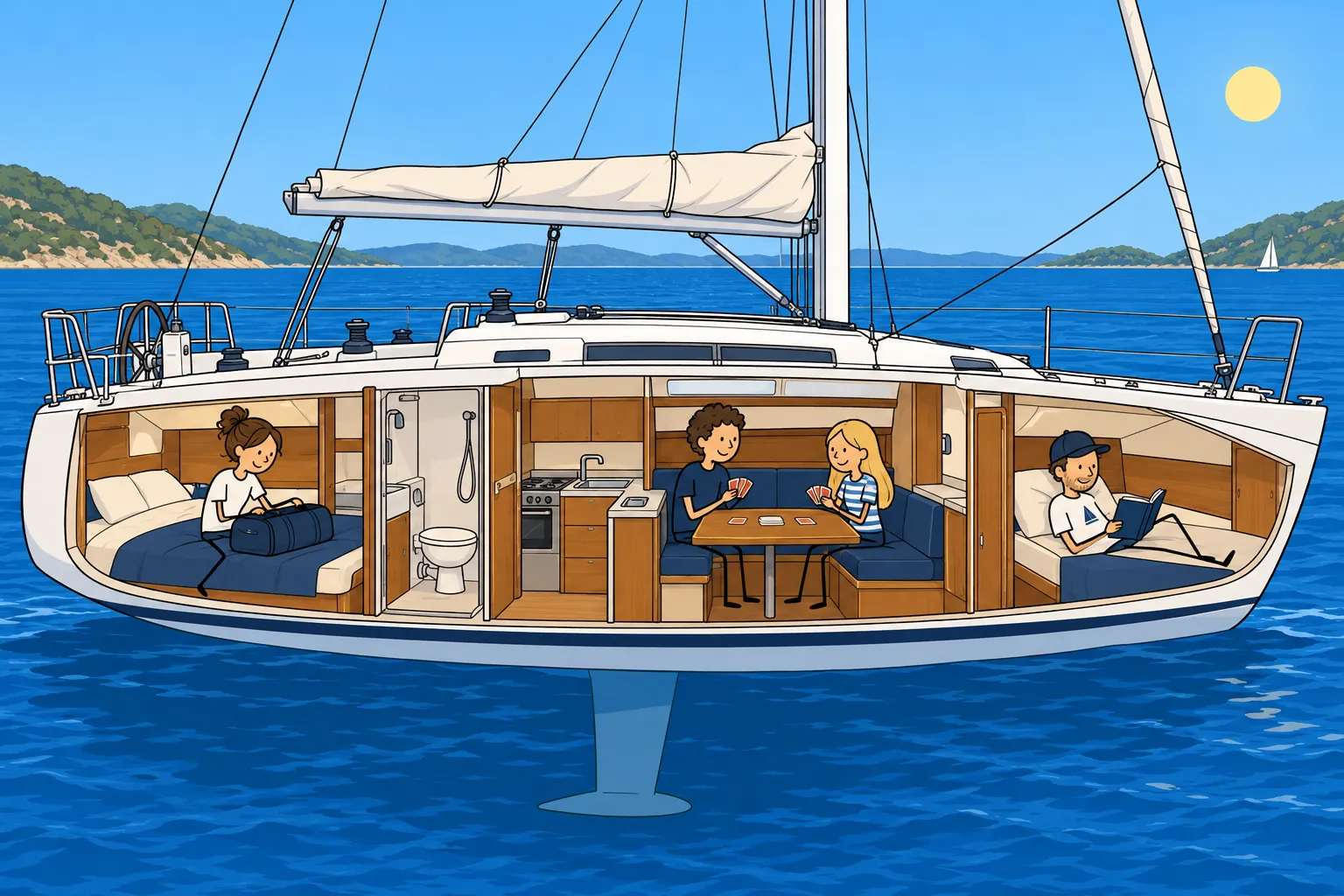
- The bed is a proper mattress. The cabins at the back are usually the roomiest.
- The cabins right at the front (the bow) are called skipper cabins. They're usually for the skipper and the hostess, and guests can use them when needed.
- Each cabin has a door, a reading light, a small wardrobe or shelves, and a hatch in the ceiling you can open for fresh air.
- You can stand up in most cabins. Just mind your head near the edges for the first day.
- Bed linen and towels are covered by the yacht package, together with the final cleaning at the end of the week. You'll see the package as its own line in your offer. Beach towels aren't part of it: bring your own, or ask for them as an extra.
- The saloon: the seating in the saloon can usually be turned into a double bed.
- Bring a soft bag. It folds into a locker. A hard suitcase doesn't fit anywhere.
How do the bathroom and the boat toilet work?
Most boats have 2 to 4 bathrooms (sailors call them "heads"). Each one has a toilet, a small sink and a hand shower. On many boats, two cabins share one bathroom.
The boat toilet flushes with seawater, using a hand pump or a button. There's one golden rule: nothing goes in that you haven't eaten first. Toilet paper goes in the small bin next to it, the same as in most Greek homes and tavernas. A blocked toilet is the one thing that can really spoil a day on a boat, so the skipper shows everyone how it works on the first afternoon.
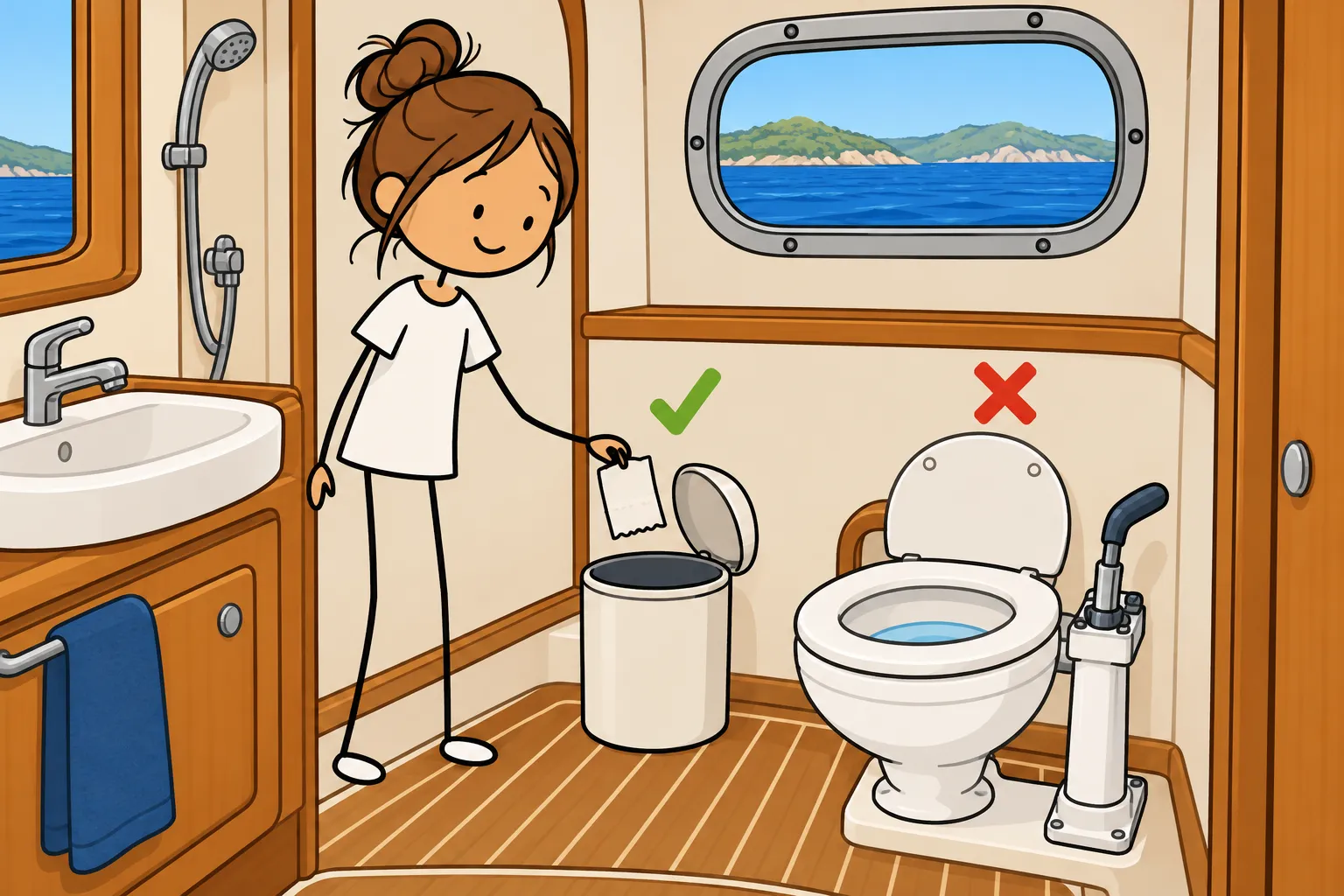
In harbours, and in bays while people are swimming, everything goes into a holding tank, which is emptied far out at sea.
Is there a shower and enough fresh water?
- The shower is in the bathroom. Some boats have a separate shower cubicle; on the others the whole bathroom gets wet, and a small pump drains the floor. There's also a shower at the back of the boat for rinsing the salt off after a swim, and that's the one you'll use most.
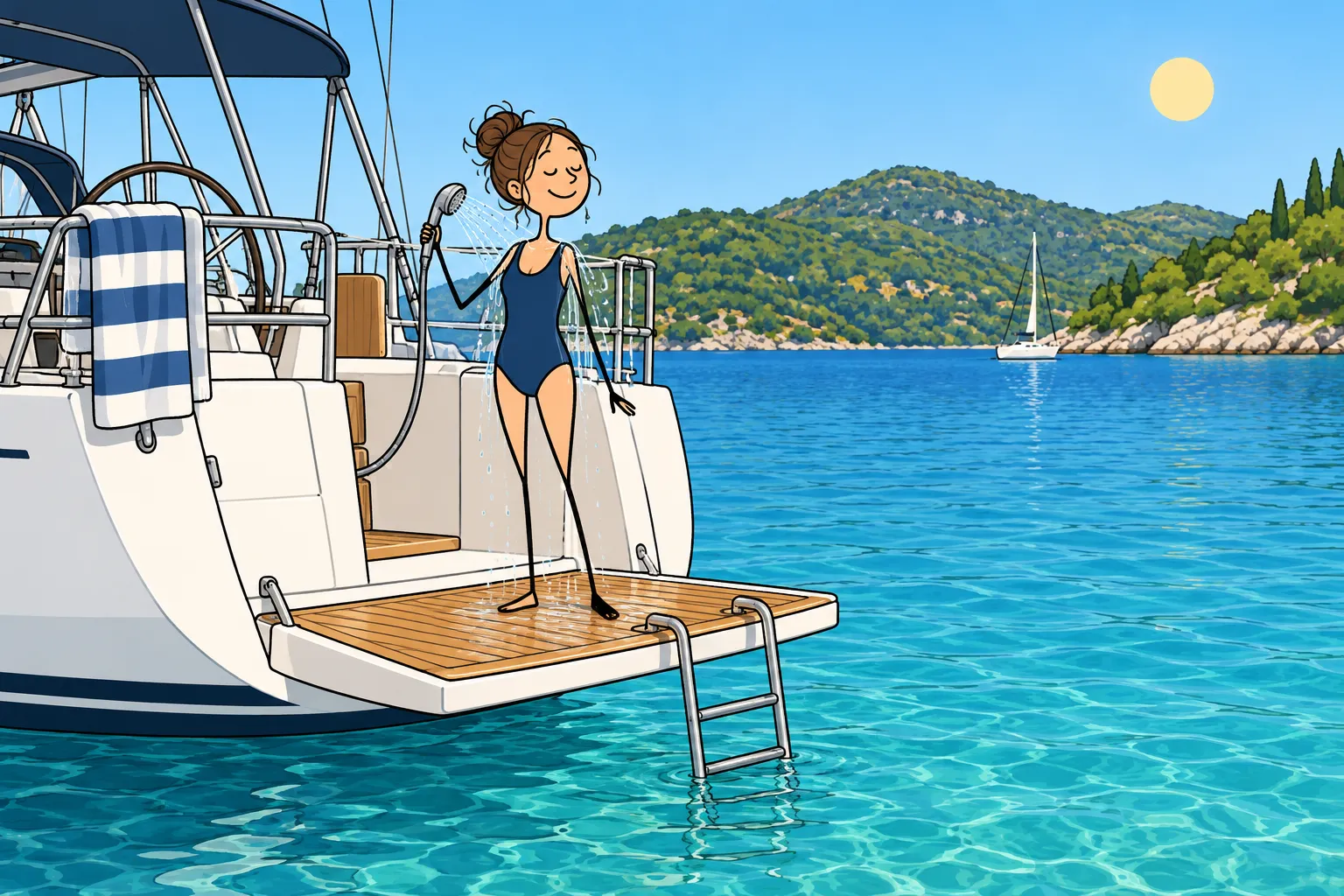
- Hot water is heated by the engine and, in harbours, by shore power. After a couple of hours under engine or a night in a marina, it's hot. After a quiet day at anchor, it may be lukewarm, which is fine in a Greek summer.
- The water tanks hold a few hundred litres. With a full boat that lasts about two days, so we top up in a harbour every day or two, usually for a few euros. On the Cyclades, where fresh water is scarce, every litre counts.
- How to make it last: swim first, then rinse quickly, and turn the water off while you soap. Most people find they spend more time washing in the sea than in any shower.
- Drinking water: we drink bottled water, bought with the groceries. Tank water is for showers and washing up.
- A boat with a watermaker: some boats have a watermaker, a unit that makes fresh water from seawater, so they rely less on harbour top-ups. If that matters to you, you can rent a boat with one: just mention it in your inquiry.
Can I charge my phone on board?
The boat runs on 12-volt batteries, like a camper van. They charge when the engine runs and when we plug into power at a marina or town quay.
- Phones and cameras: most boats have USB or car-type 12V sockets. Bring a car charger adapter and a power bank, and you'll never run out.
- Normal 220V sockets work only when the boat is plugged in on shore. Hair dryers and straighteners are for harbour nights only, and on many boats not at all.
- The fridge runs on the batteries too, so keeping it closed matters more than at home, and when you open it, close it again quickly.
Is there Wi-Fi and phone signal at sea?
- Mobile signal is good in most of Greece, including most anchorages. In a few remote bays you'll be offline for a few hours, which many guests end up enjoying.
- Guests from the EU: your phone plan works as it does at home.
- Guests from outside the EU: check your operator's roaming package for Greece before you leave, or buy a Greek eSIM or SIM card (Cosmote, Vodafone or Nova) online or at the airport.
- Wi-Fi on board costs extra, unless the boat's description says it's included. Almost every taverna and café has free Wi-Fi.
How well will I sleep on a boat?
- Air conditioning: most boats don't have it, or only when plugged in at a marina. It matters less than you'd think. At anchor there's almost always a breeze, and with the hatches open the cabins cool down quickly at night. Some guests take the cushions outside and sleep under the stars.
- Sounds: water lapping against the hull, a rope tapping the mast, the anchor chain now and then. After a day of sun and sea, most people sleep better than at home. Light sleepers should pack earplugs.
- Motion: at anchor the boat rocks very gently. In a harbour it doesn't rock.
What's it like living together in a small space?
- Shoes: barefoot on board, or soft soles that don't mark the deck.
- Tidy as you go: a boat stays comfortable when everyone puts things back in their place.
- You're never on your own with it: the skipper lives on board with you and, on the first afternoon, shows everyone how everything works (toilets, showers, the stove) and explains the basic rules of life on board.
Frequently asked questions
1Does every cabin have its own bathroom?
2Can I charge a laptop?
3Is there hot water?
4Will I feel the boat moving at night?
5Do I need to bring sheets and towels?
Life on board
Still have a question about life on board?
There's no such thing as a silly question before your first week on a boat. Send us an inquiry and we'll get back to you.