Sailing without experience - why you don't need to know how to sail
Never sailed before? You don't need experience. What the skipper handles, where you lend a hand, what you can learn and why the Ionian is an easy start.
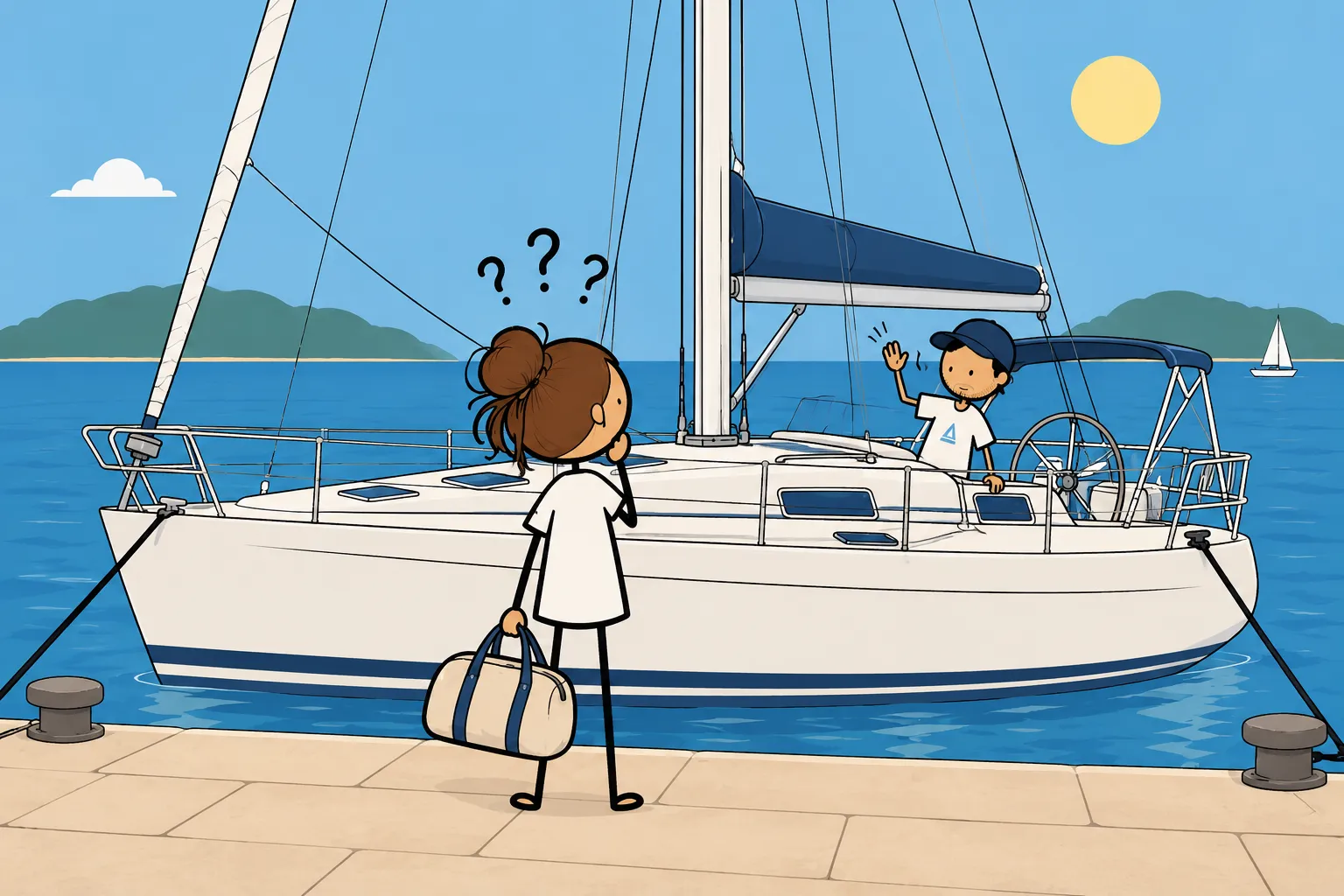
Do I need sailing experience? It's one of the first questions we get from people who'd love to try a week on a boat but have never set foot on one. The honest answer is no.
A professional skipper lives on board with you for the whole week. They sail the boat, read the weather and keep everyone safe. For many of our guests it's their first sailing experience, and that's exactly what the skipper is there for.
Sailing has a reputation for being complicated and reserved for people who grew up on boats. Running a boat does take skill, and that's why there's a professional on board. Enjoying one takes none. Here's who does what on board, what you can learn if you're curious, and where to go for an easy first week.
Who sails the boat if you've never sailed?
The skipper. Not someone you call when something goes wrong, but a professional who sleeps, eats and sails with you from Saturday to Saturday.

They're licensed and experienced, and know the waters they sail well: the routes, the coves and the harbours along the way.
On the first afternoon the skipper shows everyone how the boat works: the toilets, the showers, the stove, the basic rules of life on board, and how to help with the lines when the boat ties up in a harbour. After that, you know enough to feel at home on board.
What will you never have to do?
- Plan the route or read a chart. The skipper navigates and knows the area.
- Check the forecast. The skipper follows it every day and plans the sailing around it.
- Manoeuvre the boat yourself. The skipper brings the boat into harbour and handles the anchoring. When it's needed, you lend a hand with the lines, more on that below.
- Fix anything. If the engine, the batteries or the toilet act up, the skipper deals with it.
- Hold a licence. The skipper is the licensed one on board.
- Speak sailor. Port, starboard, sheet, cleat: nobody expects you to know them on day one.
Your part is the easy one: arrive on Saturday afternoon with a soft bag, tell the skipper what kind of week you'd like, and take a line in harbour when it's needed.
What does the skipper decide, and what do you decide?
Some decisions belong to the skipper, and on a boat that's a good thing:
- The weather. Whether it's a day to cross to another island, or better to stay in a sheltered bay.
- The route. Which leg makes sense today, given the wind and the sea.
- Safety. How to move around the deck safely, and when not to leave port. In bad weather, the plan changes or we stay in a safe harbour.
Everything else you shape together, on the spot. The skipper lives on board, so you can talk about tomorrow over dinner: a quiet cove for swimming, a lively harbour town for the evening, a beach someone saw in a photo. When the weather allows, they'll fit it in. The skipper proposes the route and puts it together around the weather conditions and the guests' wishes.
A typical day looks like this: breakfast on the boat or in the marina, a sail to the next cove or island, a swim and lunch, more sailing in the afternoon, and dinner at a taverna on the island or on board.
Where does the skipper need your help?
Sailing with a skipper doesn't mean you'll never touch a rope. The skipper is responsible for the boat, but when mooring in some harbours they can't be at the helm and tie up the boat at the same time.
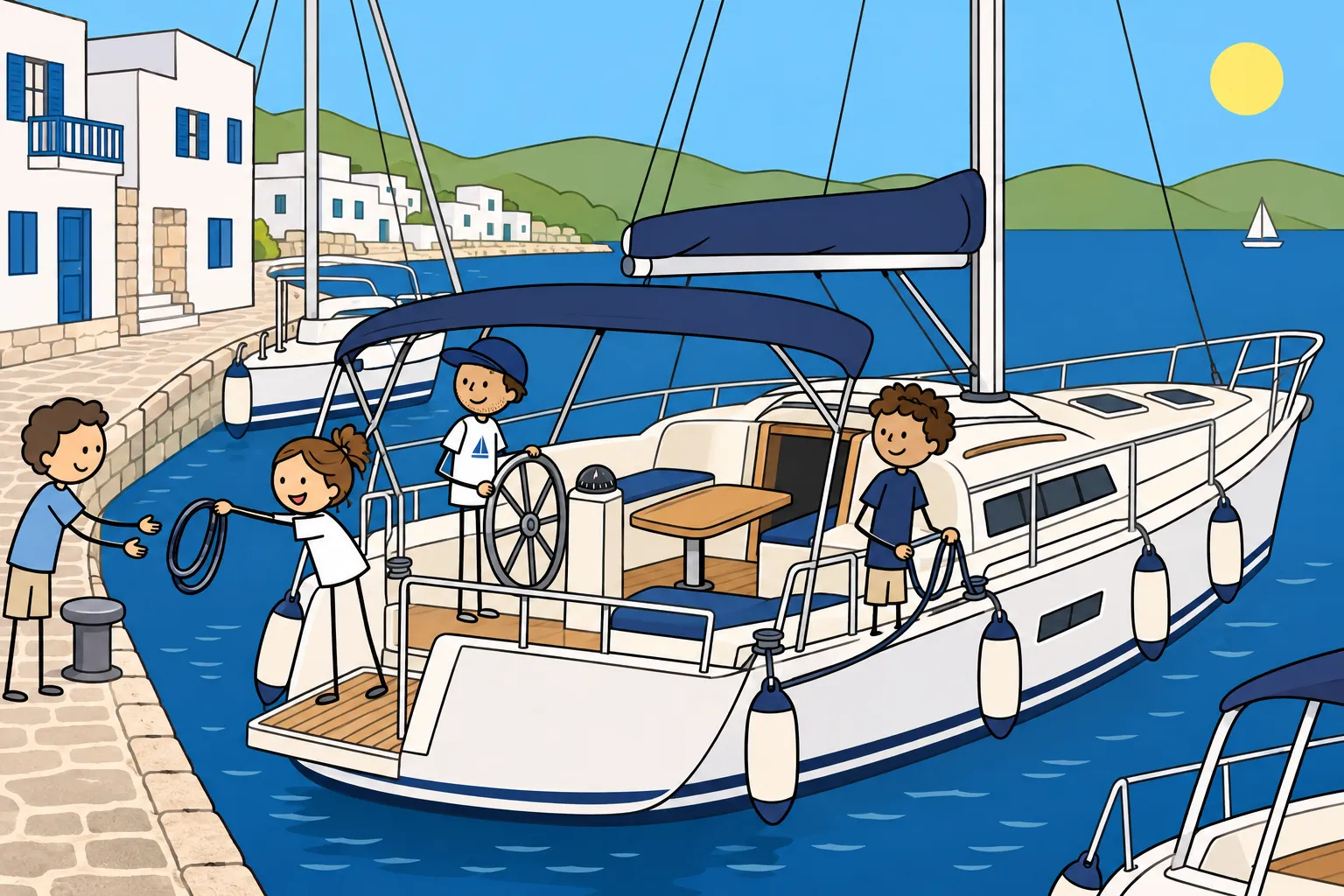
In Greek harbours, boats usually moor stern-to: the anchor goes down in front and the boat reverses up to the quay. That's when the skipper needs a few more hands: someone to pass or throw a line ashore, tie it to a cleat on board, or put out the fenders. They're the busiest few minutes of the day, but the jobs are simple.
You don't need any prior knowledge for it. At the start of every sailing week the skipper shows everyone these basics, and while we moor, they tell you exactly who does what and when. After the first harbour, everyone knows the drill.
A holiday with no obligations: add a hostess
If you'd like a holiday with no obligations at all, our recommendation is to book a hostess alongside the skipper. The hostess helps the skipper, keeps the boat clean and prepares the meals, so the lines, the cleaning and the cooking are no longer your concern.
What can you learn during the week if you want to?
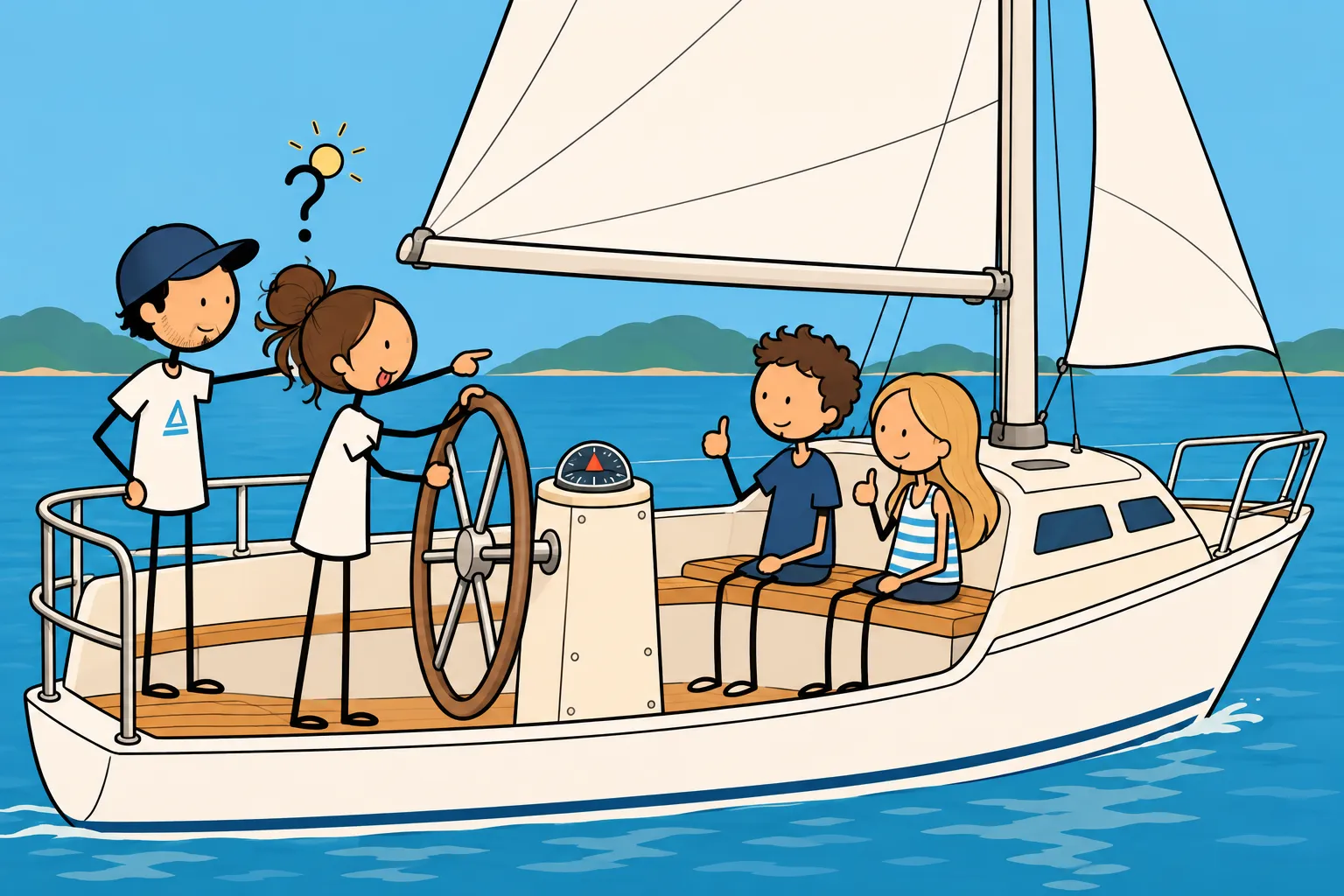
Quite a lot, at your own pace. You can join in as much as you like: handle the sails, help with navigation and assist the skipper, or simply relax. If you're curious, tell the skipper on the first day and they'll show you as you go.
Steering
In open water, with a steady breeze, the skipper can hand you the wheel and show you how to hold a course: pick a point on the horizon, make small corrections, keep an eye on the sails. It's the quickest way to feel what the boat is doing.
Handling the sails
Hoisting the mainsail, unrolling the jib, pulling in a sheet (the rope that controls a sail) on the winch and easing it out again. You'll see how a small adjustment changes the boat's speed and how much it leans.
Lines and a few knots
A handful of knots covers almost everything on a boat: the bowline for a loop that won't slip, the cleat hitch for tying a line to a cleat, and the clove hitch for hanging fenders on the rail. One afternoon in the cockpit is enough to learn them.
Whether you end the week steering half the day or only helping with the lines in harbour, it's a perfectly good sailing week.
Why is the Ionian a good route for first-timers?
Of our routes in Greece, the Ionian route from Lefkada or Preveza is the one we call the perfect choice for first-timers. Here's why:
- Calmer sea. The strong summer meltemi that blows across the Aegean largely passes the Ionian by. Instead, from late May to the end of September, a north-westerly sea breeze the Greeks call the maistro usually picks up in the early afternoon and dies down in the evening. Mornings are often calm and good for swimming, and the afternoon breeze is good for sailing.
- Short legs. Many islands sit close together, especially in the stretch of water between Lefkada, Meganisi, Kalamos and Kastos that sailors call the Inland Sea. The legs are short and relatively sheltered, so there's always time for a swim and a long lunch.
- A lot in a small area. A calm night in Vathy harbour on Ithaca, swimming in the coves of Meganisi and Atokos, Myrtos beach and Melissani Cave on Kefalonia. Plenty of variety without long days at sea.
What if I'm nervous about sailing for the first time?
A few nerves before a first week on a boat are normal. Here's how we see the usual worries.
What if I'm afraid of the sea?
You're in good hands, and you set your own limits. The skipper plans each day around the forecast, and a bad-weather day is spent in a safe harbour, not out at sea. There are life jackets on board for everyone, and swimming is always optional: you can enjoy a cove from the deck, or sit on the swim platform with your feet in the water.
Under sail, a sailboat leans to one side. That's normal and the boat is built for it, and if it makes you uneasy, the skipper can ease the sails to bring it more upright. If you'd rather the boat didn't lean at all, a catamaran sails flat.
What if I don't know any sailing terms?
Nobody expects you to. A good skipper says “pull this rope” long before “trim the jib sheet”, and the words come by themselves after a few days. If you want a head start, four are enough: bow (front), stern (back), port (left) and starboard (right).
What if I'm useless on board?
You won't be. The skipper sails the boat, and the help they do need, like the lines when we tie up in a harbour, they show you on the first day, with no prior knowledge needed. If you like to pitch in beyond that, there are small jobs: keeping a lookout, or sorting out the grocery run with the rest of the group. And the most useful thing anyone can do on a boat is easy: put things back in their place.
Frequently asked questions
1Do I need a sailing licence?
2Can we go if nobody in our group has ever sailed?
3Will I get seasick?
4Is a catamaran easier for beginners?
5Do I have to help on board at all?
First sail
Ready for your first sailing week?
You don't need to know anything about boats to start. Send us an inquiry with your dates and group size, and mention it if you'd like a hostess too, and we'll come back with a concrete proposal for a first week that suits you.