Sailing with kids - what to know before you go
Which life jacket your child needs, what guardrail netting is for, how to plan the day, sun, seasickness, and why a catamaran helps families on board.
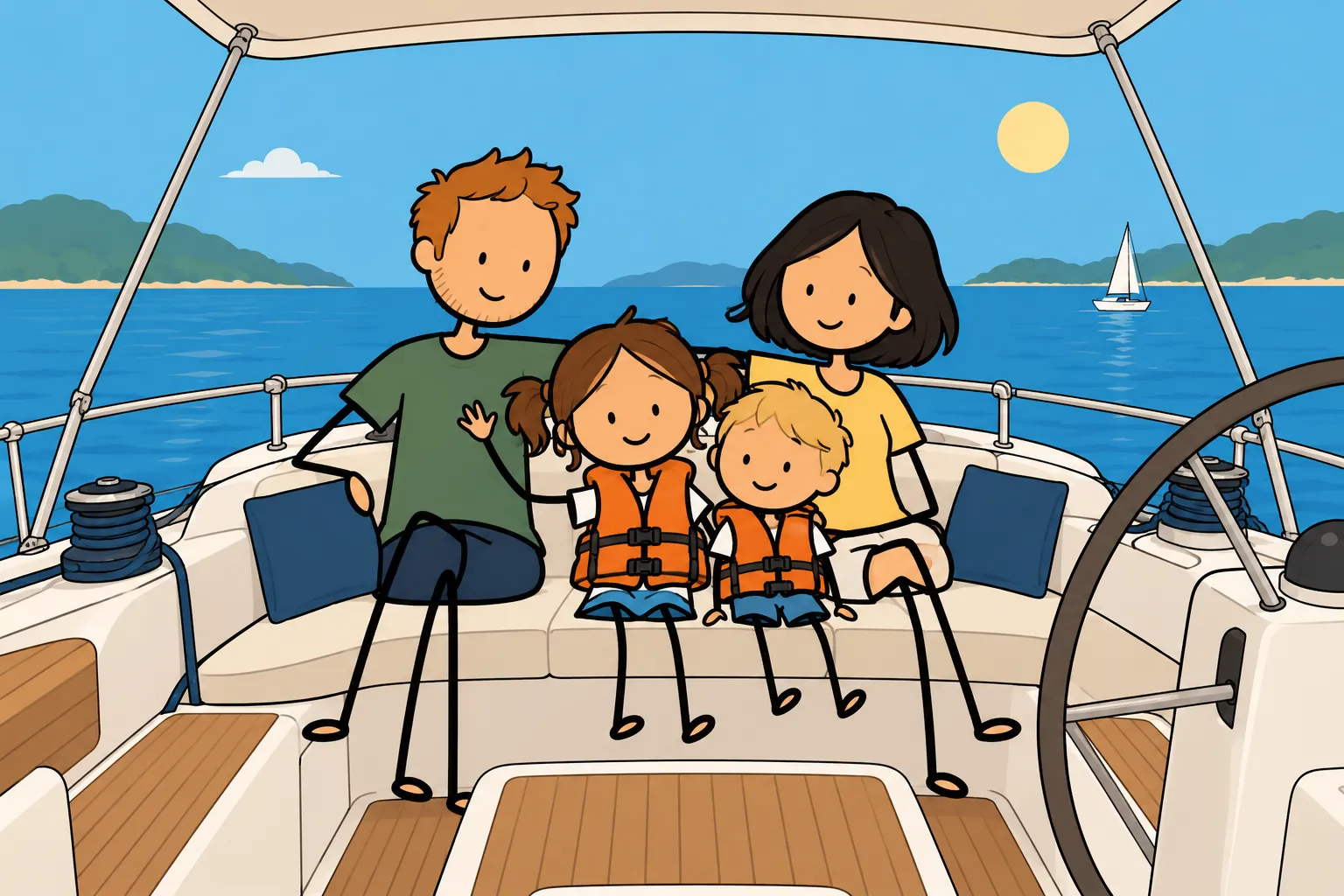
Is sailing a good idea with kids? Yes. For a lot of children, a boat is one big playground: swimming in bays you can only reach from the water, jumping off the stern, riding the dinghy to the beach. Still, a week on a boat with kids takes a bit more preparation than an ordinary holiday.
Below is everything parents need to know before they go: which life jacket your child needs, what guardrail netting is for, how to plan the day, how to protect kids from the sun and seasickness, and why a catamaran is often a handy choice for families.
Is sailing a good idea with kids?
Yes, with a little preparation. A skipper, an experienced, licensed professional who handles the boat, lives on board with you all week, so you can focus on the kids.
Tell the skipper at the start of the week that you're travelling with children. The skipper proposes the route and puts it together around the weather conditions and the guests' wishes, so a family can ask for shorter legs and more time in the bays. If the weather turns, the plan changes or the boat waits in a safe harbour.
For a first sailing week with kids, a destination with calmer sea and short legs works best. That's why the Ionian Sea, starting from Lefkada or Preveza, is the perfect choice for first-timers: the distances between harbours are short, and there's usually a beach or a bay for a swim along the way.
One thing always holds: the skipper runs the boat, and the parents watch the kids, on deck and in the water.
Which life jacket does a child need?
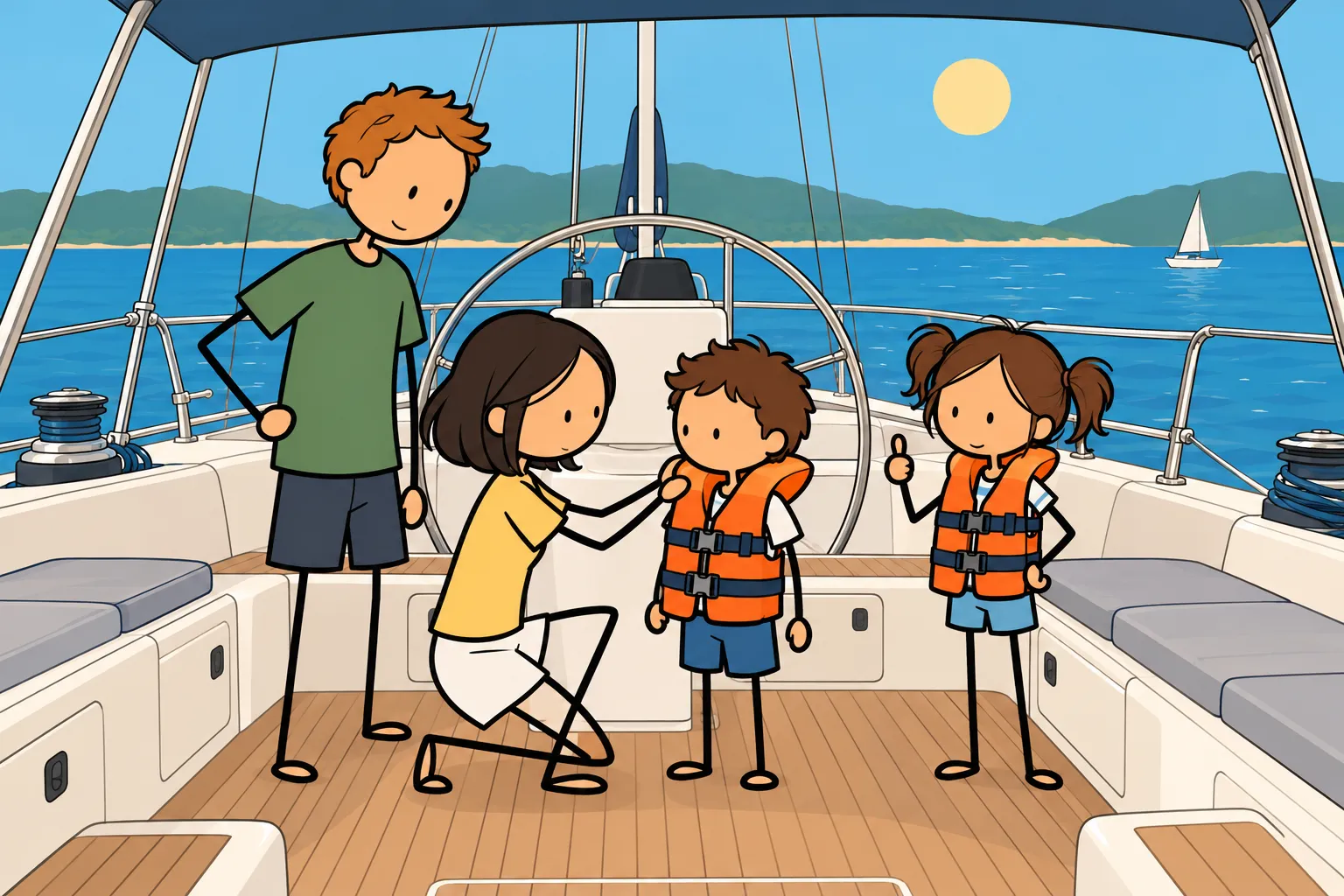
A life jacket is the most important thing you'll sort out for your child, and it has to be the right size.
- Size by weight, not age. Children's life jackets are made for a specific weight range, printed on the label. An adult life jacket won't do: if it's too big, it can slip over the child's head in the water.
- A crotch strap. Good children's life jackets have a strap that runs between the legs and stops the jacket riding up over the head. Jackets for babies and toddlers also have a large collar that keeps the head above water.
- A fit test before you leave. Fasten every buckle and strap, then lift your child by the shoulders of the jacket. If it slides up to the chin or ears, it's too big or not tight enough.
- A jacket your child will wear. Some models rub around the neck, and a child who hates their life jacket will keep trying to take it off. Let them try it at home or in a pool before the trip.
- When to wear it. A child who isn't a strong swimmer wears a life jacket whenever they're on deck, under way and in harbour, and in the dinghy.
- Armbands are no substitute. Armbands, rubber rings and other inflatable toys aren't safety devices.
Children's life jackets in the right size, especially for babies and toddlers, are available on request, so tell us your children's ages and weights when you inquire. If your child is used to a particular jacket, you can bring it too.
How do you make a boat safe for kids?
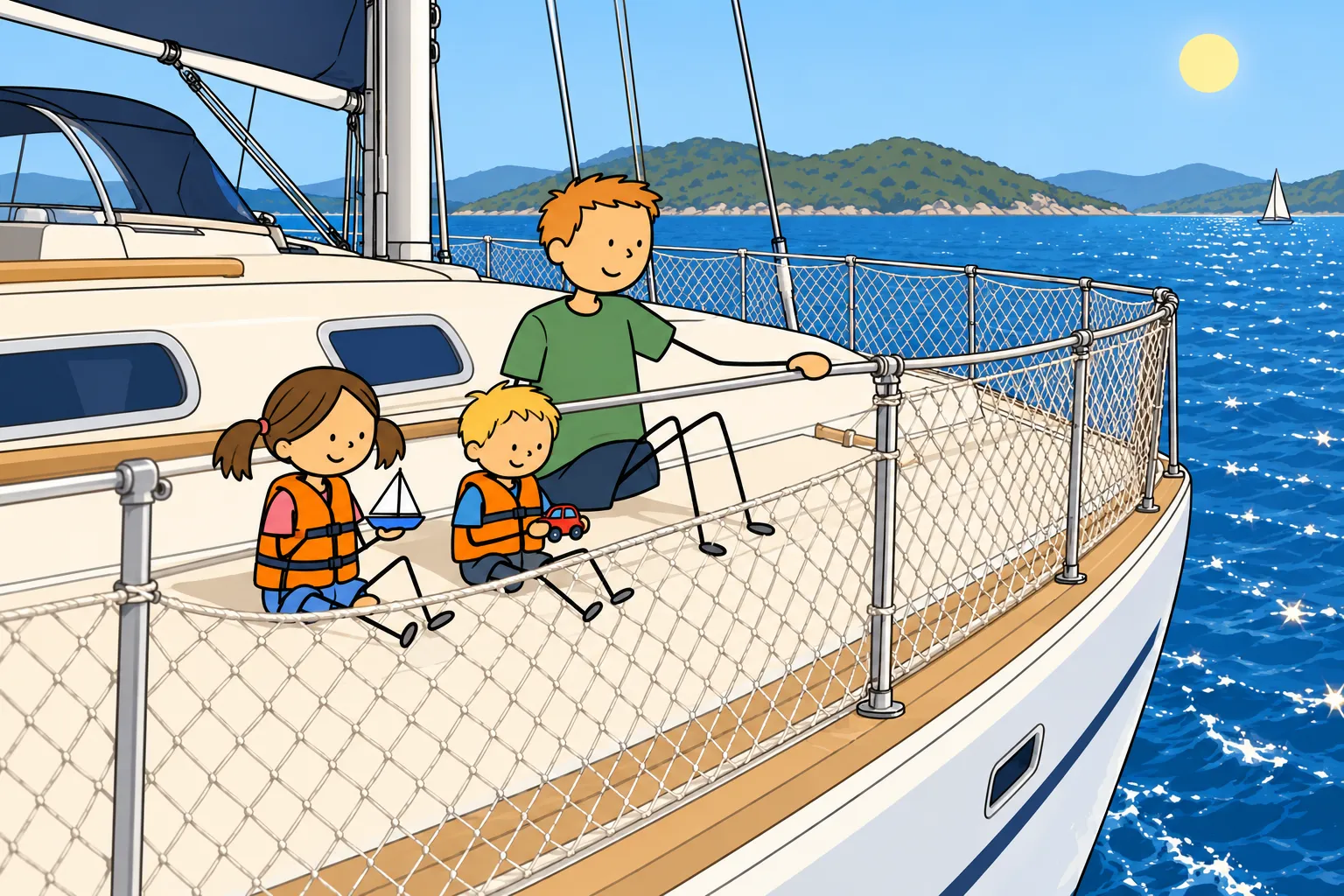
Guardrail netting
The guardrail around the deck is made of wires running between posts, and the gaps between the wires are wide enough for a small child to slip through. That's why safety netting is stretched along the guardrails. With small children on board, it's basic equipment. The netting goes up before you set sail and is an extra cost, so ask for it in advance, when you book the boat.
Rules on deck
The general rules of sailing safety apply to everyone on board, and with kids it's worth agreeing on a few more, short and clear, before you first set sail:
- while the boat is sailing, always hold on to something
- no running on deck
- lines, winches and the wheel are hands-off unless you ask first
- toilet paper never goes down the toilet, it goes in the bin next to it
- fresh water is limited, so showers are quick
How do you plan the day with kids on board?
Kids enjoy a day on a boat most when it has a rhythm they know.
- Shorter legs. Few kids like sitting for hours while the boat sails. So it's better to plan shorter passages and longer stays in the bays, and that's a wish the skipper can take into account when proposing the route.
- Sailing at nap time. Some parents sail while the little ones sleep, so the passage goes by without boredom.
- Meals at the same time. Breakfast on the boat or in the marina, a swim and lunch in a bay, dinner at a restaurant on the island or on board: a typical sailing day already has a steady rhythm, and snacks and naps fit easily into it.
- A shady break around midday. The sun is strongest from about 11am to 3pm, so that's a good time for lunch in the shade, a rest or a game in the saloon.
- Things for quiet moments. Books, cards, board games and colouring books come in handy when the wind picks up or the boat is in harbour.
If you want the week to be a holiday for the parents too, with no obligations at all, we recommend booking a hostess as well as the skipper: she helps the skipper, keeps the boat clean and prepares the meals.
What do kids love most on a boat?
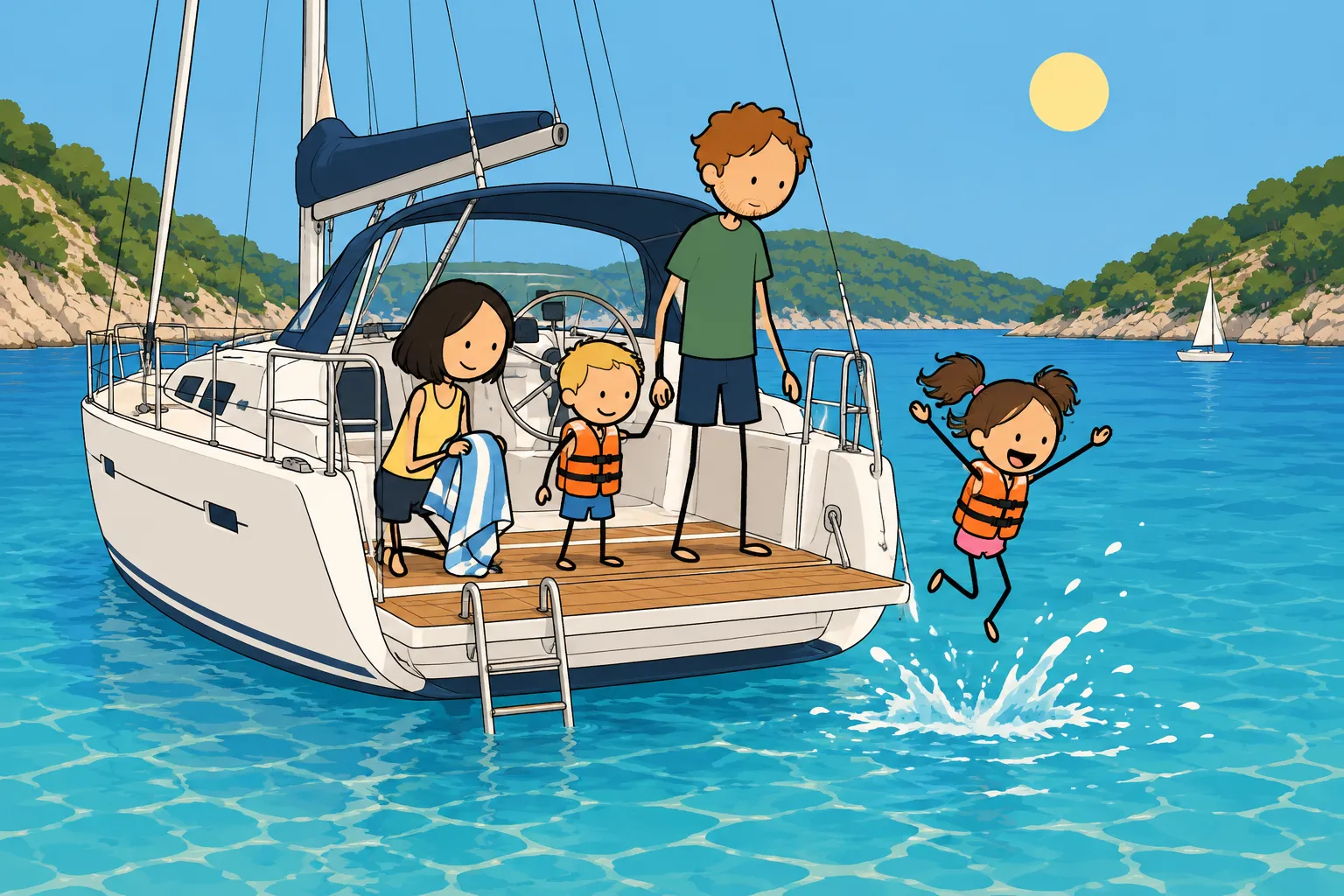
- Snorkelling. There's plenty to see under the boat in the clear water of Greek bays. Bring a mask and snorkel that fit your child.
- Jumping off the stern. The swim platform at the stern is the favourite spot for jumping into the sea. The rules are simple: the engine is off, a child who isn't a strong swimmer jumps in a life jacket, and one adult has the single job of watching the kids in the water. Drowning happens quickly and quietly, so that adult doesn't look away, not even for a moment.
- Dinghy rides. For a lot of kids, taking the dinghy to the beach, the shop or a restaurant is the highlight of the day.
- Little jobs. Older kids are happy to take charge of the fenders when mooring and, in calm water, if the skipper allows it, the wheel for a few minutes. In some harbours guests help with the lines when mooring; it's basic, needs no prior knowledge, and the skipper explains it at the start of every week.
How do you protect kids from the sun and seasickness?
Sun and heat
- Babies under 6 months should be kept out of direct sunlight, and sunscreen isn't recommended for them.
- For older kids, use sunscreen with an SPF of at least 30 that protects against both UVA and UVB. Reapply it every 2 hours and straight after swimming.
- A wide-brimmed hat or one with a neck flap, sunglasses and light, loose clothing protect better than sunscreen alone.
- Have kids drink water often, even when they don't ask, especially in the heat.
Seasickness
Children under 2 rarely get seasick. After that, susceptibility rises and peaks at roughly 7 to 12 years old.
- First try what helps adults with seasickness too: watching the horizon, fresh air on deck, and no reading or screens while the boat is sailing.
- Give medication only on a doctor's or pharmacist's advice, and only products suited to your child's age.
- Scopolamine patches for nausea are not for children.
Sailboat or catamaran for a family with kids?
When it comes to sailboat or catamaran, there's no wrong answer even with kids, but a catamaran has a few advantages for families:
- It sails flat. It's easier to walk around, and toys, glasses and bottles mostly stay where you left them.
- Everything is on one level. The saloon and cockpit are connected without steps, so you can see the kids whether they're inside or out.
- More space. The cabins are spread across two hulls with the saloon in between, so a family with kids gets more peace and privacy.
- Shallow bays. A catamaran has a much shallower draft, so it can anchor in shallower bays, closer to the beach.
- The bow net. At anchor it's a great place to lie above the water, with an adult keeping watch. Some models have a solid, fenced foredeck instead of a net, which makes kids easier to keep an eye on.
A sailboat is a good choice for a family too, and it usually costs less. Under sail it leans to one side, which is normal and safe, and if anyone feels uncomfortable, the skipper can ease the sails and bring the boat upright.
Frequently asked questions
1How old does a child need to be to go sailing?
2Are there children's life jackets on board?
3Does my child need to know how to swim?
4Do children count as guests?
Your week
Planning a sailing week with kids?
Tell us how many of you there are, how many kids and how old they are, when you'd like to sail and what your budget is, and we'll suggest boats that suit you.