Meals on a Sailing Week - how to organise food for seven days on board
What you eat on board and in tavernas, how to do the first big shop and a shared kitty, how much water to buy, with a sample meal plan and shopping list.

What will we eat all week? Do we cook every day? How much food do you buy for seven people and one small fridge? Crews planning sailing in Greece ask us this often, and the answer is simpler than it looks.
Breakfast and lunch are mostly eaten on board, dinners are split between tavernas and the boat, and shopping happens in two steps: one bigger shop at the start for the first two days, then small top-ups on the way. Food and drinks aren't in the boat price, or in the yacht package (bed linen, towels, final cleaning), so the crew buys and pays for them together.
What do you eat on board and what in a taverna?

The rhythm of a week on a sailboat decides where you eat.
- Breakfast and lunch are almost always on board. In the morning you're in a harbour or a cove, at noon at anchor, often somewhere with nothing but sea and a beach. These meals are light and simple, and make up most of the shopping.
- Dinners are split. When the boat spends the night in a harbour, a taverna is a few steps away. When you stay at anchor in a calm cove, dinner is on board. A good week has both.
- A taverna isn't a luxury. In Greece dinner in a taverna is often cheap, and fresh fish, salads and local dishes are part of the experience.
How many evenings you spend in tavernas is up to the crew, but know it before the first shop, because it sets how much food you buy.
What should you agree before the first shop?
Easiest in the group chat, before the trip.
- Who eats what. Allergies, vegetarians, who doesn't drink coffee. It's easier to buy the right thing now than to look for a substitute in a small island shop.
- How many dinners on board. Say two or three, the rest in tavernas.
- Who shops. One or two people with a list finish faster than the whole crew.
- Who cooks and who washes up. The skipper looks after the boat, so the galley is the crew's. Taking turns is easiest.
If nobody wants to think about it, you can book a hostess alongside the skipper. She prepares the meals, helps the skipper and keeps the boat clean, which is our recommendation for a holiday with no obligations. She can also do the shopping for you, and we give guests shopping lists for the first shop either way.
What can a meal plan for the week look like?
An example for six people and the skipper. Where you are each evening depends on the route, and the skipper proposes the route and puts it together around the weather conditions and the guests' wishes. So this is a frame for shopping, not a schedule to keep at all costs.
- Day 1 (check-in from 17:00): dinner in a taverna next to the marina.
- Days 2 to 6: breakfast on board or at a bakery, lunch at anchor every day, two dinners on board in a cove, the rest in tavernas.
- Day 7: back at the base marina by 18:00 on Friday, lunch from leftovers and dinner in a taverna.
That's about 14 meals on board for seven people, and shopping starts from that number. For breakfast: yogurt with honey, bread or pies from a bakery, eggs. Lunch at anchor is something cold (salad, feta, tuna, fruit), and dinner on board is pasta, risotto or another simple dish.
How do you do the first big shop?

The first shop is right at the start, after check-in or in the morning before casting off. You buy for the first two days, not the whole week:
- The fridge is small. The fridge in the boat's galley is smaller than a home one.
- There are shops on the way. Almost every Greek harbour town has at least a small shop, so fresh food is topped up every day or two.
- You don't know where you'll be. You might stay two nights in a cove you love.
Don't overbuy. What you forgot is easy to find on the way. Only snacks and fruit deserve a generous count. Keep staples for a day or two on board, because smaller places have less choice.
After the first shop you buy little and often. Take bread in small amounts from a bakery, where mornings bring tiropita (cheese) and spanakopita (spinach) pies, and in towns the weekly laiki agora is an open-air market with fruit, vegetables, eggs and olives, open until early afternoon.
In Greece don't count on salt, oil and coffee being on board: spices, dish soap and bin bags are usually yours to buy. In some marinas groceries can be delivered to the boat, handy for water and other heavy items.
What goes on the shopping list?
A rough list for the first two days, adjusted to your crew's tastes:
- Basics: coffee, tea, sugar, salt, pepper, olive oil, vinegar, spices.
- Breakfast: bread, Greek yogurt, honey, eggs, cheese, long-life milk, muesli.
- Lunch and snacks: tomatoes, cucumbers, peppers, onions, feta, olives, canned tuna, crackers, nuts, fruit.
- Dinner on board: pasta, rice, tomato passata, garlic, potatoes.
- Drinks: bottled water, juice, and beer and wine to the crew's taste.
- For the galley: dish soap, sponges, bin bags, paper towels, toilet paper.
Local seasonal food is usually tastier and cheaper than imported.
How much bottled water should you buy?
For drinking we buy bottled water. Tank water is for showers and washing up, and there's a limited amount: the tanks hold a few hundred litres and are refilled in harbours every day or two.
The European Food Safety Authority (EFSA) puts adequate daily water intake for adults at about 2 litres for women and 2.5 for men, including water from food. You need more in the heat, and in summer you're in the sun all day on board. So count about 3 litres per person a day (charter guides count up to 3.8). For six people and the skipper that's about 42 litres for the first two days, or five packs of six 1.5-litre bottles. Larger packs mean less plastic, and top up in every harbour.
How does a shared kitty work?
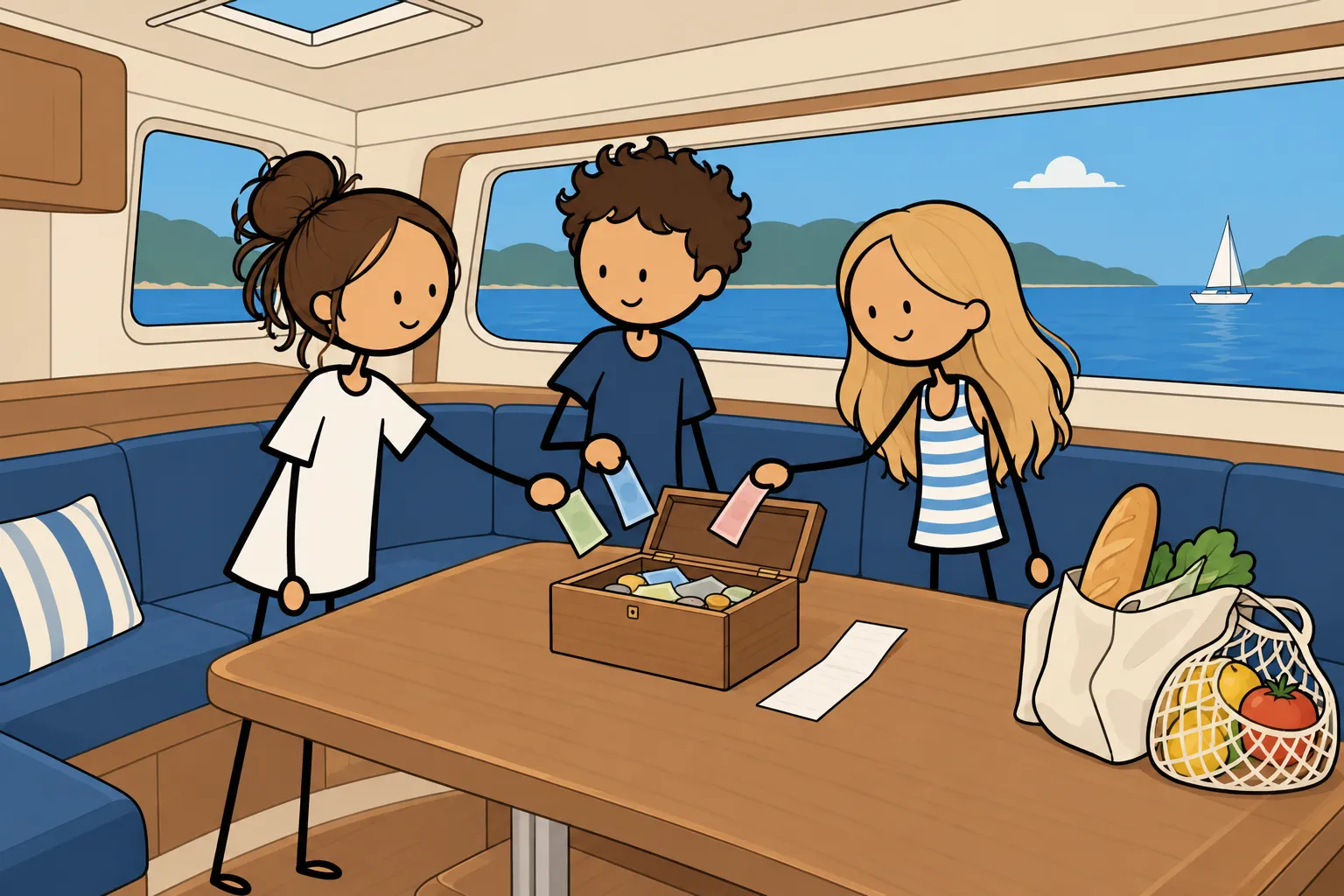
A shared kitty is the simplest way to split food costs without calculating after every purchase.
- At the start everyone puts in the same amount, and one person keeps the cash and receipts.
- Everything shared is paid from it: shopping, water, bakery, market. You can also pay fuel, marinas and port fees from it, since they aren't in the boat price either.
- When the kitty runs out, everyone adds the same amount again, and at the end of the week what's left is split.
- Tavernas are paid from the kitty by some crews and individually by others. Agree it in advance.
The skipper doesn't put money in the kitty. The crew covers the skipper's food and drink, and the rule is simple: what you eat, the skipper eats. So count them in every meal. It's easier to start with a smaller amount and top up than to guess the whole week upfront.
Frequently asked questions
1Is food included in the price of a sailing week?
2Who pays for the skipper's food?
3Do we have to cook every day?
4Can you drink the tank water on the boat?
5What if someone in the crew has an allergy or doesn't eat meat?
Your week
Planning a week on the water?
Tell us when you'd like to sail and how many of you there are, and we'll suggest boats that suit your crew. You already have the shopping list.