Hostess or Cook on a Yacht - the difference and which one you need
A hostess helps the skipper, keeps the boat clean and makes simple meals, while a cook only does the food. The difference, who each one suits and what to check before you sail.
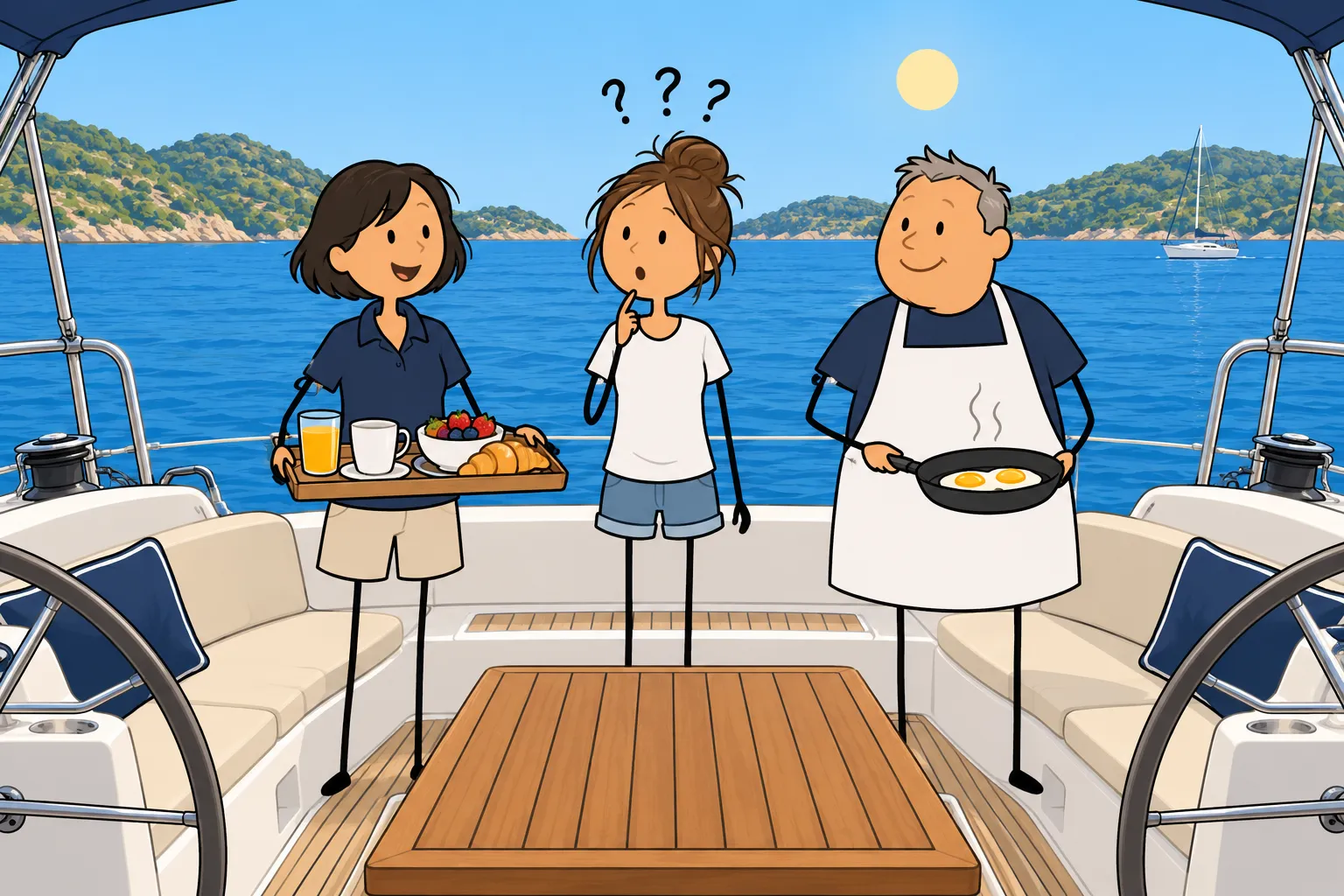
When a crew decides they'd rather not cook and tidy the boat during their week at sea, they can book one more crew member alongside the skipper. That's usually where the question comes up: a hostess or a cook? Both prepare food and both stay on board with you all week, but they don't do the same job.
The short answer: a hostess is an all-rounder. She helps the skipper with the lines, keeps the boat clean and prepares simple meals, usually breakfast and a light lunch. A cook (often called a chef) is all about the food: they plan the menu, often do the shopping themselves and prepare more elaborate dishes, dinners on board included.
In other words, with a hostess you have no chores, and with a cook the food is the centre of the week. Below is the difference point by point, who each one suits, and what to check before you decide.
What's the difference between a hostess and a cook on a boat?
The difference is where their day goes. A hostess splits it across three jobs: helping the skipper, keeping the boat clean and making the meals. A cook spends it in the galley.
- Main job. Hostess: the boat, the meals and helping the skipper. Cook: the food.
- Meals. Hostess: usually breakfast and a light lunch. Cook: up to three meals a day, dinners on board included.
- Menu. Hostess: simple, home-style dishes. Cook: planned in advance around your tastes and diets.
- Shopping. Hostess: usually done by her. Cook: usually part of the job, but not with every company.
- Cleaning. Hostess: saloon, galley, cockpit, heads. Cook: the galley, the rest by agreement.
- Lines when mooring. Hostess: helps the skipper. Cook: not a given.
The names aren't used the same way everywhere, though. Some companies also call the hostess a "boat cook", and on sailing charter yachts one person often covers both jobs. So before you sail, don't just ask what the role is called, ask what exactly it includes.
What does a cook on a boat do?
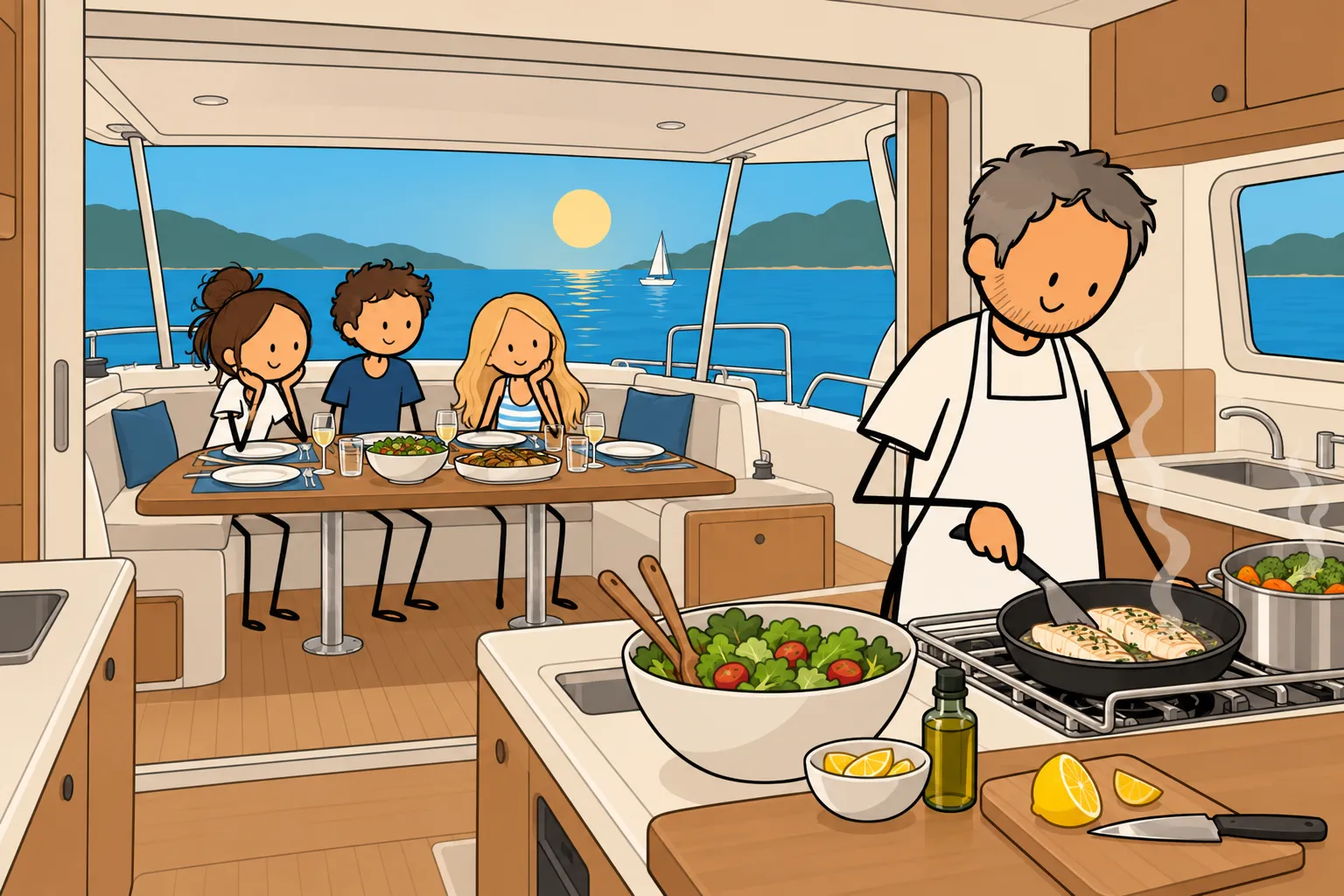
A cook does one job, the food, from the plan to the plate.
- Plans the menu. Before departure or on the first day, they ask what you eat and don't eat, who's vegetarian and who has an allergy, and put together a menu for the whole week.
- Does the shopping. For many cooks, provisioning is part of the job: they buy most of the food at the marina before you leave and top up fresh produce along the way, because they like to pick what they'll cook with. With some companies, though, the cook only cooks and the shopping and menu are up to the guests, so check this in advance.
- Cooks more, and more elaborately. With some companies the cook makes up to three meals a day, with snacks and drinks in between. They make the difference where a hostess stops: dinners on board, dishes with several steps, local cuisine.
- Looks after the galley. They keep the galley tidy. With some companies the cabins, heads and the rest of the boat are explicitly not their job, unless you agree otherwise.
Even the best cook works in a boat galley: a small space, little room for supplies, a limited fridge and limited fresh water, and a boat that is sometimes moving. A good cook on board knows how to make a great meal in those conditions and fits the menu to what the galley can do.
What food can you expect from a hostess, and what from a cook?
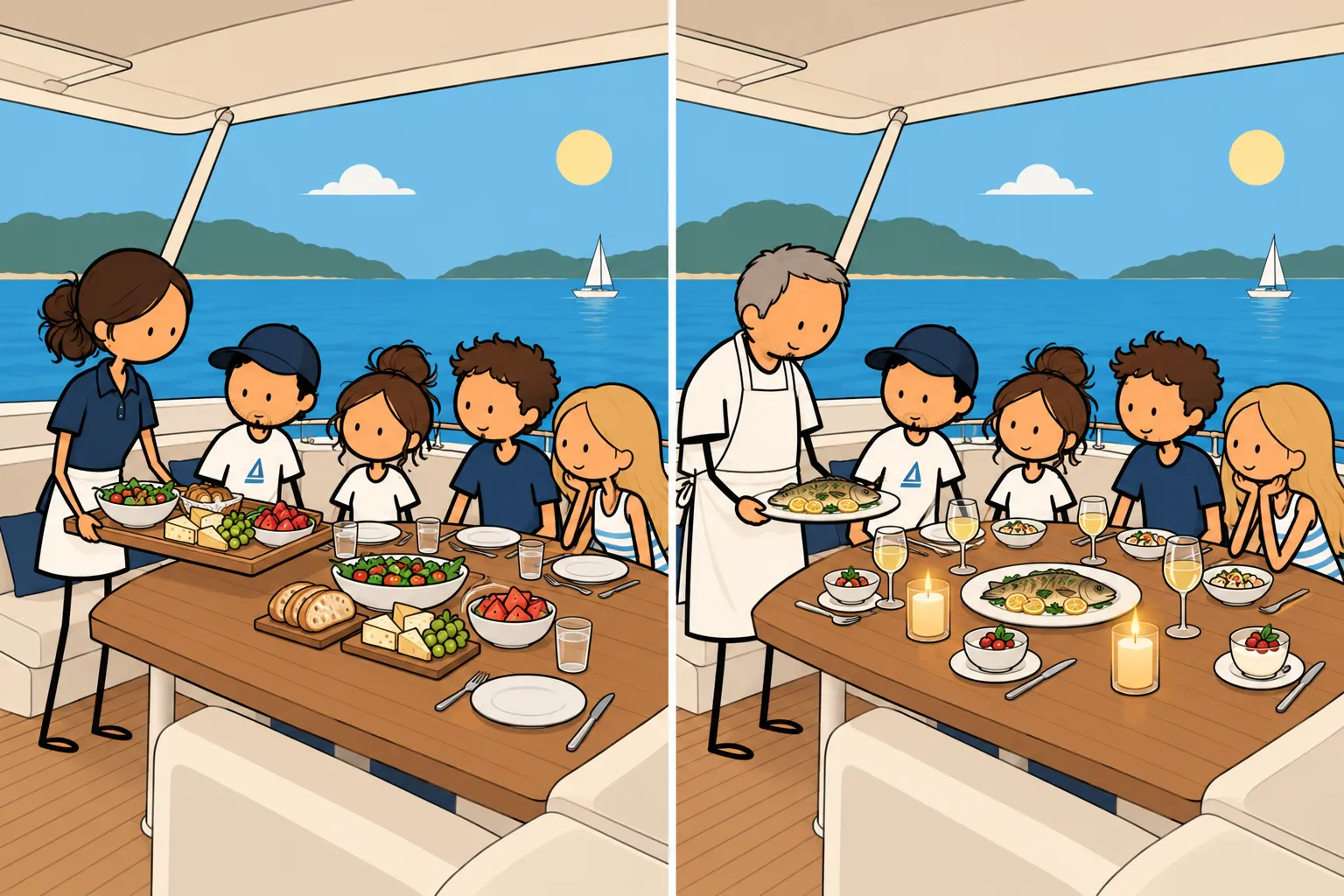
This is where you feel the difference most.
With a hostess you eat simply and home-style. There's breakfast in the morning, and for lunch in the bay something like pasta, risotto or a salad, with coffee, tea and snacks in between. A hostess isn't a chef, so don't expect elaborate menus. Dinner is usually at a taverna on the island, and if you'd like to have dinner on board too, that's agreed separately.
With a cook the food is part of the programme. The menu is planned for the whole week, the dishes are more elaborate, and dinner can be on board too, for example when you're anchored in a calm bay and don't feel like going ashore. Many cooks love cooking local cuisine from fresh ingredients: you just tell them in advance what you like, or go with the menu they suggest.
Either way, the crew pays for the food for the week from a shared grocery kitty, because food isn't included in the boat price. With a cook you eat on board more often, so the shopping is bigger, but you spend less in tavernas.
Who looks after the boat and the lines if you have a cook?
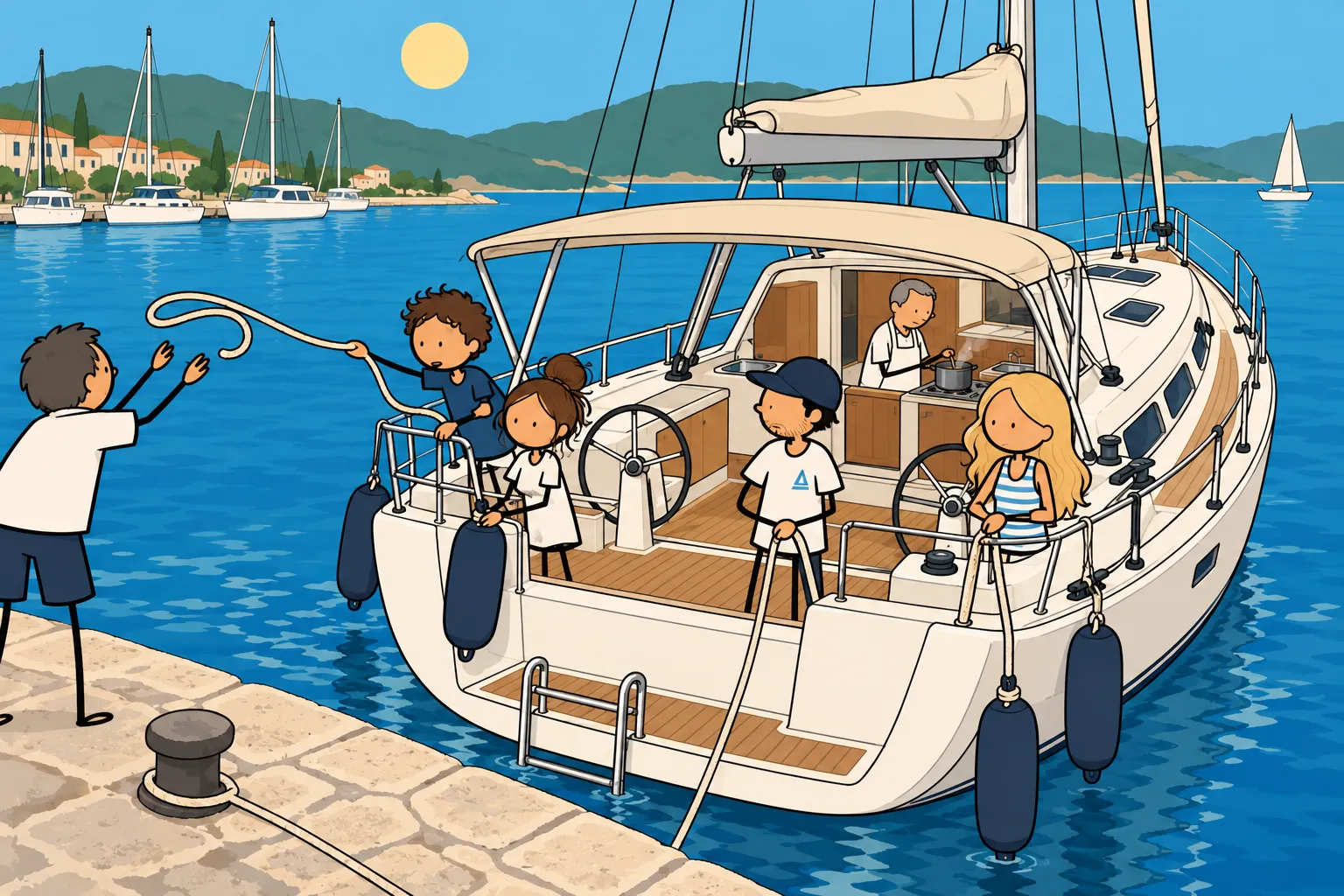
This is the difference that's easiest to miss. With a hostess, the work on board is covered: she helps the skipper when mooring, tidies the saloon, cockpit and heads, and does the washing up. A cook is focused on the food, so the rest of the work during the week stays with the crew, just as when you have no one besides the skipper.
- The lines. In some harbours the skipper needs a hand when mooring: someone passes or throws a line, ties it to a cleat and sets the fenders. It's basic, needs no prior knowledge, and the skipper explains it at the start of every week.
- Cleaning. During the week the crew tidies the saloon, cockpit and heads, unless you agree otherwise with the cook.
- Final cleaning. That's not a job for the crew or the cook, because it's already part of the yacht package.
That's why, for a holiday with no obligations at all, our recommendation is a hostess. A cook is the right choice when the food matters more to you than who tidies the cockpit after breakfast.
Who is a hostess right for, and who is a cook right for?
There's no wrong choice. It just comes down to what matters more on your holiday: having no chores at all, or eating really well on board.
A hostess is the better choice if...
- you want a holiday with no obligations, from the dishes to the lines
- breakfast and a light lunch on board are enough, and you like your dinners at a taverna
- you're travelling with kids and it helps that meals and tidying are taken care of
- there are more of you, and more people means more tidying and more dishes
A cook is the better choice if...
- food is one of the main reasons you go on holiday
- you'd like to have dinner on board in a bay more often, instead of at a taverna
- someone in the group has a special diet and you'd like the whole menu planned in advance
- you're celebrating something, a birthday or an anniversary, and want a festive dinner on board
- you don't mind sharing the other jobs on board within the crew
What should you check before booking a hostess or a cook?
The same title doesn't always mean the same job with different companies, so it's best to agree on everything important in advance.
- What exactly the role includes. How many meals a day, whether dinners too, and whether shopping, cleaning the boat and helping the skipper with the lines are included.
- Where they sleep. Every crew member needs their own berth. Many catamarans have small crew cabins in the bows, and if the boat has none, a hostess can share a cabin with the skipper only if it has two separate (bunk) beds, never a double bed. Otherwise the crew member takes a guest cabin. If you want both a hostess and a cook, plan for one more berth.
- Who covers the crew's food. The skipper's food is covered by the crew: what you eat, the skipper eats. The hostess and the cook eat with the crew on board, or the guests pay an extra food fee, usually about €30 a day. It varies by boat, so check it in advance.
- The boat's maximum. The skipper, the hostess and the cook all count towards the boat's maximum number of people, so on a boat for 9 with a skipper, a hostess and a cook, that leaves 6 guests.
- The grocery budget. With a cook, agree on a rough amount before they plan the menu, because the menu drives the shopping.
- Diets and allergies. Tell the cook before you sail, so they're in the menu from day one.
Frequently asked questions
1Does a cook help the skipper with the lines?
2Who pays for the groceries when you have a cook?
3Is a cook more expensive than a hostess?
4Can you have both a hostess and a cook on board?
Your week
Hostess or cook, which one suits your crew?
We arrange a hostess, or a cook if you'd like one. Tell us your dates, how many of you there are and what matters more to you, a holiday with no chores or the food on board, and we'll suggest boats that suit you.