Yacht hostess - what she does and who needs one
What a hostess does during a sailing week, from breakfast to mooring, what isn't her job, where she sleeps and why we recommend her for a no-chores holiday.
On a skippered sailing week, the skipper runs the boat. They sail, moor, anchor and look after everyone's safety, and they propose the route and put it together around the weather and the guests' wishes. Cooking, washing up and tidying the boat aren't part of the skipper's job, so during the week the crew usually shares them, which for many is part of the sailing experience.
A hostess is the second crew member, and she takes over exactly those jobs. She helps the skipper with the lines when mooring, keeps the boat clean, does the shopping and prepares the meals. That's why, for anyone who wants a holiday with no obligations at all, our recommendation is to book a hostess alongside the skipper.
Below: what her day looks like, what is and isn't her job, where she sleeps, and what's worth agreeing with her at the start of the week.
What does a yacht hostess do?
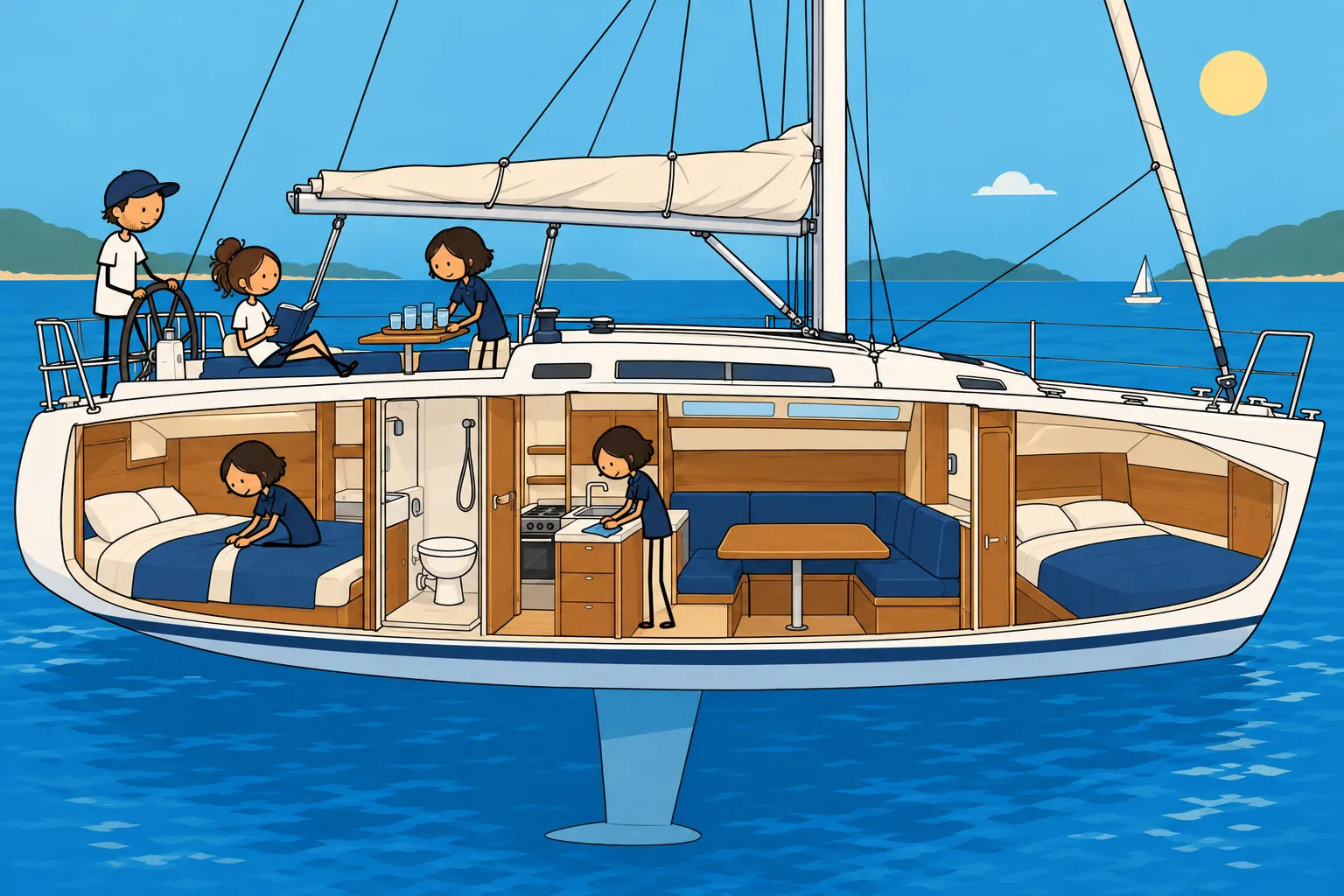
A hostess on a sailboat or catamaran has three main jobs.
- She helps the skipper. In some harbours the skipper needs a hand with the lines when mooring: someone passes or throws a line, ties it to a cleat and sets the fenders. Without a hostess, someone from the group does it. It's basic, needs no prior knowledge, and the skipper explains it at the start of every week. With a hostess, it's her job, as is helping the skipper when leaving port and anchoring.
- She keeps the boat clean. Every day she tidies the saloon, galley, cockpit and bathrooms, does the washing up and takes out the rubbish.
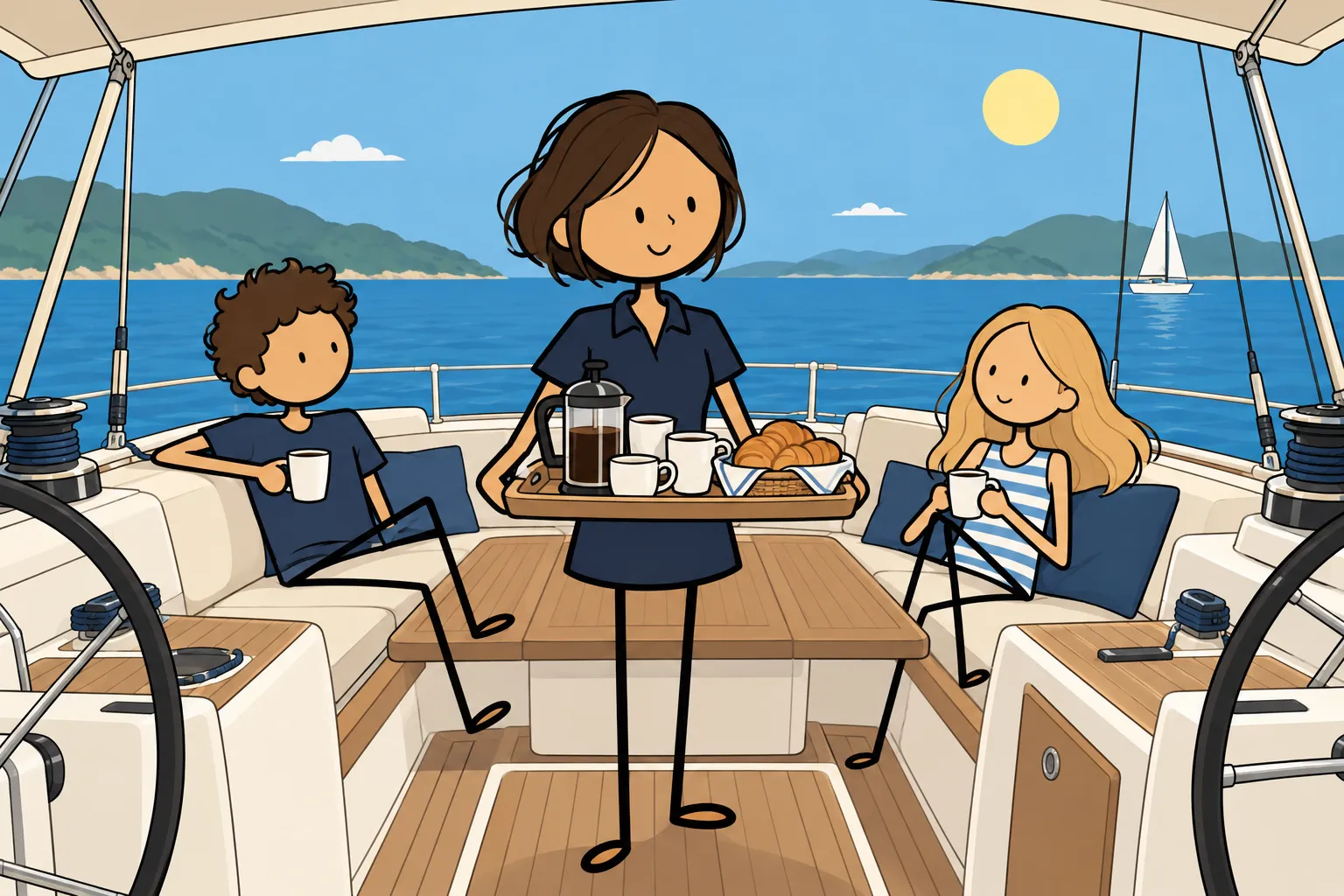
- She prepares the meals. Most often two meals a day, breakfast and a light lunch, plus coffee, tea and something to snack on in between. Dinner is often in a taverna on the island, and if you'd like to eat on board in the evening too, that's agreed separately.
On top of that, the hostess usually takes over the food shopping: the big shop at the start of the week and fresh top-ups along the way, when the boat stops in a harbour. She shops for the group with the money the group sets aside for food, so you don't have to think about what's missing from the fridge.
What does a hostess's day look like?

No two weeks are the same, because the route depends on the weather and on what the group wants. Still, most days follow a similar rhythm: breakfast on the boat or in the marina, a sail to the next cove or island, a swim and lunch, an afternoon sail, and dinner at a restaurant on the island or on board. Here's where the hostess fits into that day.
The first day
While the skipper checks the boat, the hostess checks the galley, the kitchenware and the provisions already on board. After the boat briefing she asks the group what everyone eats and doesn't eat, who has allergies and when you'd like your meals. It's the right moment to agree on the small things, because after that everything runs by itself.
Morning
While the group wakes up, the hostess makes breakfast. Afterwards she does the washing up, tidies the saloon and bathrooms and clears the galley before the boat sets off, and when leaving port she helps the skipper with the lines.
Under way and at anchor
While the boat sails, you sunbathe, read or simply enjoy the sailing. When the boat anchors in a cove, the group goes for a swim and the hostess prepares lunch, which you eat on board, at anchor.
Afternoon and evening
After the afternoon sail, when the boat moors in a harbour, the hostess again helps the skipper with the lines and fenders. If provisions need topping up, that's when she goes shopping. In the evening, when the group has dinner in a taverna, she has time for herself too.
What isn't a hostess's job?
A hostess makes your week easier, but she isn't on call for everything. It's good to know this in advance so expectations match.
- She isn't a professional chef. She makes simple, home-style meals with what the boat's galley has. If food is the centre of your holiday and you'd like elaborate menus, that's what a cook on board is for.
- She doesn't cook at any hour. Meal times are agreed in advance, so breakfast doesn't wait for each person separately.
- She doesn't decide the route. The skipper proposes the route and puts it together around the weather and the guests' wishes. Where the boat goes isn't the hostess's call.
- She isn't a babysitter. She can help with the children, but childcare isn't part of her job unless you agree otherwise in advance.
- She doesn't work around the clock. She doesn't stand night watches and, like anyone at work, she's entitled to rest and a bit of privacy.
Whether she also tidies your cabin is something you agree on too: some people like their cabin done every day, others prefer to keep it private.
Why do we recommend a hostess for a holiday with no obligations?
Without a hostess, the work on board is shared. The skipper is in charge of the boat. Everything else falls to the group: someone makes breakfast, someone washes up, someone does the shopping, and in some harbours someone helps the skipper with the lines. None of it is hard, and for many groups it's a perfectly normal part of the week.
But if you came aboard to rest, those are still chores. With a hostess, there aren't any: when you wake up, breakfast is ready and the boat is tidy, and when you moor, the lines are her job. What's left for you is the sea, the sun and the company.
The final cleaning of the boat is already part of the yacht package, but that happens only at the end, after you leave. During the week, keeping the boat clean is up to the group, or to the hostess.
A hostess makes the most sense:
- if this is your annual holiday and you don't want any duties at all
- if you're travelling with children and it helps that meals and dishes aren't on you
- if you're a bigger group, because more people means more shopping, dishes and tidying
- if nobody in the group really enjoys cooking
Where does the hostess sleep on a boat?
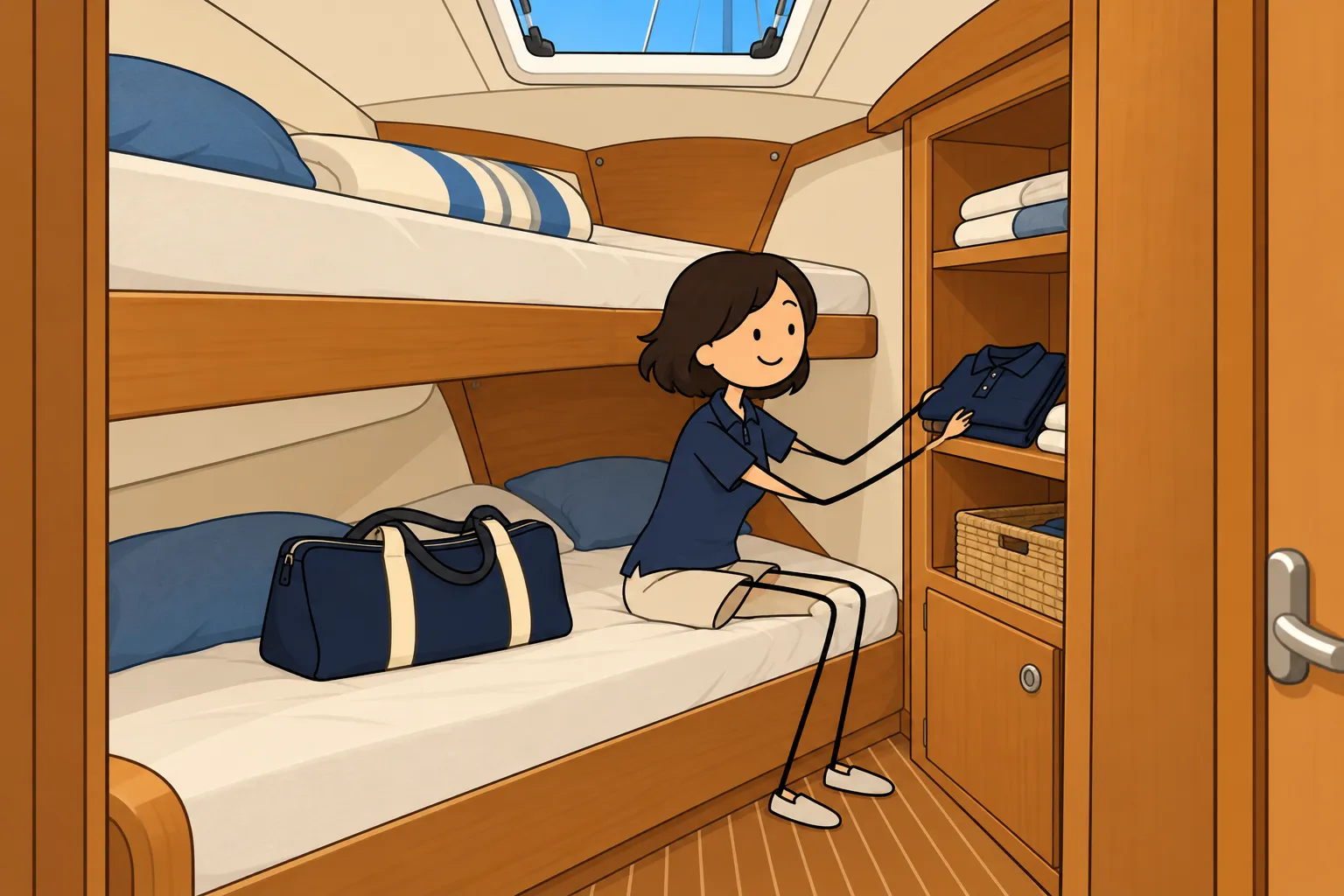
It depends on the boat, and it's worth checking before you count beds.
- A crew cabin in the bow. On many catamarans, at the very front of each hull there's a small cabin with a single berth, often reached only through a hatch on deck. It's usually what the "+2" in "4+2 cabins" stands for. When the skipper sleeps in one and the hostess in the other, all the guest cabins stay with your group. Some sailboats also have a small crew space in the bow.
- A guest cabin. If the boat has no crew cabin, the hostess can share a cabin with the skipper, but only if it has two separate (bunk) beds, never a double bed. Otherwise she takes one of the guest cabins, and that cabin is then not available to your group.
What holds on every boat: the crew shouldn't sleep in the saloon or the cockpit. The skipper and the hostess each need their own place to rest, so count the hostess in when you plan the cabins. She also counts towards the boat's maximum number of people: on a boat for 9 with a skipper and a hostess, that leaves 7 guests.
As for her food, she eats with the crew on board, or the guests pay an extra food fee, usually about €30 a day.
What should you agree on with the hostess?
The best weeks are the ones where everything important is agreed on the first day. A few things worth talking through:
- Diet and allergies. Say what you don't eat, who's vegetarian and who has allergies. The hostess adapts the meals to that.
- Meal times. When breakfast is, and whether lunch is in the cove or later.
- Dinners. Which evenings you plan to eat in a taverna and which on board, so she knows how much to buy.
- Food budget. A rough amount for the shopping and how the spending is tracked. The hostess usually keeps the receipts, so everything is clear at the end of the week.
- Cabins. Whether you'd like her to tidy your cabin or not.
Frequently asked questions
1Is a hostess the same as a cook?
2Does the hostess make dinner too?
3Do we have to help with the lines if we have a hostess?
4Does the hostess take a guest cabin?
5Who pays for the hostess's food?
6Should you tip the hostess?
Your week
Want a sailing week with no obligations at all?
Tell us your dates, how many of you there are and that you'd like a hostess too, and we'll suggest boats that suit you.