Greece Against Overtourism in 2026 - What It Means for Sailors
Greece plans stricter rules for Santorini, Mykonos, Rhodes and Kos. What is reported, what is adopted, and why a sailing week still reaches quiet places.
In May 2026 Greek ministers unveiled a plan to sort the country's destinations by how much tourist pressure they carry, and to restrict new building where it is highest. The most detailed reports, from Novinite (citing dpa, 12 May) and To Vima (11 May), name Santorini, Mykonos, Rhodes and Kos. It was a draft then; the framework was adopted by a joint ministerial decision published in the Government Gazette on 7 August 2026 (GTP).
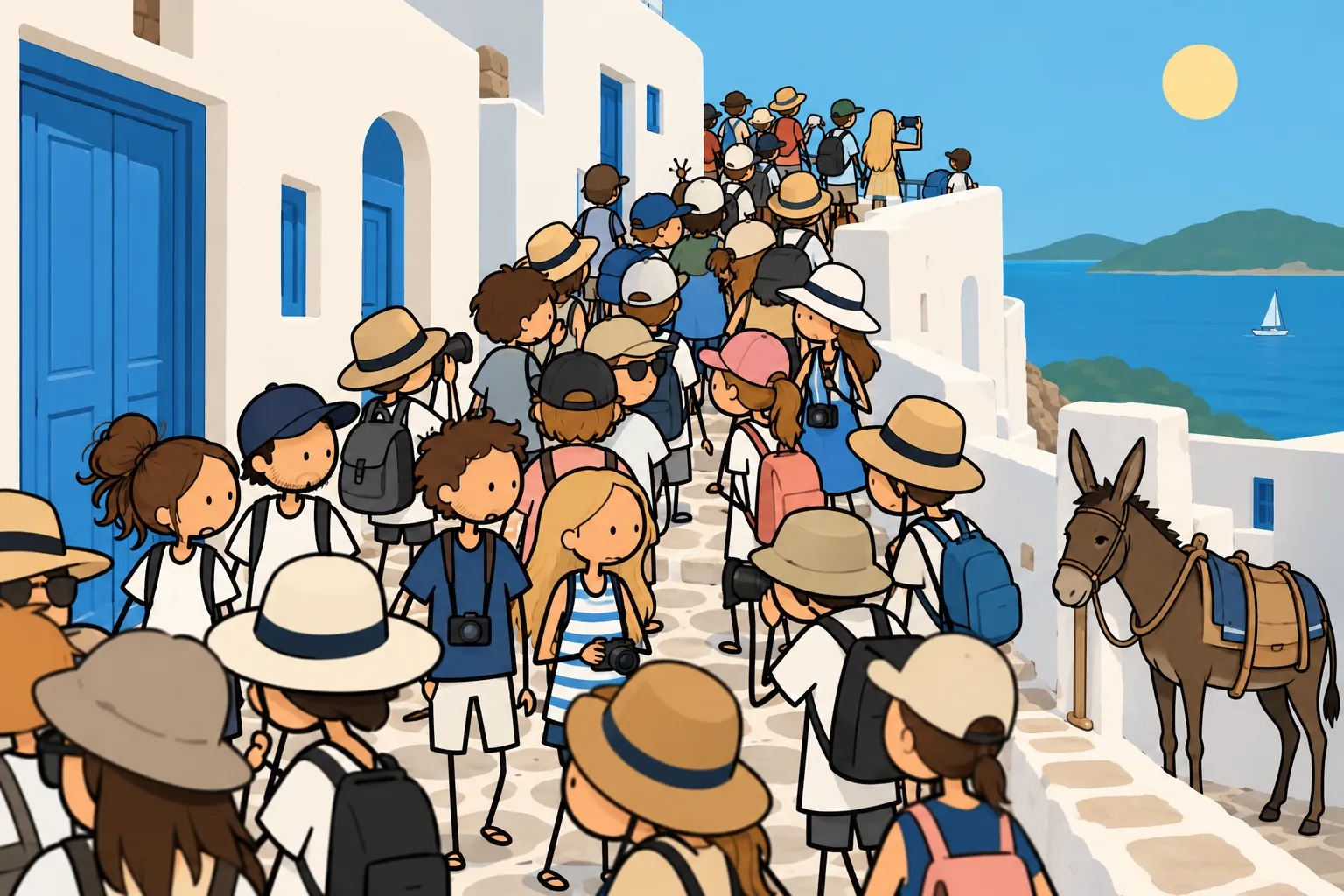
For anyone choosing between a classic island holiday and a sailing week in Greece, the interesting part is the reason behind the plan: Greece had nearly 38 million visitors last year, and a handful of places take most of the strain.
What was adopted, and what did the reports say?
The Special Spatial Framework for Tourism is a long-delayed planning document. Its earlier version was annulled by the Council of State on procedural grounds. According to To Vima in April, the new one was in its final approval stage, with disputes still open.
What the reports say it contains:
- Zones by pressure. Areas are classified from "saturated" (category A, controlled development) to "developing". Saturated areas named include the whole of Skiathos, Mykonos, Santorini and Kos (except Dikaios), plus parts of Rhodes, Corfu, Zakynthos and Crete.
- Hotel size cap. Novinite reports a cap of 100 beds for new hotels in the most affected areas. To Vima's 11 May draft favoured 75 beds, with a possible rise to 100, so the figure was not settled.
- Building limits. Novinite also lists minimum plots of 8 to 16 hectares for hotels outside designated zones, and no construction within 25 m of the sea.
- Short-term rentals. To Vima describes a proposed ban on converting new homes into short-term rentals in saturated zones.
Novinite said the ministerial order was expected by the end of June; it came in August. The Special Spatial Framework for Tourism was published in the Government Gazette on 7 August 2026 (FEK D' 658), and its main rules apply from that date (GTP). How it applies on each island runs through local urban plans, so check the details from the May reports above before you rely on them.
What about the higher high-season lodging tax?
This is the least clear part. In September 2024 the government announced it would raise the climate crisis tax on accommodation, with higher rates in the April to October season (Fortune). The tax already exists and is charged per night, by hotel category. Sources disagree on the current rates, and we found no official confirmation of a further rise for 2026, so we don't quote figures. Check the tax authority's schedule before budgeting.
What does it mean for a sailing week?

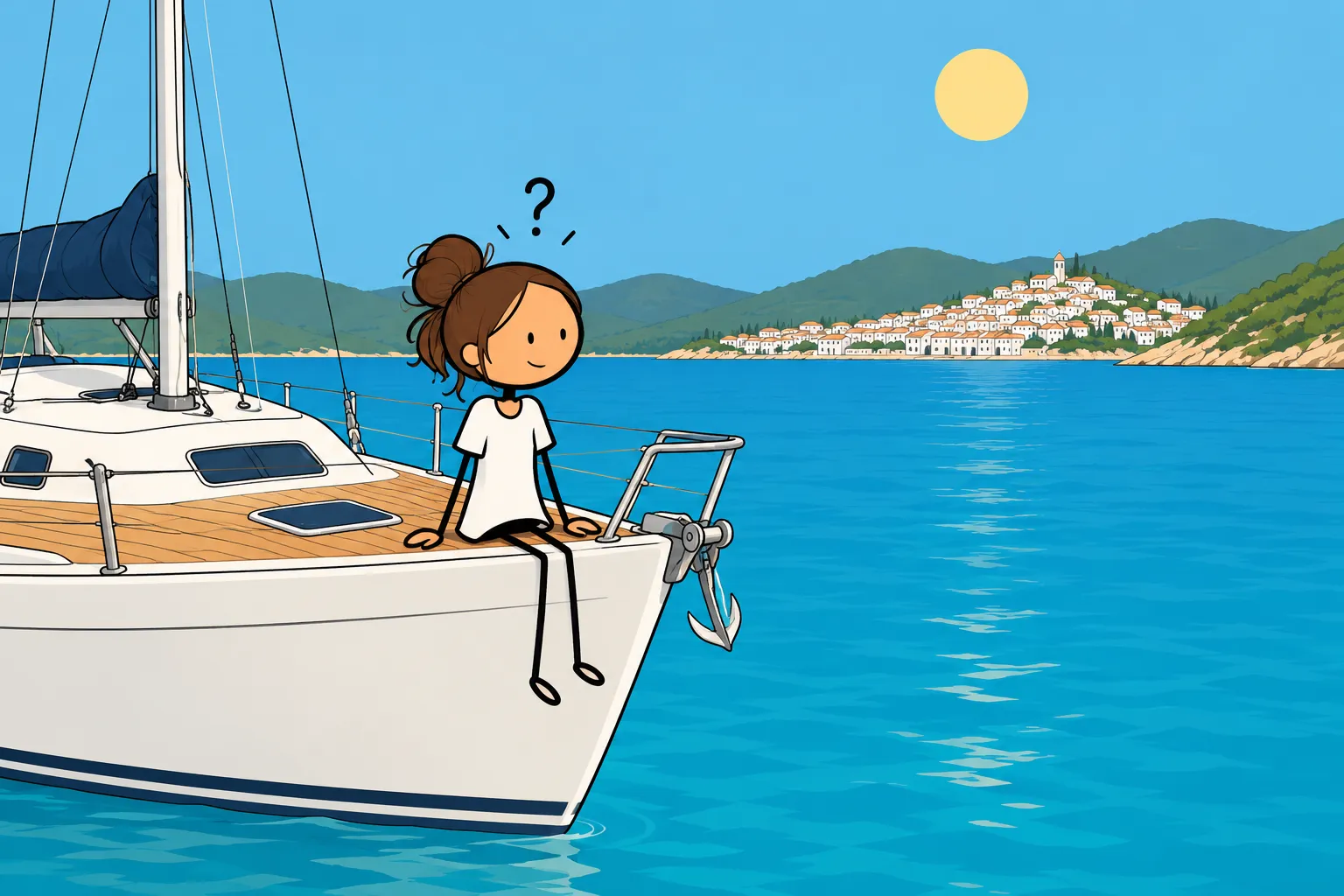
The rules are about building and beds, not about visitors on boats, so a sailing week isn't directly affected. But the picture explains why a boat is an easy way out of the crowds.
On a boat you sleep in a different cove most nights instead of competing for a room in the hot spots. The Ionian route is made of short legs between small islands and quiet harbours, and the Sporades route from Volos pairs a busy island like Skiathos, which is on the saturated list, with calmer ones such as Alonissos. The skipper proposes the route around the weather and your wishes, so quiet stops are a matter of asking.
Honesty matters here: every popular harbour is busy in August, whichever island it is. If crowds are your worry, June or September helps more than any decree.
Frequently asked questions
1Is Greece limiting tourists in 2026?
2Are the new rules already in force?
3Can we still visit Santorini or Mykonos by boat?
Your week
Want a week without the crowds?
Tell us your dates and crew and we'll suggest boats and a route.