Skandalopetra - diving with a stone and one breath
How Greek sponge divers reached the seabed with one breath and a stone, why the diving suit nearly wiped them out, and how skandalopetra lives on today.
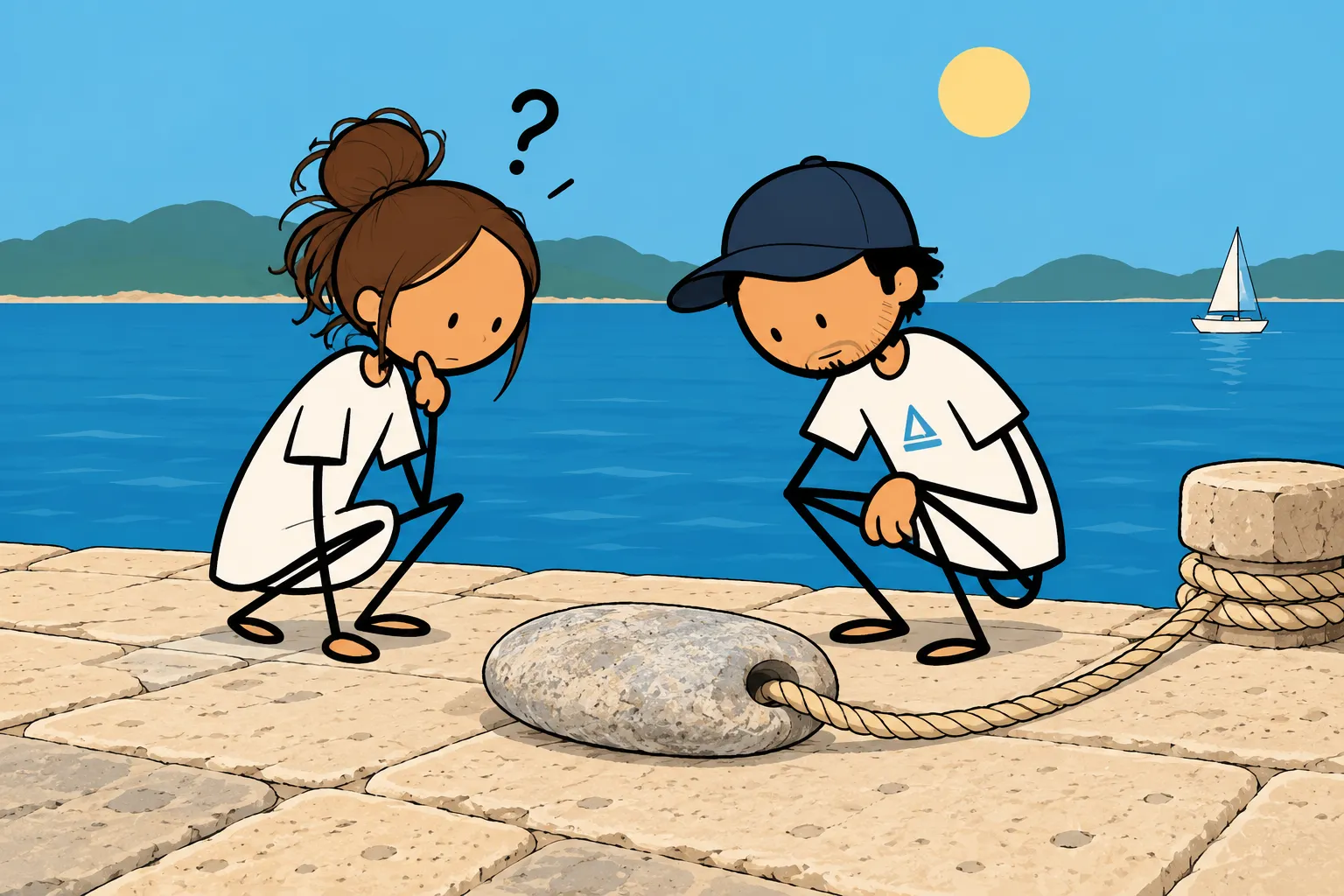
Long before the Greek islands became a sailing holiday, the deepest work in their waters was done with almost no equipment. No mask, no fins, no air. A diver, a rope, a partner in the boat, and a smooth, heavy stone called a skandalopetra.
What is a skandalopetra?
It's a flat stone, usually marble or granite, weighing between 8 and 14 kilos. Its corners are rounded and its shape is streamlined, so it cuts through the water.
That's the whole kit. Greek sponge divers used it for centuries to reach the seabed fast and save their breath for the work at the bottom.
How does a skandalopetra dive work?
The rope
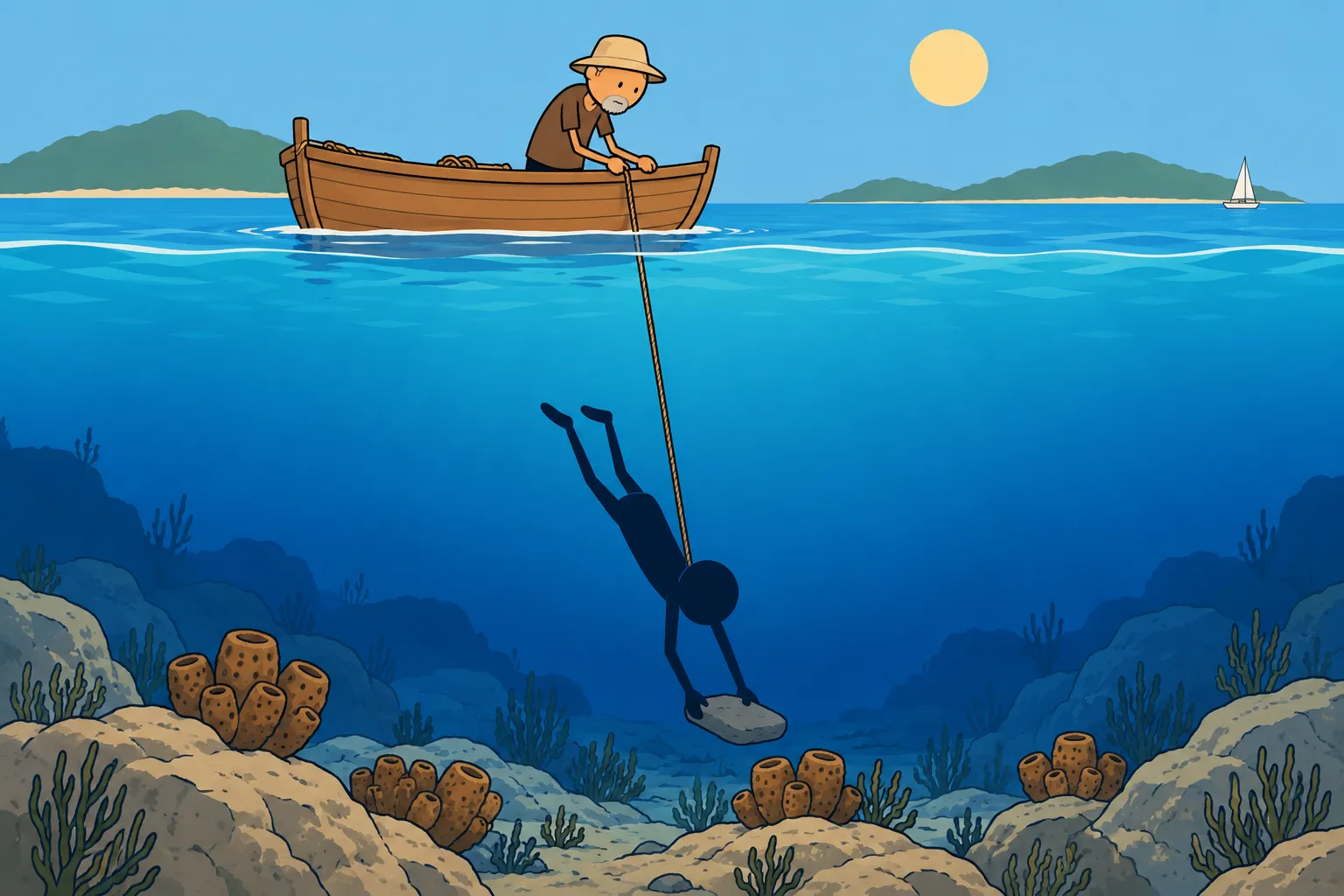
The diver is tied to the stone with a thin cord, and the stone is tied to the boat with the same rope.
The descent
Holding the stone, the diver drops in and stays still and as vertical as possible. The stone does the work: it's the ballast that pulls them down, a brake when they need to slow down, and a rudder to steer toward the spot they want.
The bottom and the way up
Once there, the diver lets go of the stone and works: in the old days, cutting sponges. When it's time, the diver puts their feet on the stone and the partner in the boat pulls them up.
The partner in the boat
The partner has a name: the kolaouzeris, the rope tender. Their job is as important as the diver's. They have to know at every moment how deep the diver is, feel through the rope when the diver slows down to equalize their ears, sense when the stone touches the bottom, and judge the right moment to pull. The diver's life is literally in their hands.
Who were the sponge divers of Kalymnos and Symi?
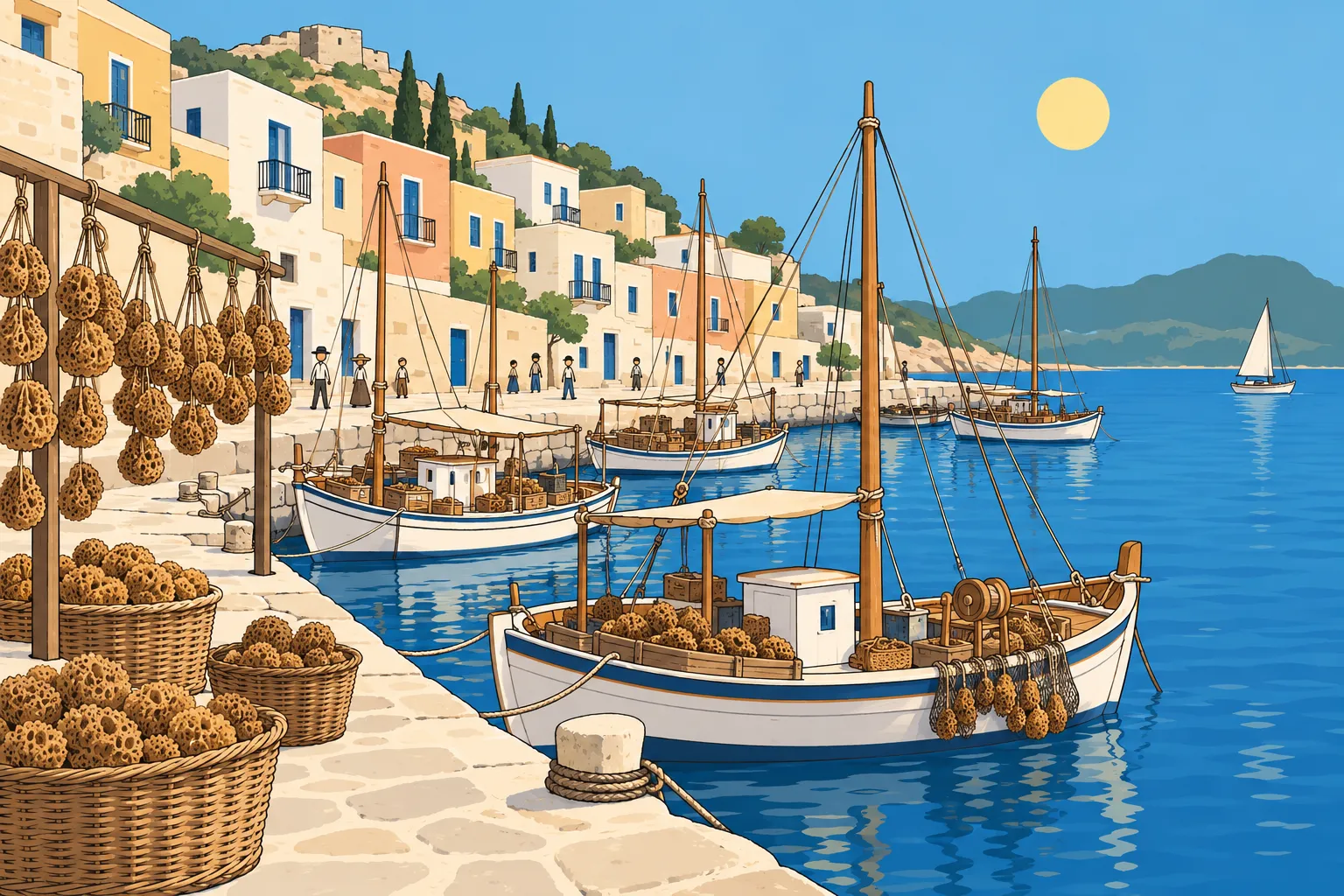
The centre of this world was the Dodecanese, above all the islands of Kalymnos and Symi. Whole communities lived from sponges. Crews spent entire seasons away, diving along the coasts of North Africa and Sicily.
Why did the diving suit make things worse?
In 1865 the first hard-hat diving suit, the *skafandro*, arrived in the Dodecanese. Air was pumped down from the boat, so divers could stay on the bottom far longer than one breath allowed.
Nobody yet understood decompression. Divers came up too fast and were paralysed or died within minutes of surfacing. In 1867, of 24 divers working with 12 suits, 10 died in a single season. Some estimates put the toll at around 10,000 deaths among Mediterranean divers in the suit's first 50 years.
What was the deepest skandalopetra dive?
The most famous skandalopetra dive wasn't for sponges. In 1913 an Italian battleship lost its anchor off Karpathos, and Stathis Hatzis, a sponge diver from Symi, went down with his stone to more than 80 metres to find it. It's remembered as the first depth record in freediving.
Is skandalopetra still practised today?
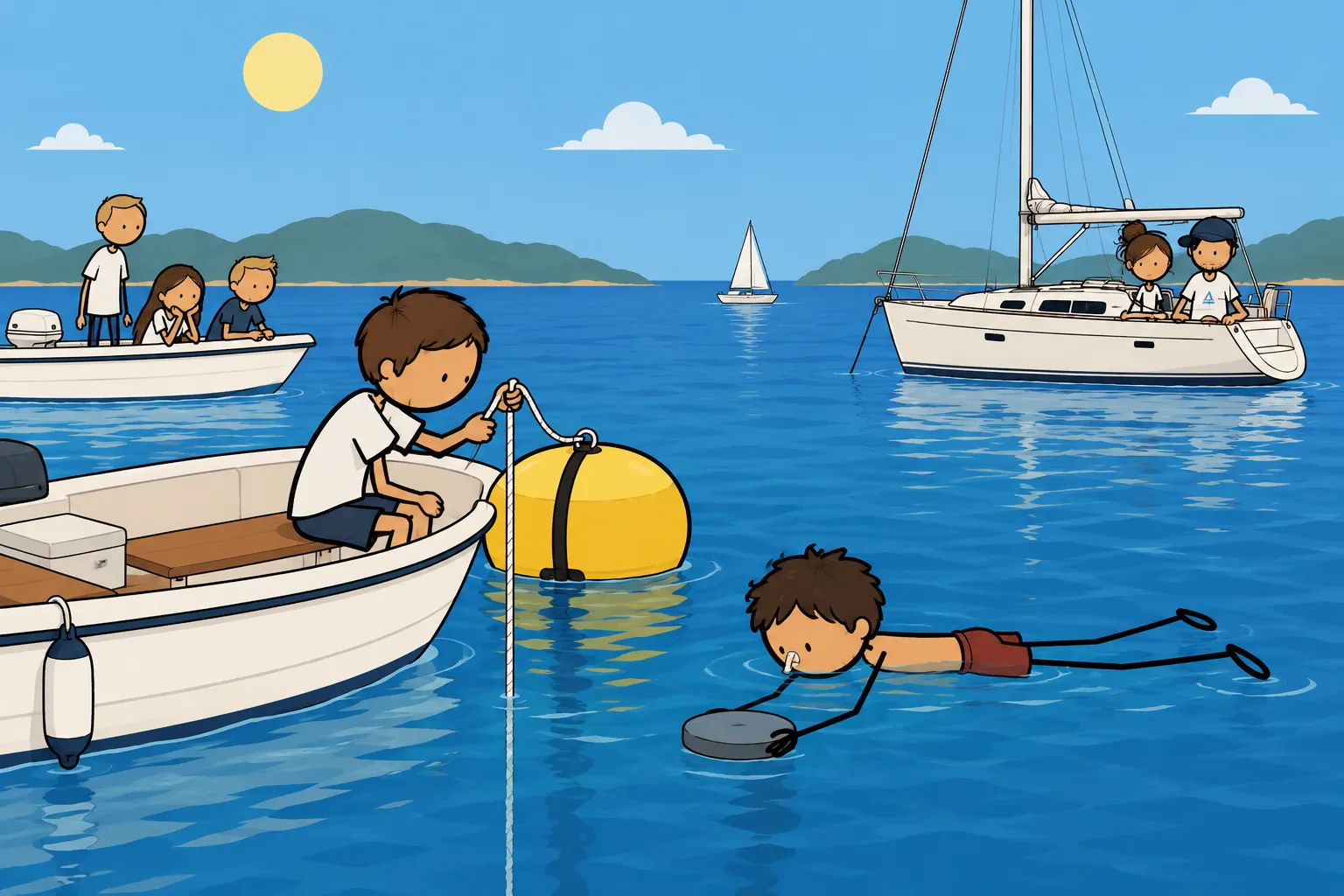
The old technique is now a competitive freediving discipline, overseen by AIDA International. The rules keep the spirit of the sponge boats:
- Each team has two people: the diver (*voutichtis*) and the rope tender.
- The diver may wear a nose clip. Wetsuits, masks and fins aren't allowed.
- It's the only true team event in freediving: the result depends as much on the person pulling the rope as on the person holding their breath.
Karpathos, the island of Hatzis's dive, has hosted an international skandalopetra competition.
Where can you feel this history from a boat?
Sail through the Dodecanese and the sponge-diving past is all around you, in the sponges sold along the harbours of Kalymnos and Symi. And when, during your week on a sailboat, you swim down from the anchorage to touch the sand five metres below, you'll understand how far eighty metres really is.