Sailing Ithaca - harbours, bays and what to see
Sail to Odysseus's island. Where boats moor on Ithaca, the best bays, Homeric sites ashore, the wind, and how Ithaca fits into a week in the Ionian.
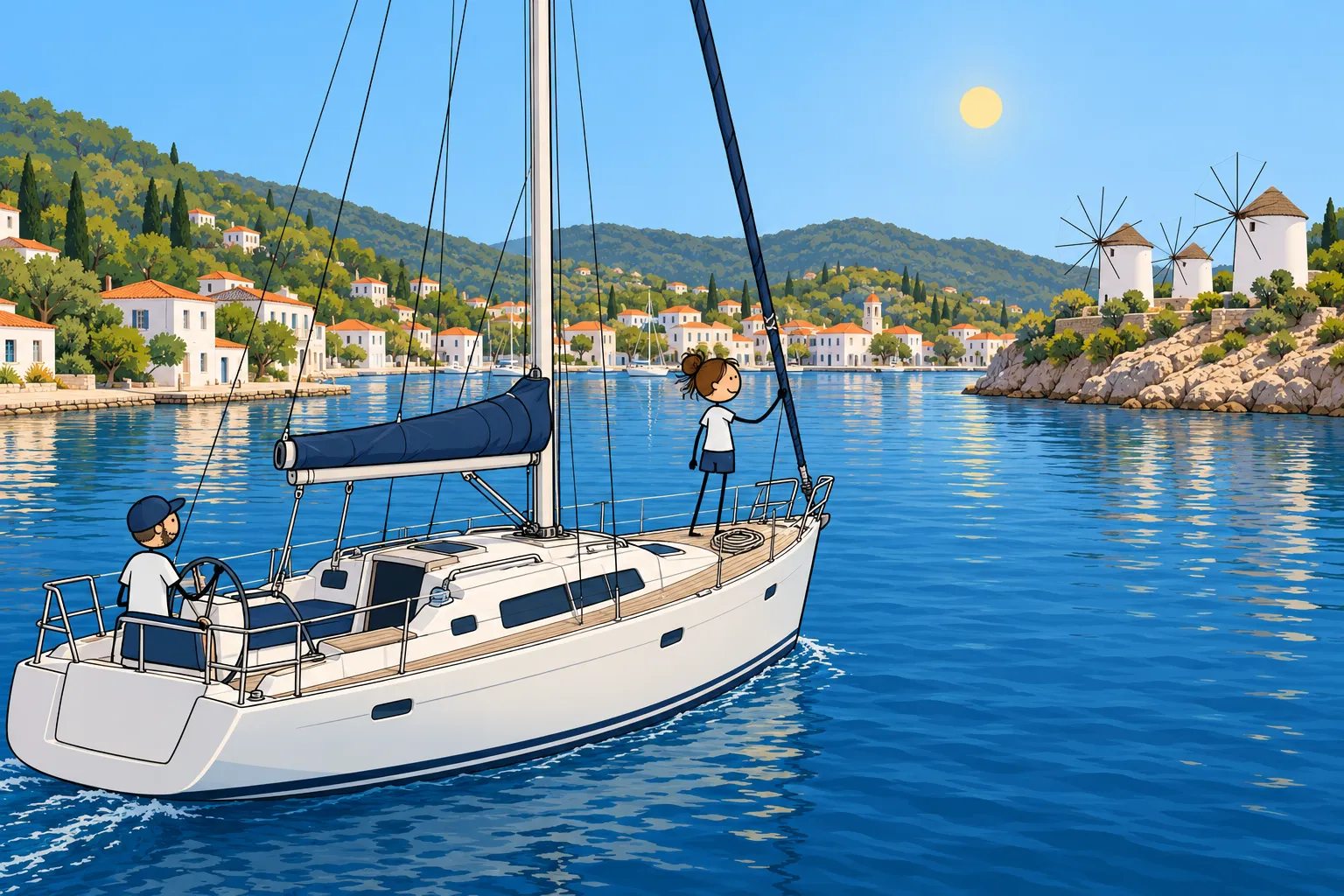
Ithaca is the island of Odysseus: a rocky, green island in the southern Ionian, separated from Kefalonia by a channel just 2 nautical miles wide. You do not need to know the Odyssey to enjoy it, but it adds something when you walk where tradition places the hero's home. It is a highlight of our Ionian week, and a very different place from the lively harbours around Lefkada.
Where do boats moor on Ithaca?
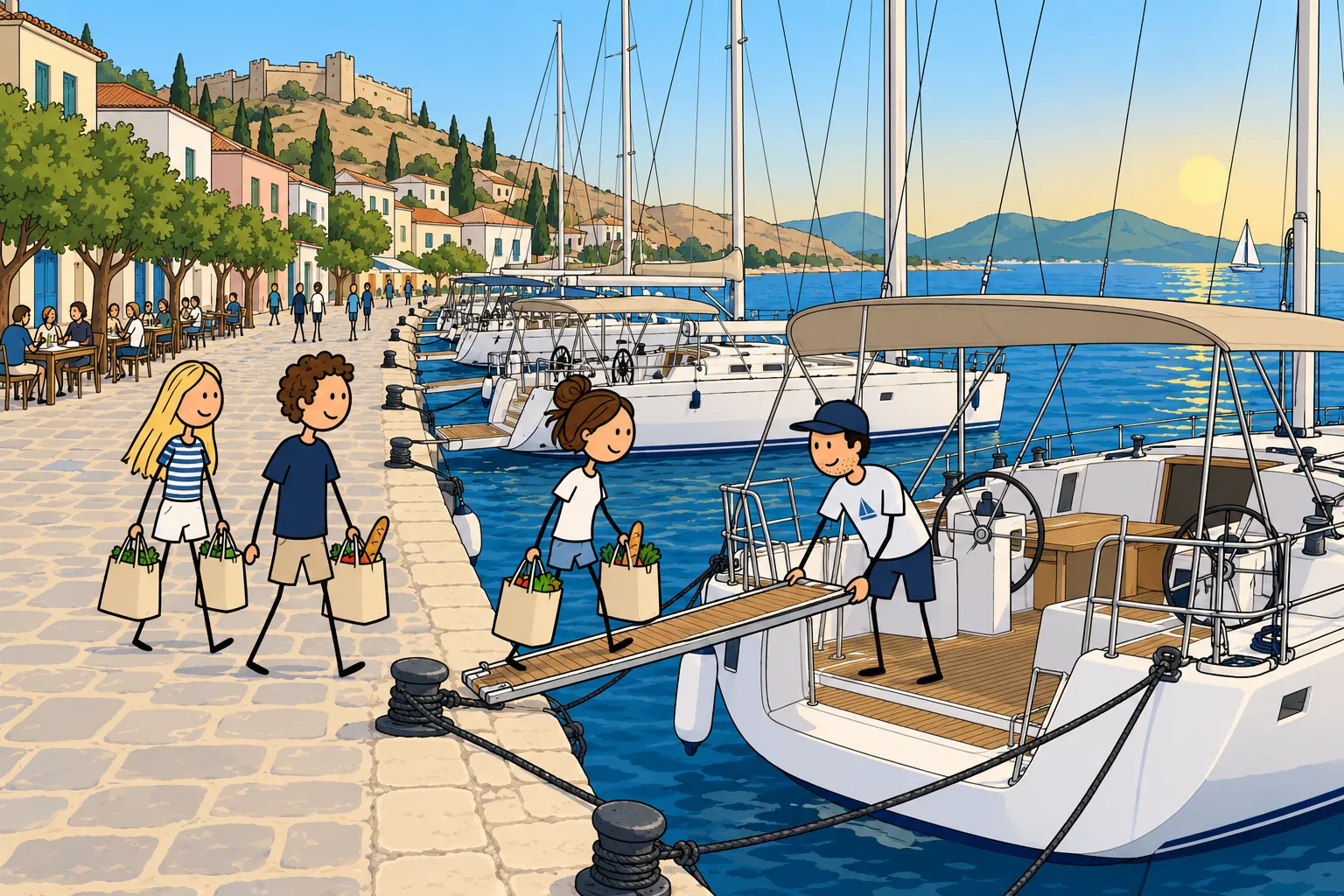
- Vathy: the main town and port, in a deep, sheltered bay, with about 2,900 people and two Venetian forts. You can go stern-to the quay along the village esplanade, or use the quay on the north-north-east side of the bay, which is best against north-westerlies. Fees and shore power vary, so the skipper checks on arrival.
- Frikes: a tiny port at the head of a narrow bay in the north. The best berths are along the breakwater, close to the village. Ferries cause wash, so we use plenty of fenders.
- Kioni: a pretty, traditional village under wooded hills, with three windmills on the headland guiding your approach. It is sheltered from all winds except the rare south-easterly, and the seabed is muddy with good holding. The best berths are stern-to the quay, and it is busy in summer, so arriving before noon helps.
- Port Polis: a beautiful bay and small port in the north-west, mostly for local boats, where boats usually anchor and take a line ashore.
In some harbours guests help with the lines. It is basic, and the skipper explains it at the start of every week. If you are curious about how marinas, quays and anchorages differ, see our guide.
What are the best bays to anchor and swim?
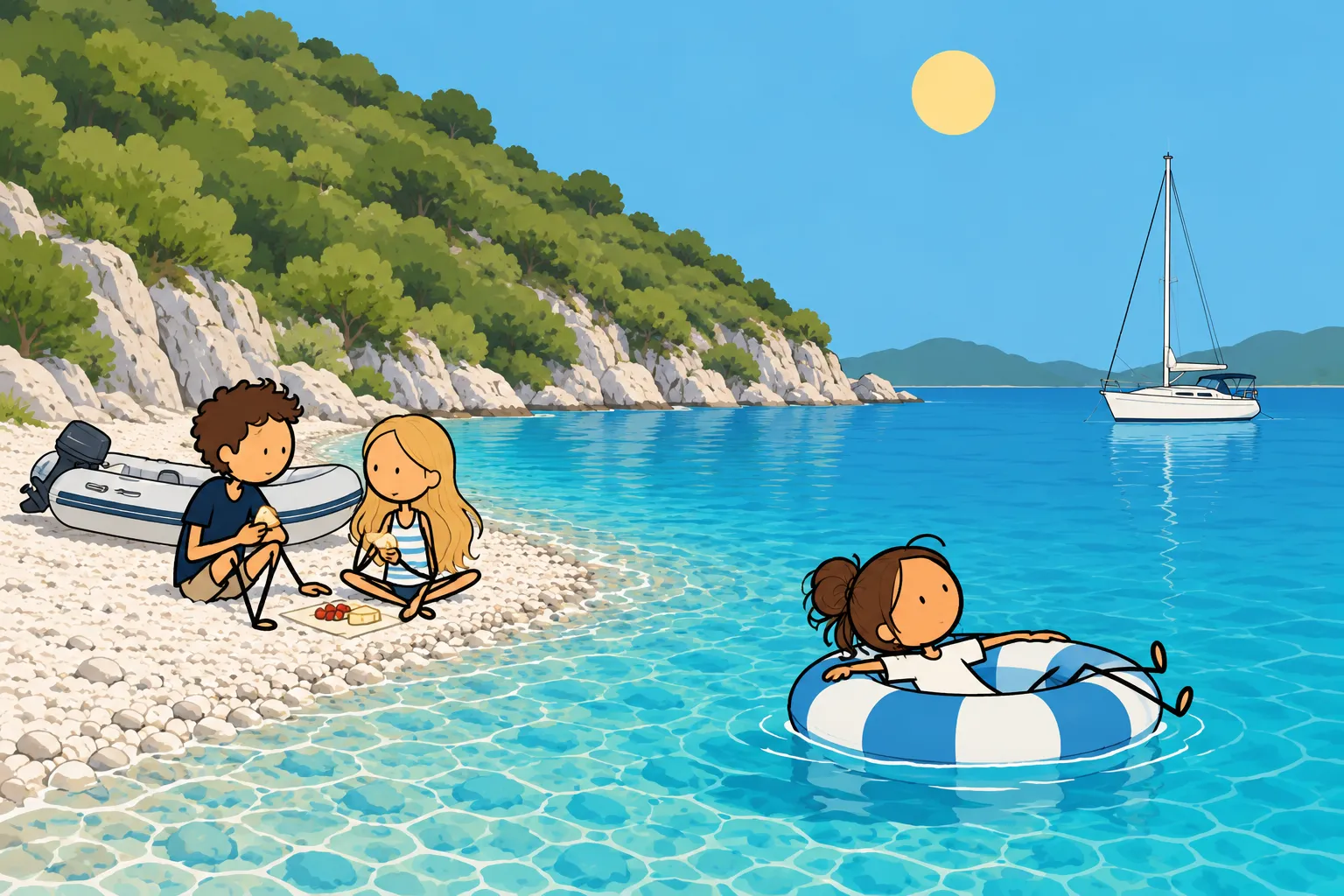
- Gidaki: a beach in the Vathy area that is reachable only by boat or an adventurous path, and often called the island's best. South of it are several smaller, empty bays for a lunch stop.
- Sarakiniko: a quiet, wild anchorage on the east coast, open only to south-easterly winds. In calm weather, one of the nicest places to swim.
- Pera Pigadia: a bay with three coves for anchoring close to the beaches, with a tiny islet with a harbour.
- Agios Nikolaos (Marmagkas): an underrated bay behind a small islet and chapel with excellent shelter and good snorkelling.
- Atokos and Arkoudi: two small islands between Ithaca and Meganisi with anchorages. Atokos has a reported rule (not confirmed in official sources) that restricts sailing, anchoring and swimming within 300 m from 1 May to 31 October to protect the monk seal, so check what applies before the week.
The skipper picks calm, sheltered bays and anchors on sand.
What is there to see ashore?
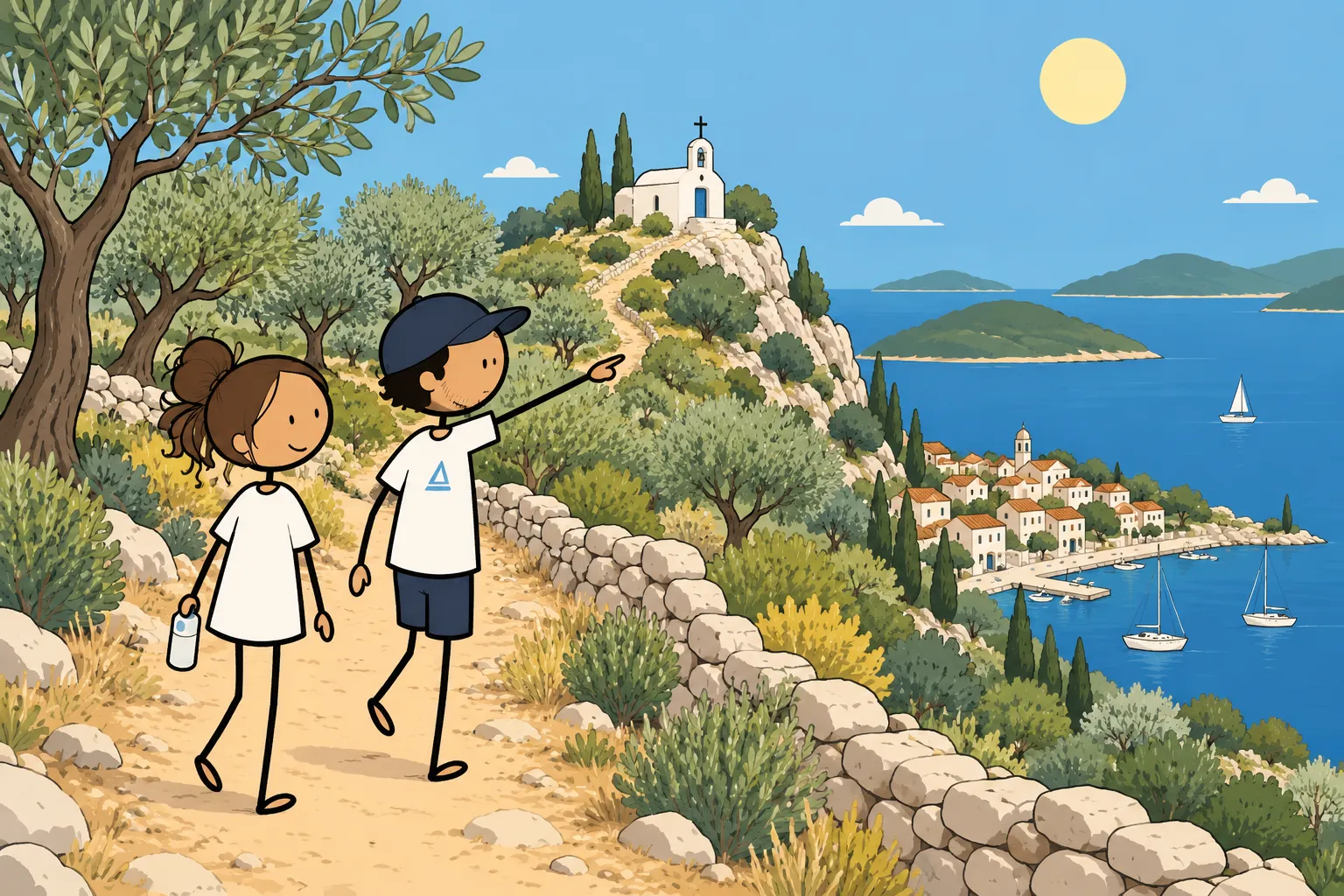
- Stavros and Port Polis: the area where finds suggest the site of Odysseus's town, with a museum in the village and the remains of a large ancient building often described as his palace. There is also a cave on the Port Polis shore, a shrine in ancient times and now under water, though its entrance is visible from the boat.
- Vathy: a small, free archaeological museum and the cove traditionally identified as the one where Odysseus was put ashore in the Odyssey.
- Cave of the Nymphs and the Castle of Odysseus: a stalactite cave 2 km west of Vathy, and the ancient acropolis on Mount Aetos popularly known as the Castle of Odysseus. Hire scooters if you want to see them.
- Kioni walk: a marked circular trail goes to Anogi and the Kathara monastery, then to Stavros and back to the port.
Whether this is really Homer's island is debated. Most accept it, and one German archaeologist argued for Lefkada, but the stories and sites are good either way.
What are the wind and conditions like?
The prevailing wind is north-westerly, strongest in June and July and in the afternoon, and weaker in the evening. Gusts often come from the west, especially in Frikes and Kioni, down the valleys, and strong gusts can hit the east coast and Vathy bay. In strong north-westerlies the skipper may move from Vathy to Kioni or Frikes. Ithaca belongs to the UNESCO Kefalonia Geopark, which also protects whales and dolphins.
How does Ithaca fit into a LUFF week?
Ithaca is a natural next stop after Lefkada and Meganisi, with Kefalonia just across the channel. The skipper proposes the route and puts it together around the weather and the guests' wishes. Browse the boats for a Saturday-to-Saturday week in the yacht catalogue.
Frequently asked questions
1Is Ithaca really Odysseus's island?
2What is the best harbour on Ithaca?
3Is Ithaca windy?
4How far is Ithaca from Kefalonia?
Your week
Sail to Odysseus's island
Tell us your dates and group size, and we will suggest boats and a route.