Responsible Sailing - how to protect the sea on board
Anchoring on sand, not on Posidonia, saving water, waste and marine parks: small habits that leave the sea the way you found it after a week under sail.
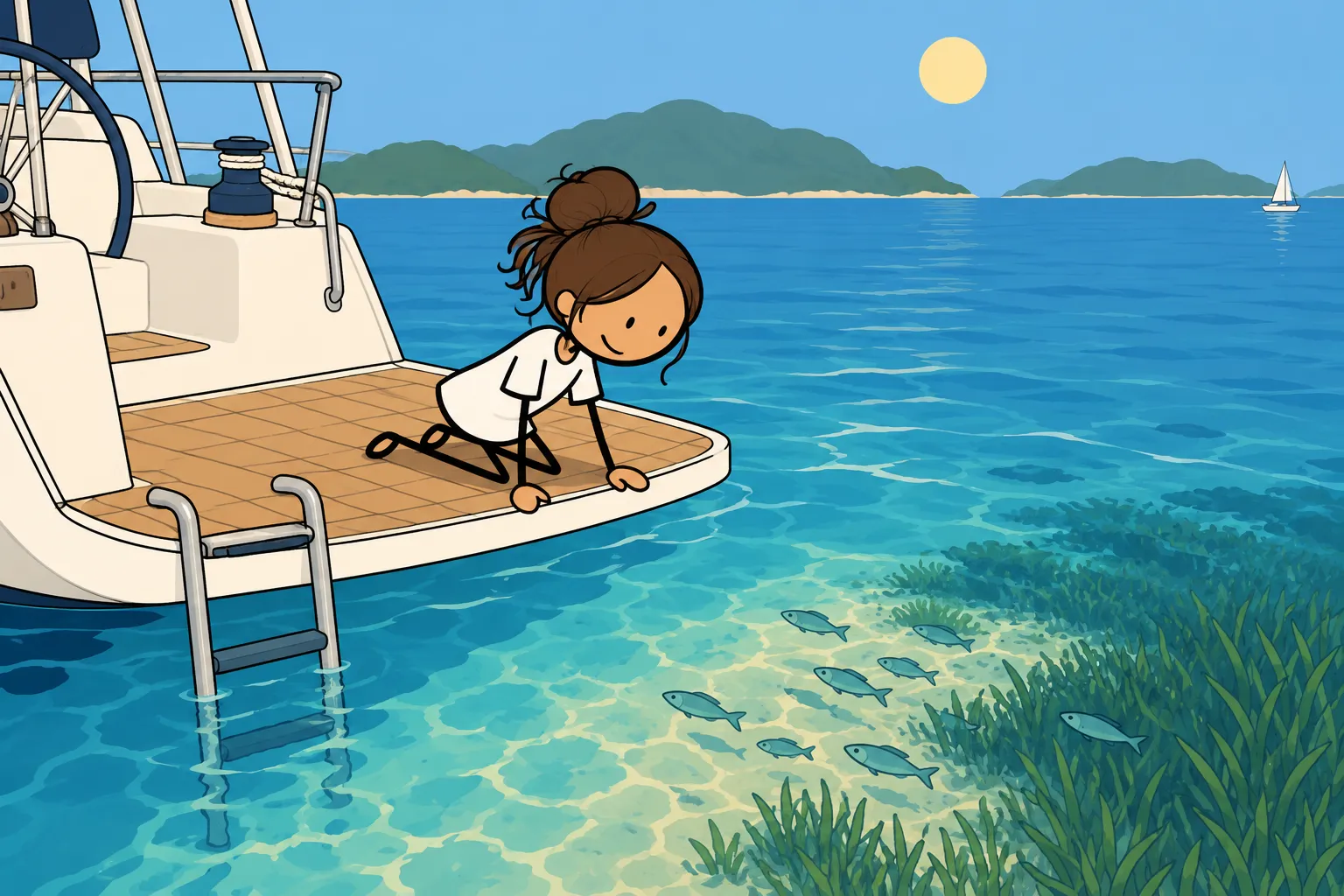
Sailors are guests in the sea they sail on, and everything that makes a week on the water special, clear water, quiet bays and sea life, is easily spoiled by small habits. The good news is that the sea is looked after by ordinary things: where the anchor goes down, how much water you use and what you leave behind. None of it needs experience.
Below are the habits that count most on a boat, and many of them apply to every one of the other destinations we sail.
Why anchor on sand and not on Posidonia?
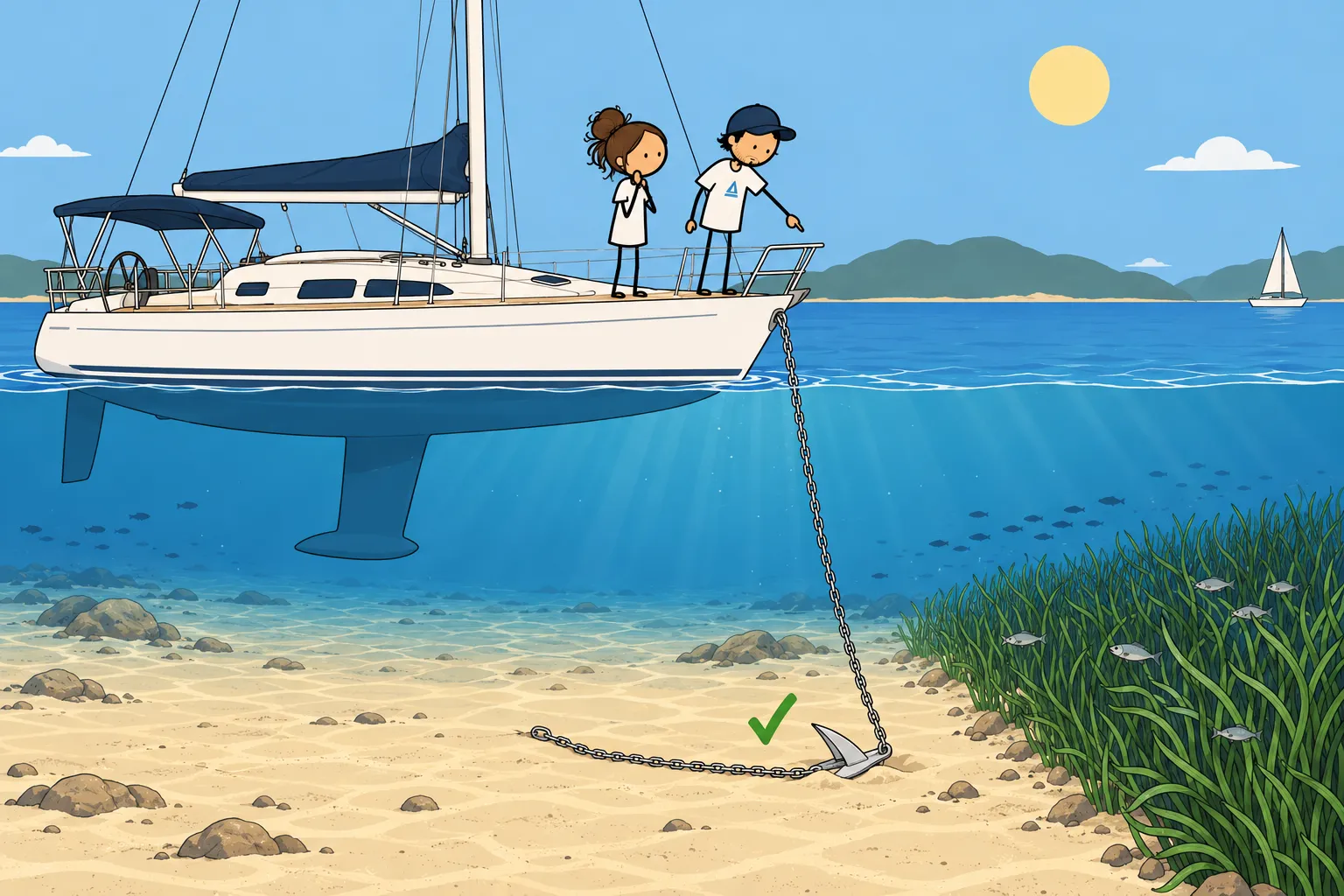
Posidonia is a seagrass that forms dense underwater meadows, the darker patches on the seabed you can spot from the boat. The meadows are home to fish and many other sea creatures, and they are protected as a habitat under European Union rules. Posidonia grows very slowly, so a damaged meadow can take a very long time to recover.
An anchor is a heavy blow to it: when it is lifted, it rips the grass out of the seabed and leaves a bare stripe. So the rule is simple: anchor on sand. It is not only about the sea, it is practical too: sand gives good holding, while grass and weed stop an anchor from gripping.
The skipper chooses the anchoring spot, and you can help: sandy bottom looks light, Posidonia looks dark. Some places now install mooring buoys to protect the meadows. In one bay on Alonissos, for example, there have been free buoys since 2024, and anchoring there is forbidden.
How do we save water on board?
Water on a boat is limited: tanks hold a few hundred litres and are refilled in harbours every day or two. So saving it is practical as well as kind.
- Take quick showers: wet yourself, turn the tap off, soap up, rinse.
- After a swim in the sea, rinsing your face and the salt is enough, no long shower needed.
- Turn the tap off while brushing your teeth and washing dishes.
- Drink from a reusable bottle, and fill it from the tank or in the harbour.
What about waste and the toilet?
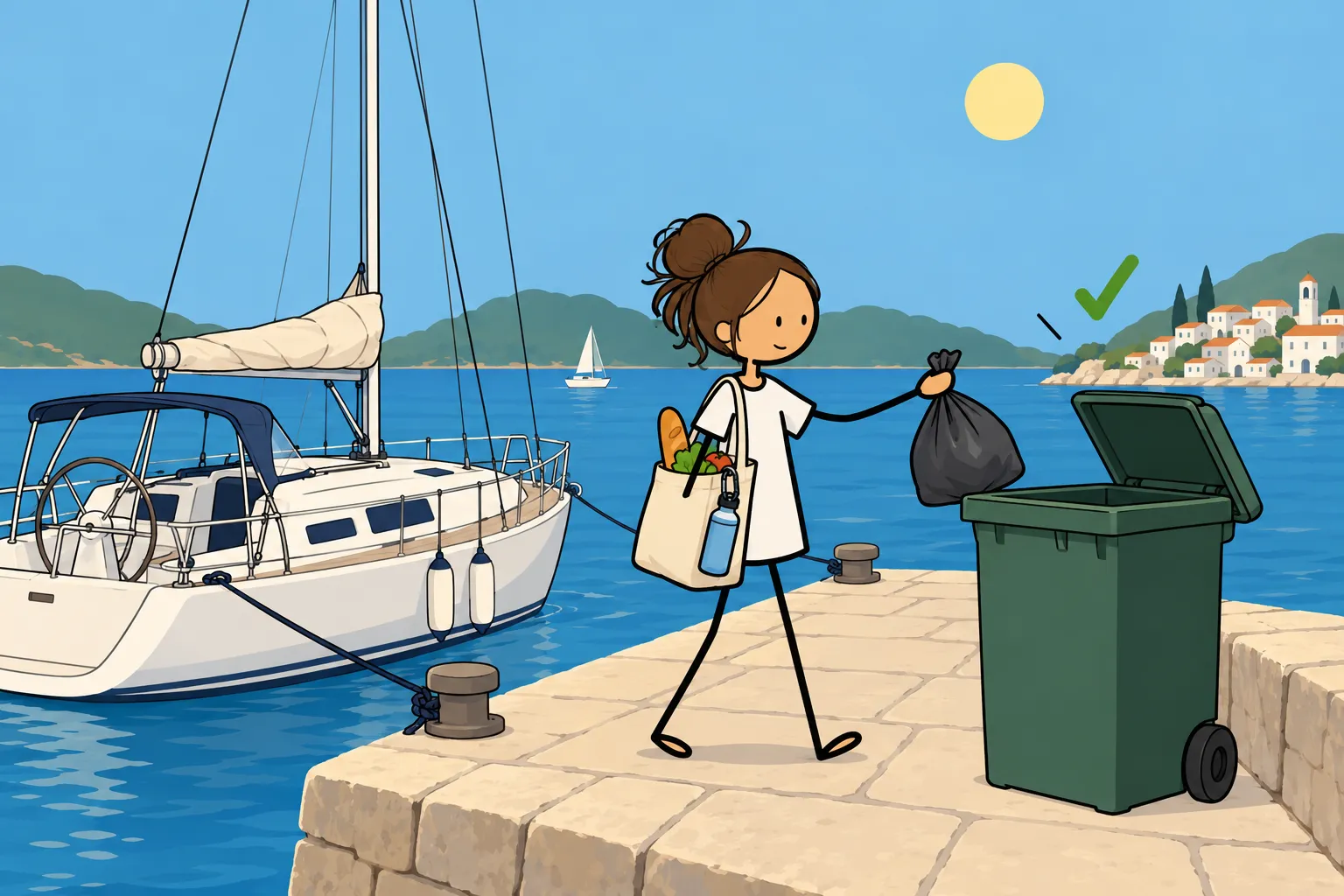
Nothing goes into the sea. Plastic matters most: the international MARPOL convention bans dumping plastic into the sea anywhere. Whatever is produced on board stays on board until it goes into a bin in the harbour.
- Collect rubbish in a bag and drop it in a bin in port. In some small bays and harbours there are no bins, so waste is carried to the next harbour.
- Avoid single-use plastic: bring a reusable bottle and a cloth shopping bag.
- Toilet paper is never flushed. The bin next to the toilet is for that, because a boat toilet clogs easily.
- The holding tank is not emptied in bays or near swimmers. The skipper decides when and where to empty it, in line with the rules.
How do we look after the sea when swimming and sunbathing?
There are no true coral reefs in the Mediterranean, but the reason is the same as elsewhere: whatever comes off your skin ends up in water where fish and seagrass live.
- Choose a sunscreen with mineral filters and without oxybenzone and octinoxate, which some places, including Hawaii and Palau, have banned.
- Apply sunscreen before you get in the water, not on the beach as you go in.
- Use biodegradable soap and shampoo, especially if you wash on the swimming platform.
- Do not feed fish and do not leave food in the sea.
What are marine parks, and how do you sail in them?
Marine parks are areas of sea where some activities are limited or banned to protect endangered species and their habitats.
- Alonissos. The National Marine Park of the Northern Sporades was set up in 1992, and its symbol is the Mediterranean monk seal (Monachus monachus), one of the rarest seals in the world. The park also holds Posidonia meadows, sea turtles and rare birds. It has two zones. In zone B, which includes Alonissos, almost all activities are allowed. In the more strictly protected zone A, anchoring is allowed only in certain bays, and since 2022 an online ticket is required to enter.
- Atokos near Ithaca. A sailing guide reports that from 1 May to 31 October, sailing, anchoring, fishing, swimming and landing are prohibited within 300 metres of the island, to protect monk seals (a 2025 decision of the Ithaca Port Authority that we couldn't confirm in official sources, so check before you go).
Rules change, so check them before you sail. As guests, we stick to them and to common sense: we do not enter sea caves, we keep our distance from wildlife and we do not approach a seal if we see one.
What does "take only photos" mean?
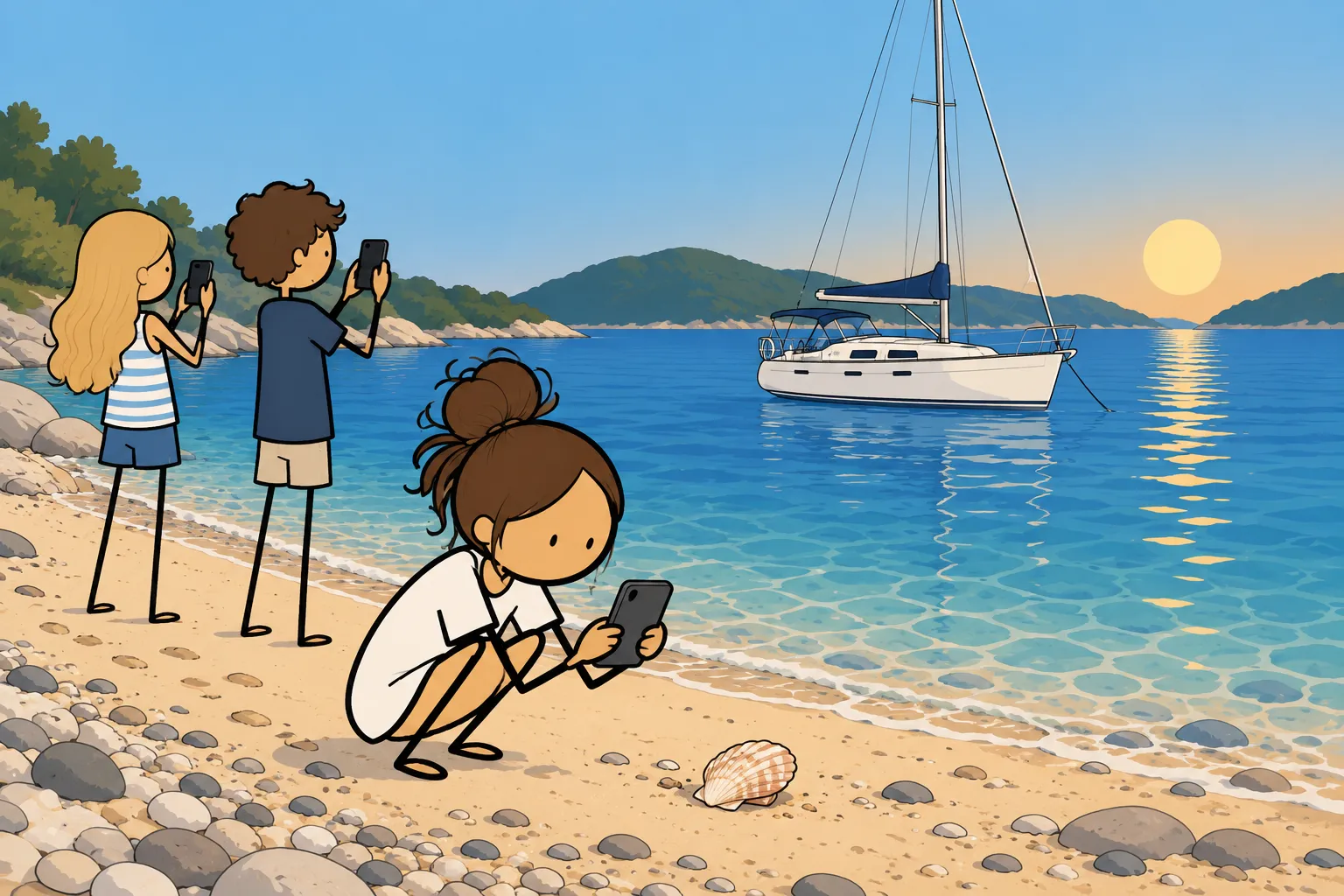
A well-known saying among nature lovers goes: leave only footprints, take only photos.
- Do not pick shells, coral, sponges or stones from the seabed.
- Do not touch archaeological remains and wrecks, and anchoring at historic wrecks is often forbidden.
- Take photos, but do not disturb animals for a better shot.
- Leave a bay cleaner than you found it. If you see plastic in the water, pick it up.
Frequently asked questions
1Why does Posidonia matter?
2Can I throw fruit peel or food into the sea?
3Does the skipper or do we choose where to anchor?
4What if I see a Mediterranean monk seal?
5Do you pay to enter a marine park?
Your week
Sail with us and look after the sea together
The sea is looked after by the small habits of a whole crew, and sailing through bays that have stayed clean is the best part of a week on the water.