How to become a skipper - which licences you need to sail a yacht yourself
Non-EU licences, Croatia, the ICC and VHF. Which licence you need to skipper a yacht yourself, what Greece asks for, and why a skippered week needs none.
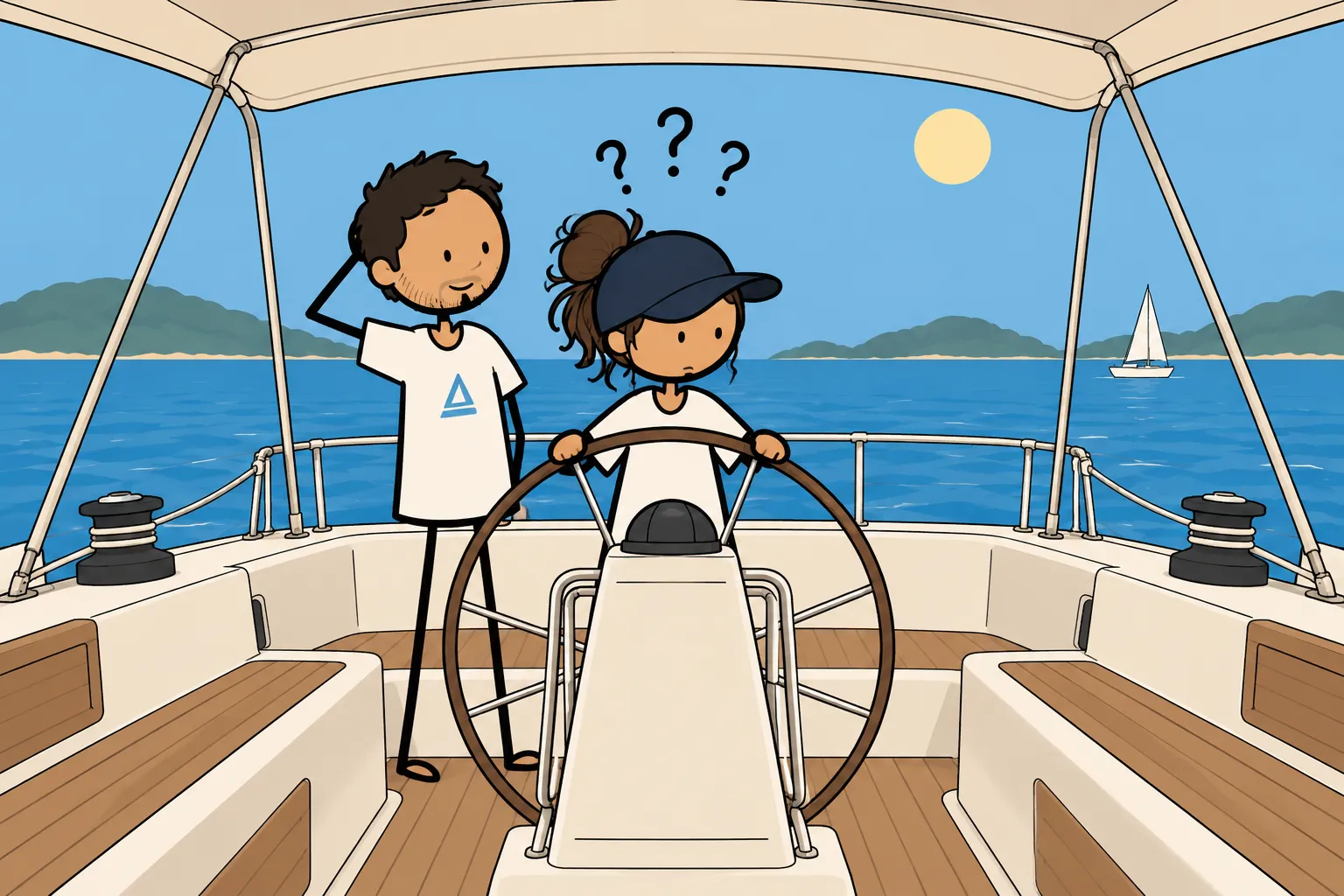
If a week at sea left you wanting to skipper a yacht yourself one day, the path is clear: a course, an exam, a licence and as many miles at sea as you can get. The only catch is that the rules change from country to country, so it matters which licence is valid where you want to sail.
The short answer: for your first sailing week with a skipper you need no licence at all, because the skipper holds it. To charter a boat without a skipper, you need a licence recognised by the country you sail in, often a certificate for the boat's VHF radio too, and the charter company checks your documents before you leave. Below is the whole path step by step, with a focus on readers whose licence was issued outside the EU.
We cover recreational licences here, for sailing with family and friends. Professional skippers, who sail boats for pay, follow a different and stricter path.
Do you need a licence for a sailing week?

No. When you go sailing in Greece with a skipper, the boat is handled by an experienced, licensed skipper who lives on board with you and is responsible for the boat. You need no licence, no course and no sailing experience.
In some harbours guests help with the lines when mooring, but that's basic and the skipper explains it at the start of every week. If you're thinking about a licence of your own, a skippered week is also the best first lesson: you can try the helm and the sails, and see a day at sea through the eyes of the person running the boat.
What if your licence is from a non-EU country?
A national boat licence is usually issued under that country's own rules, often for rivers, lakes and canals, and it says little about the sea. Many licences from outside the EU cover inland waters only, and there is no single list that tells you where each one is accepted.
For the sea, one question matters: does the country where you charter the boat recognise your licence? Croatia, for example, publishes an official list of recognised foreign certificates (May 2026 version), and it is worth checking your country against it. If your licence isn't there, or you can't tell, there are two ways forward: get an international certificate (the ICC) from your own country, if it issues one, or take a licence the country you want to sail in recognises, such as the Croatian boat operator licence. Ask the charter company early, and send them a copy of your licence.
How do you get a boat operator licence in Croatia?
In Croatia the licence is called a certificate of competence for a boat operator (voditelj brodice). There are three categories:
- A: for the smallest boats with low-powered engines.
- B: for private boating in Croatia's internal waters and territorial sea. You can take it from age 16.
- C: a higher category, from age 18, renewed every five years and required for sailing further offshore and for some commercial work.
You usually take a course first, then register for the exam at a harbour master's office and sit it before its exam board.
Check two things before you sign up for a course. First, which category covers the boat you want to charter, since that depends on the boat's size and the sailing area. Second, if you're not a Croatian citizen, ask the harbour master's office which documents they need from you.
What is the ICC and who can get one?
The ICC (International Certificate for Operators of Pleasure Craft) is an international certificate for operating pleasure craft. It comes from Resolution No. 40 of the UN Economic Commission for Europe (UNECE), and it's issued by the authorities of countries that accepted the resolution, or by bodies those countries approve.
- Who gets one. A country issues it to its own citizens and residents (and, under some conditions, to citizens of certain other countries). So you can't get one in just any country.
- Requirements. At least 16 years old, physically and mentally fit (sight and hearing in particular), and a passed exam. If you already hold a national licence, the same country can issue you an ICC without a new exam.
- What it says. Codes show where and what you may sail: I (inland waters), C (coastal waters), M (motor craft) and S (sailing craft). For a sailboat at sea, look for C and S.
- Where it's valid. Croatia accepts any Resolution 40 ICC valid for coastal waters, charter boats included, within the limits written on the certificate.
Not every country has accepted the resolution, so ask your national authority whether it issues the ICC before you go down that route.
Do you also need a VHF certificate (SRC)?
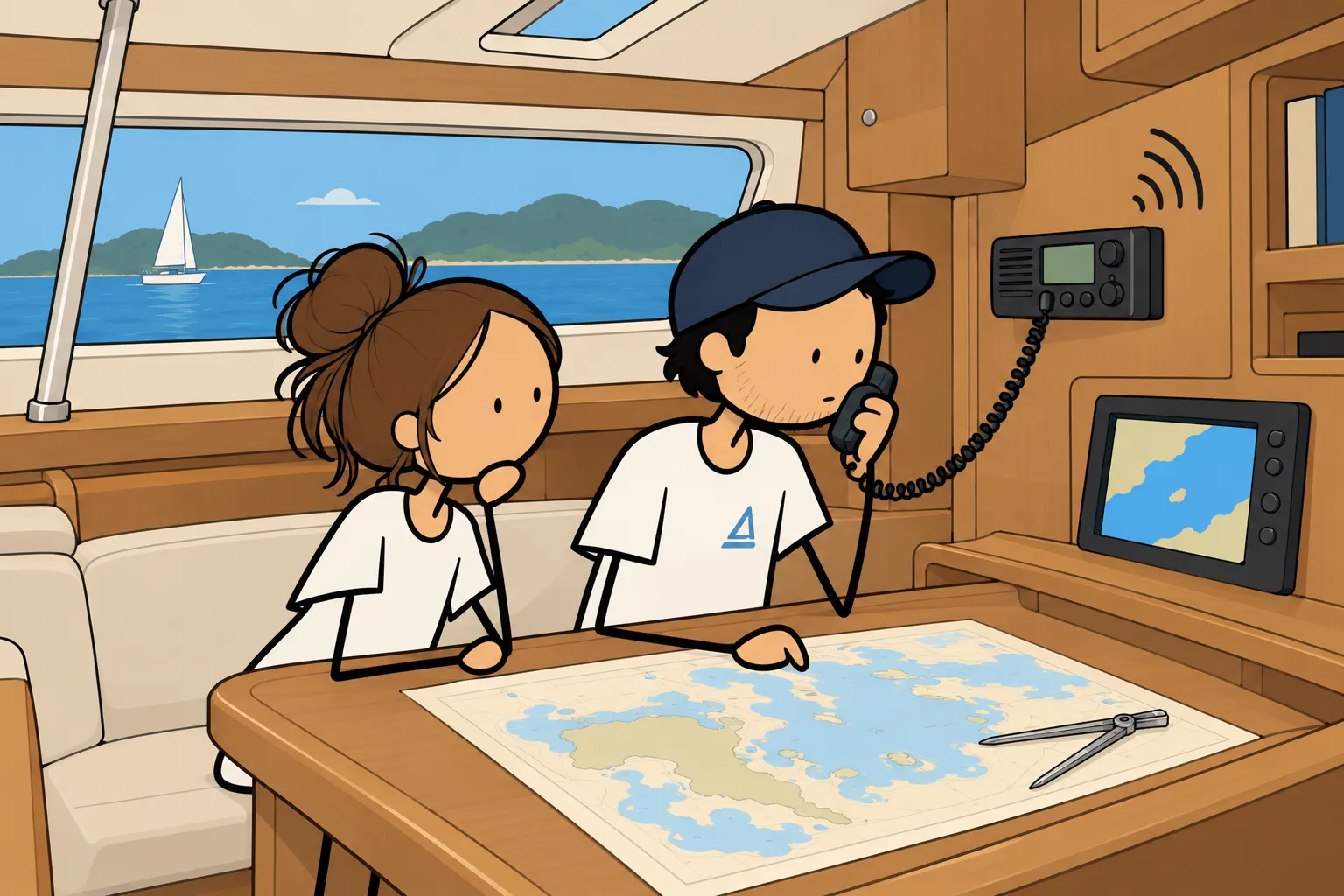
Often, yes. Charter sailboats and catamarans usually have a VHF radio, used to call the marina, talk to other boats and, if needed, call for help. Using it takes its own certificate, most often the SRC (Short Range Certificate). The European Conference of Postal and Telecommunications Administrations (CEPT) harmonised the SRC exam for pleasure boats, and it covers the VHF radio and DSC (digital selective calling).
- Croatia: recognised foreign licences are valid on condition that you also hold a suitable national or foreign radio certificate, if the boat has a fitted VHF station.
- Greece: ask the charter company whether it requires a radio certificate for the boat you've picked.
If you're taking a licence anyway, it pays to take the radio certificate at the same time.
What does Greece require to charter a boat without a skipper?
When a boat in Greece is chartered without a skipper and crew, the person in charge must hold the qualifications set out in decision 3342/02/2004 of the Greek Ministry of Merchant Marine, which under Law 4926/2022 applies until a new decision replaces it. For sailboats, the decision lists Greek diplomas and licences, and for foreigners it says:
- an equivalent foreign certificate issued or recognised by a state authority, or by a foreign nautical club or sailing school, is accepted,
- certificates from outside the EU must come with a translation into Greek or English,
- the port authority may also ask for a signed declaration of your competence.
Charter companies also set their own conditions and check documents before departure (in Croatia, that check is required by law). So send the company a copy of your licence in advance and ask exactly what it accepts, before you pay for the boat. We also offer bareboat charter, a boat without a skipper, to guests with a valid licence.
In what order do you get to your first week at the helm?
- 1. A week with a skipper. Get to know the boat and the sea: the helm, the sails, the lines, mooring. A calmer sea with short legs, like the Ionian, is a good start.
- 2. A course and an exam. Pick a licence recognised by the country you want to sail in, and take the radio certificate at the same time.
- 3. Miles with more experienced sailors. A licence is a piece of paper, while confidence comes from experience. Crew for a more experienced skipper or join a sailing club, on rivers and lakes or at sea.
- 4. Your first week without a skipper. Pick a familiar, calmer area, short legs and a boat of a size you're used to, and leave room in the plan for a day or two of bad weather.
Frequently asked questions
1Do I need a licence if I sail with a skipper?
2Is a non-EU boat licence valid at sea?
3How old do I have to be to get an ICC?
4Do you rent boats without a skipper?
5Can I work as a skipper with a recreational licence?
Your week
Want to try it first, with a skipper?
The easiest first step towards a licence of your own is a week at sea with an experienced skipper. Tell us how many you are and when and where you'd like to sail, and we'll suggest boats that suit you.