Boat Etiquette - what's allowed and what isn't on a sailing week
Shoes, the toilet, water, music and generator hours at anchor, the skipper's word, alcohol, smoking and marine parks. A short, friendly guide to boat etiquette.

There aren't many rules on a boat, and the ones that exist have a simple reason: for a week you share a small space with your group and the skipper, and a cove with the people on the boats around you. Know a few things in advance and you'll be relaxed from day one.
This isn't a list of bans. It's what we'd tell a friend before their first sailing week in Greece: what's perfectly fine, what's better avoided, and why.
What are the basic rules of behaviour on a boat?
- Fine: bare feet or soft-soled shoes. Better not: black or hard soles on deck.
- Fine: toilet paper in the bin next to the toilet. Better not: anything in the toilet except what you've eaten.
- Fine: a quick shower after swimming in the sea. Better not: a long shower with the water running.
- Fine: music by day, quieter in the evening at anchor. Better not: loud music late at night in a cove or harbour.
- Fine: a glass of wine at anchor. Better not: alcohol while sailing and mooring.
- Fine: litter in a bag, then in a harbour bin. Better not: anything in the sea, cigarette butts included.
The boat is everyone's shared home for the week. Final cleaning is covered by the yacht package, but the stay on a sailboat is nicer when everyone puts things back and wet swimsuits don't end up on the saloon cushions.
Do you wear shoes on a boat?
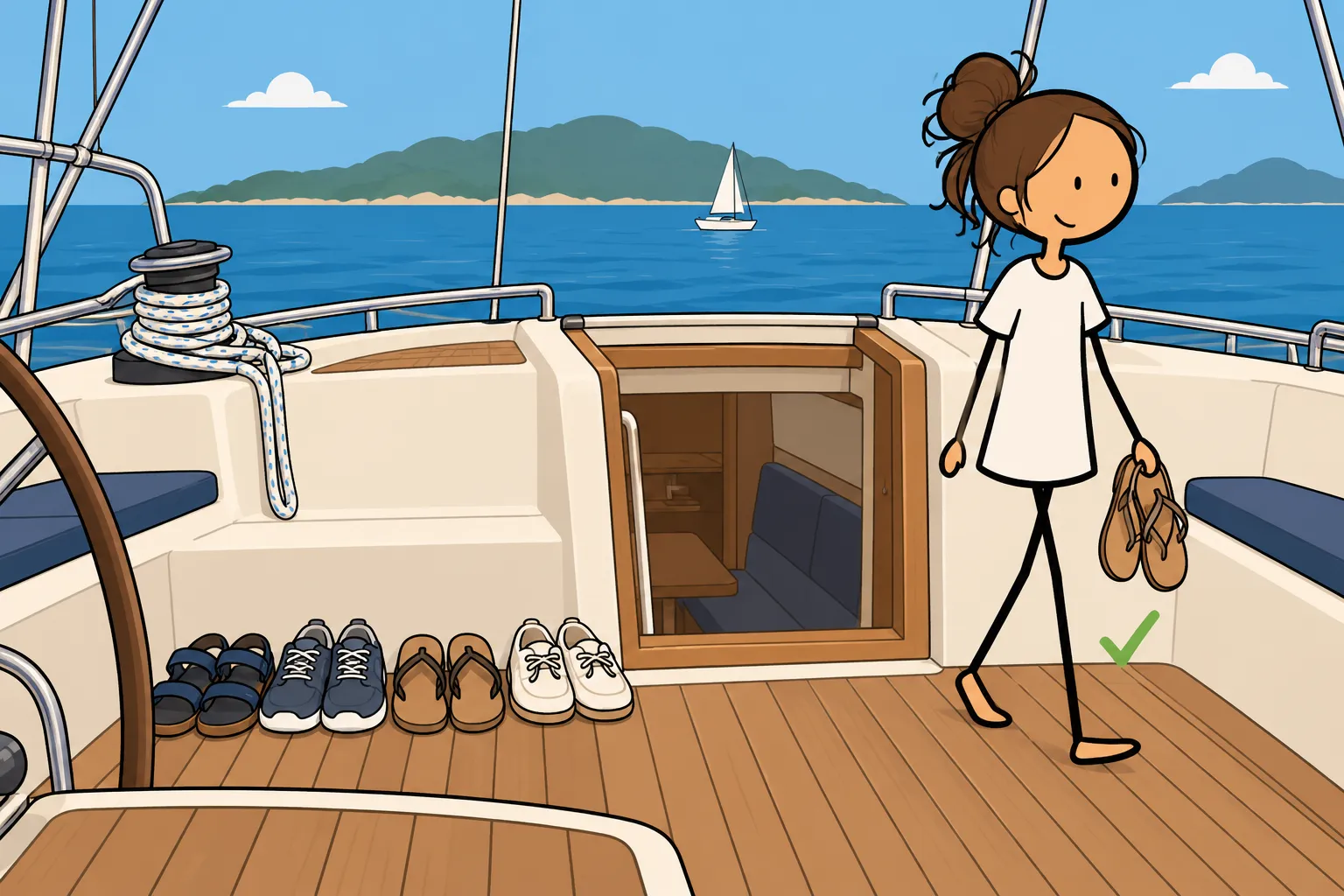
Most people go barefoot on board, and that's perfectly fine. If you're more comfortable in shoes, pick soft soles that leave no marks, such as sailing sandals. Black rubber and hard soles mark the deck, and high heels have no place on a boat. Take off the shoes you walked around town in before stepping aboard, and bring a pair that's easy to slip on for going ashore, because you'll do it several times a day.
How do you use the toilet on a boat?
One rule with no exceptions: nothing goes in the toilet that you haven't eaten first, and that includes toilet paper. It goes in the bin next to the toilet, as in many Greek homes and tavernas, and the same goes for wet wipes and sanitary products.
A boat toilet's pipes are narrow and clog easily, and a blocked toilet can spoil the day for everyone. Some charter companies bill for the repair. The skipper shows you how to flush it at the start of the week.
How do you save water and power on board?
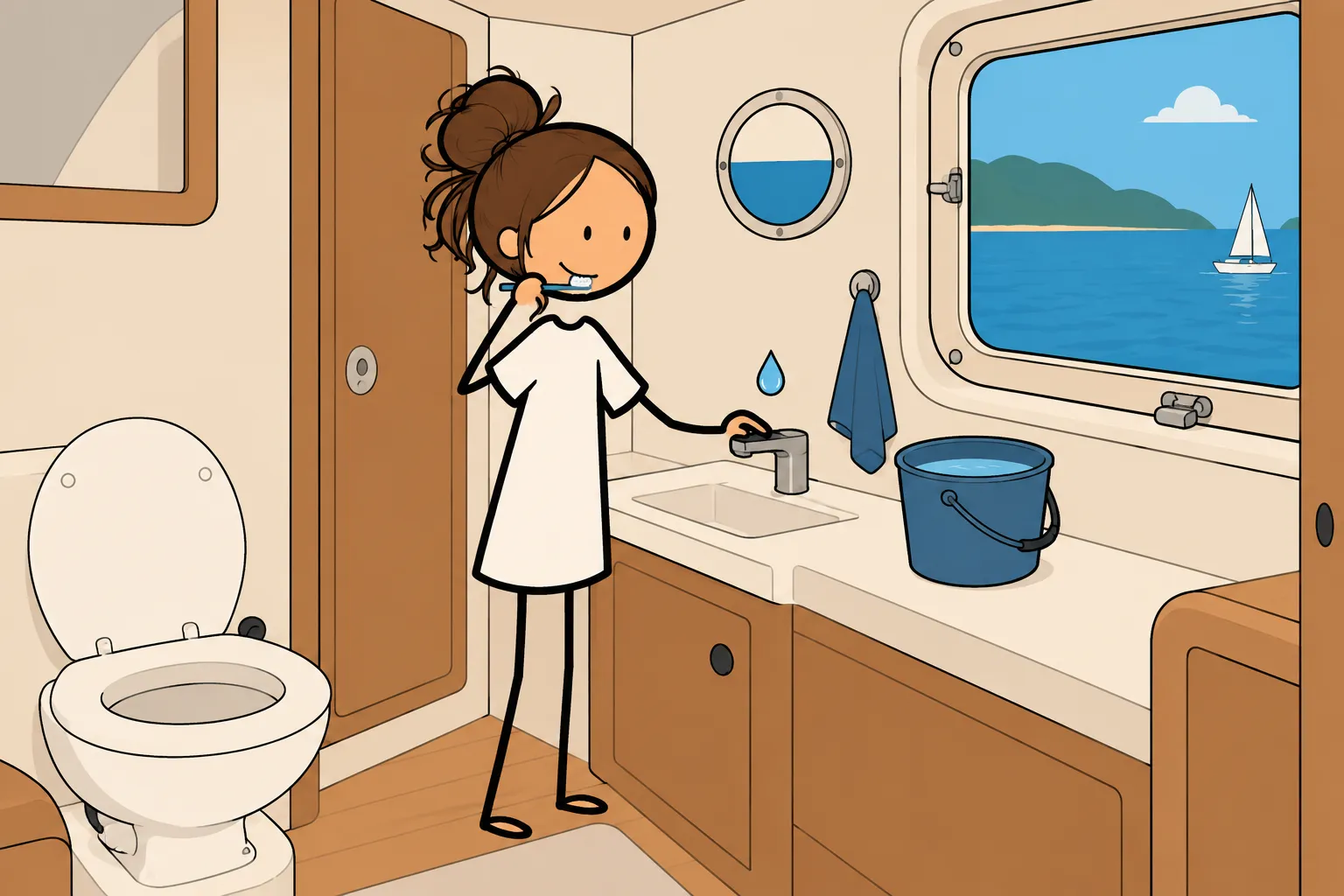
Fresh water is limited: the tanks hold a few hundred litres and are refilled in harbour every day or two, so water one person spends on a long shower is missing for everyone else.
- Keep showers short. Swim first, then just rinse off the salt, and turn the water off while you soap up.
- Don't leave the tap running while you brush your teeth or wash up.
- Buy bottled water to drink. Tank water is for showering and washing.
Power works similarly. Phones and cameras charge from USB or a 12V socket, while the regular 220V sockets only work when the boat is plugged into shore power in a harbour. The hairdryer waits for harbour evenings.
How should you behave in a cove and in a harbour?
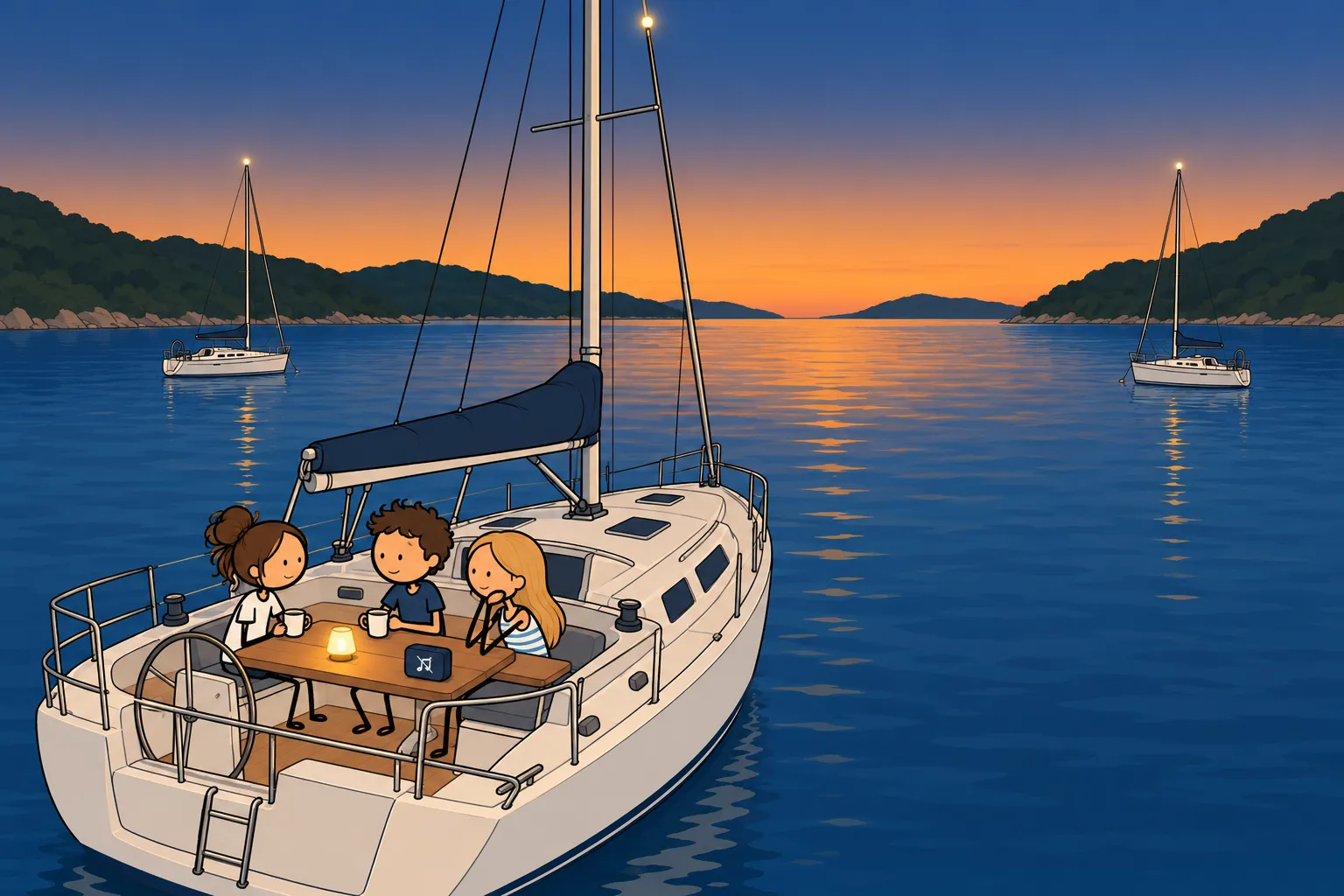
In a calm cove, sound carries over water much farther than on land, and the people on the next boat came for the same peace you did.
- Music. By day it's part of the afternoon at anchor. In the evening and early morning, keep it to your own boat.
- Generator. If the boat has one, run it by day, not late at night or early in the morning. Agree the hours with the skipper.
- Dinghy. Go slowly between anchored boats and near swimmers.
- Mooring. While the skipper moors, turn the music off and keep the chat down so the instructions can be heard. In some harbours guests help with the lines: passing or throwing one, tying it to a cleat, setting the fenders. It's basic, needs no prior knowledge, and the skipper explains it at the start of every week.
- Harbour neighbours. Greek harbours mostly moor stern-to along the quay, side by side, so neighbours are a metre or two from your cockpit. Talk quietly late at night.
Why does the skipper have the last word?
The skipper is an experienced, licensed professional who knows these waters and is responsible for the boat and everyone on it. The skipper proposes the route and puts it together around the weather and the guests' wishes, so say what you'd like in good time: which cove you want to see, where you'd like dinner, how much sailing versus swimming.
When the skipper says the wind is too strong to sail, to swim at a certain spot or to take the dinghy ashore, that isn't fussiness. They follow the forecast and know how the boat behaves. When the weather turns, the plan changes or the boat waits in a safe harbour. Sailing safety comes down to the same idea as alcohol: it dulls coordination and clear thinking. A glass of wine or a cold beer at anchor is part of the week, but while sailing and mooring it's better to go without, you don't jump in the water after drinking, and the dinghy is driven by someone who hasn't.
Can you smoke on a boat?
It depends on the boat, so if someone in your group smokes, ask before booking. It's usually allowed outside and never inside. Where it's allowed, smoke outside, in a spot the skipper shows you, downwind and away from non-smokers. Butts go in a bin, never in the sea, and watch the embers around sails, lines and cushions.
What are the rules for the sea and marine parks?
Nothing goes in the sea. The international MARPOL convention broadly bans dumping rubbish at sea and applies to every ship, yachts included. Plastic is the biggest danger because it floats for years. Keep litter in a bag and put it in harbour bins, cigarette butts and bottle caps included.
Greece also has protected marine areas. The Sporades route includes Alonissos, the only inhabited island of the Alonissos Northern Sporades National Marine Park, whose rules differ by zone. From the park's official site:
- no boat may come closer than 3 nautical miles to Piperi, the most strictly protected island
- at some islets you may anchor only from sunrise to sunset, and some can't be approached at all
- spearfishing is banned in Zone A
- camping and fires are banned on the park's land areas
Rules change from time to time, and the skipper knows where the boat may stop and stay overnight.
If you spot a Mediterranean monk seal, a rare species that's strictly protected from disturbance in the park, the Greek conservation group MOm advises: stay at least 30 metres away, never feed it, keep the noise down, and report the sighting to the nearest port police.
Frequently asked questions
1Can you drink alcohol on a boat?
2Can I play music on the boat?
3Do guests have to help the skipper?
4Why doesn't toilet paper go in the toilet?
5What if we accidentally break something?
Your week
Ready for your first week on a boat?
The skipper explains the rest at the start of the week. Tell us how many of you there are and when you'd like to sail, and we'll suggest boats that fit.